
When senior loved ones receive dementia diagnoses, families often feel overwhelmed and unprepared for the journey ahead. Creating a comprehensive dementia care plan early in the process can provide structure, peace of mind, and ensure your aging family member receives the best possible care as the condition progresses.
Understanding the Progressive Nature of Dementia
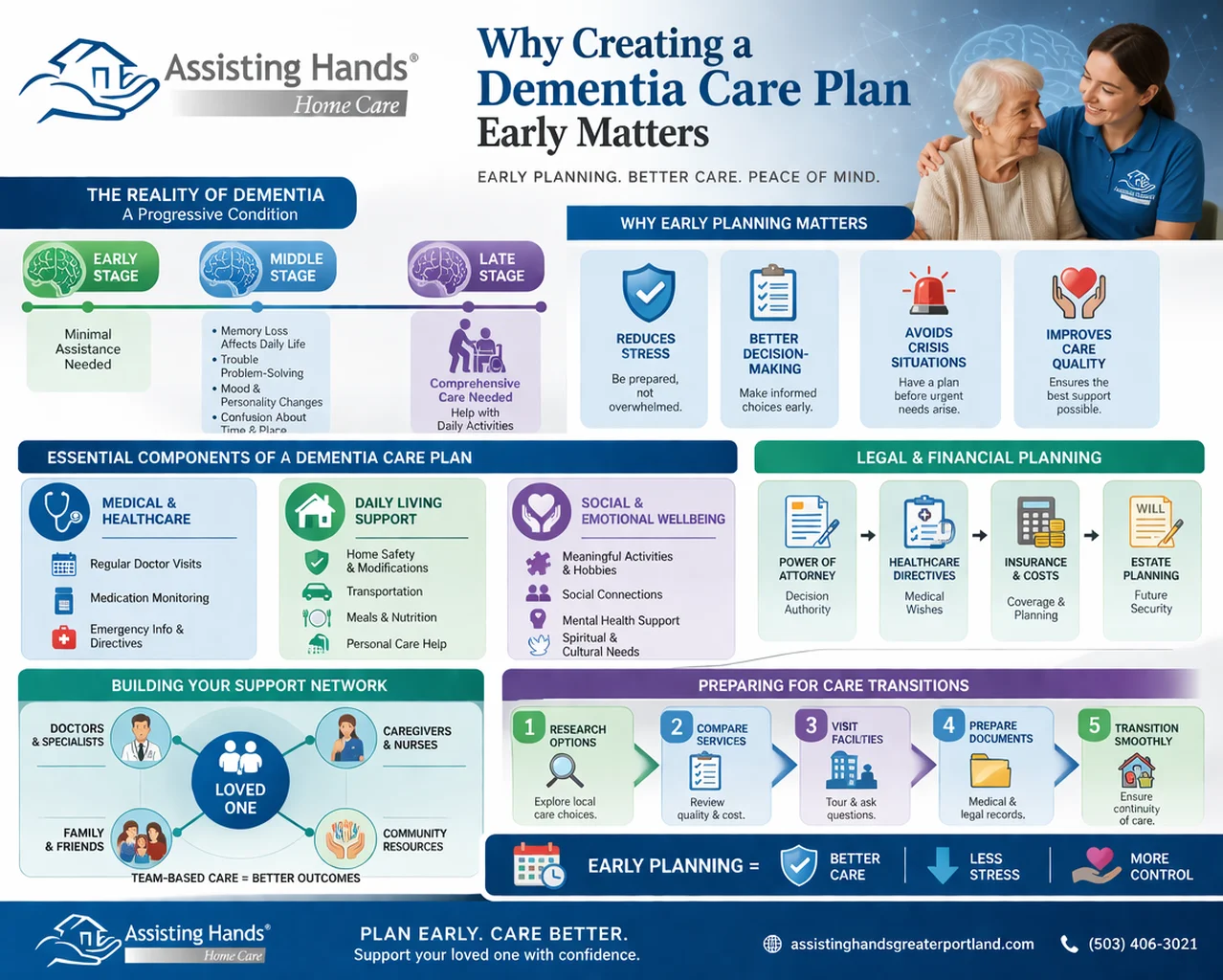
Dementia affects each person differently, but it typically progresses through several stages. A well-structured care plan acknowledges this progression and prepares for changing needs over time.
Early-stage dementia may require minimal assistance, while moderate stages often involve:
- Memory loss affecting daily activities
- Difficulty with problem-solving and planning
- Changes in mood and personality
- Increased confusion about time and place
Advanced stages typically require comprehensive care, including help with basic functions like eating, bathing, and mobility. Planning ahead allows families to research options and make informed decisions before crisis situations arise.
Caring for a loved one with dementia can be challenging, but compassionate help is available. If your senior loved one has been diagnosed with a serious condition and needs help with tasks like meal prep, transportation, medication reminders, bathing, and grooming, reach out to Assisting Hands Home Care, a leading provider of home care Portland families can trust. We also offer comprehensive care for seniors with dementia, Alzheimer’s, and Parkinson’s.
Essential Components of a Dementia Care Plan
A comprehensive care plan should address multiple aspects of your loved one’s life and wellbeing. Start by documenting your loved one’s current abilities, preferences, and medical history.
Medical and healthcare needs:
- Regular physician visits and specialist consultations
- Medication organization and monitoring
- Emergency contact information and medical directives
- Insurance coverage and healthcare proxy designations
Daily living support:
- Home safety modifications and assistive devices
- Transportation arrangements for appointments and activities
- Meal planning and nutrition considerations
- Personal care assistance as needed
Social and emotional wellbeing:
- Meaningful activities and hobbies to maintain engagement
- Social connections with family and friends
- Mental health support and counseling resources
- Spiritual or cultural considerations important to your loved one
Caring for a loved one with dementia can be challenging, but compassionate help is available. If your senior loved one has been diagnosed with a serious condition and needs help with tasks like meal prep, transportation, medication reminders, bathing, and grooming, reach out to Assisting Hands Home Care, a leading provider of home care service Portland families can trust. We also offer comprehensive care for seniors with dementia, Alzheimer’s, and Parkinson’s.
Legal and Financial Planning Considerations
Addressing legal and financial matters while your loved one can still participate in decision-making is crucial for his or her future security and your family’s peace of mind.
Essential legal documents include a durable power of attorney, healthcare proxy, and advance directives. These documents ensure someone can make decisions on your loved one’s behalf when he or she is no longer able to do so independently.
Financial planning involves:
- Organizing important documents and account information
- Understanding insurance coverage and benefits
- Exploring long-term care insurance options
- Considering estate planning needs
- Researching potential costs of future care services
Banking arrangements should include setting up automatic bill payments and ensuring authorized family members have access to accounts when needed.
Building Your Support Network
Caring for someone with dementia requires a team approach. No single person should bear the entire responsibility, and having multiple support systems in place prevents caregiver burnout.
Professional support team:
- Primary care physician and neurologist
- Social workers and care coordinators
- Home caregivers and nursing services
- Adult day programs and respite care providers
Family and community resources:
- Local Alzheimer’s Association chapters
- Support groups for both seniors and caregivers
- Faith-based or community organizations
- Neighbors and friends who can provide occasional assistance
Consider creating a communication system to keep all team members informed about changes in condition, appointments, and care needs.
Certain age-related conditions can make it more challenging for seniors to age in place safely and comfortably, but experts in live-in care Portland families can rely on are available around the clock to help seniors manage their health. Whether your loved one is living with dementia or recovering from a stroke, you can trust the professional caregivers from Assisting Hands Home Care to enhance his or her quality of life.
Preparing for Care Transitions
Dementia care often involves multiple transitions as needs change over time. Planning for these transitions reduces stress and ensures continuity of care.
Research care options in your area before they’re needed:
- Adult day programs for social interaction and supervision
- In-home care services for daily living assistance
- Assisted living facilities specializing in memory care
- Nursing homes with dementia care units
Visit facilities, ask questions about their approach to dementia care, and understand their admission requirements and costs. Having this information readily available makes decision-making easier during stressful times.
Create a transition checklist that includes notifying healthcare providers, transferring medical records, updating emergency contacts, and ensuring medication continuity.
Even when families have the best intentions, caring for a senior loved one with dementia can be challenging. Fortunately, Assisting Hands Home Care is here to help. We are a leading provider of dementia care Portland families can trust. You can take advantage of our flexible and customizable care plans, and our caregivers always stay up to date on the latest developments in senior care. Assisting Hands Home Care will work with you to customize a care plan that’s just right for your loved one’s needs. Call us today to discuss how we can give you the peace of mind that comes from knowing your loved one is being cared for with professionalism and compassion.
