As the senior population becomes more diverse, understanding the role of cultural sensitivity in caregiving is more important than ever. Providing culturally competent care ensures all seniors receive respectful, effective, and personalized support that honors their unique backgrounds.
Understanding Cultural Competence in Senior Home Care
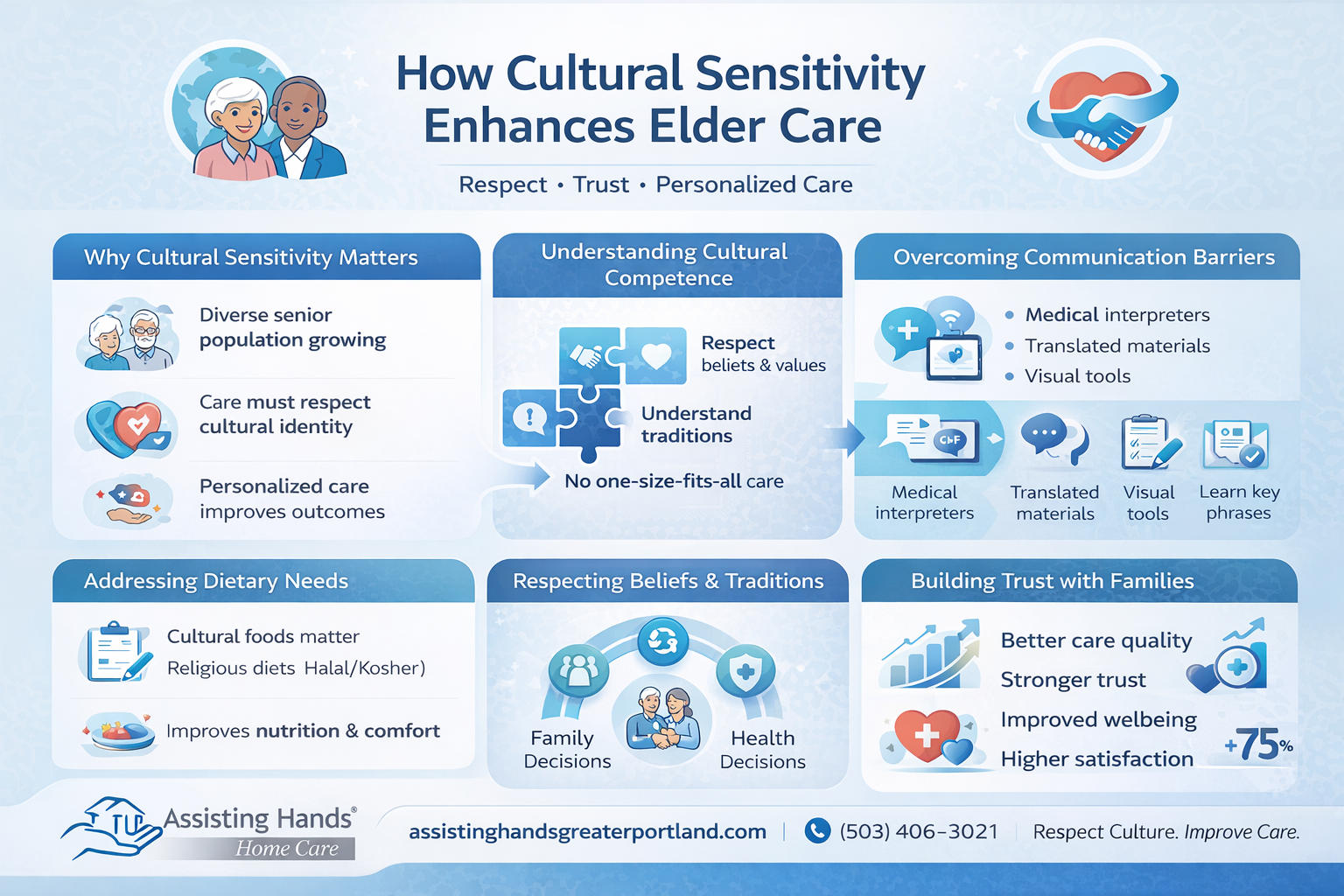
Cultural competence in senior care means recognizing and respecting the beliefs, values, and customs that shape a person’s identity and health decisions. It involves being aware of one’s own cultural views while remaining open to learning about others. This understanding allows caregivers to build stronger relationships with seniors and their families, fostering an environment of trust and mutual respect. A culturally sensitive approach acknowledges there’s no one-size-fits-all solution to care.
Seniors can face a variety of challenges as they age, many of which can be mitigated with the help of professional in-home caregivers in Portland who provide high-quality home care. Portland families trust Assisting Hands Home Care to help their elderly loved ones age in place safely and comfortably.
Communication and Language Barriers
Effective communication is the cornerstone of high-quality care, but language differences can create significant obstacles. When seniors and caregivers don’t share a common language, it can lead to misunderstandings, frustration, and potential medical errors. To address this, care providers can:
- Use professional medical interpreters instead of relying on family members, who may not be familiar with medical terminology.
- Provide translated written materials, such as care plans and medication instructions.
- Utilize visual aids and translation apps to supplement verbal communication.
- Learn key phrases in a senior’s native language as a sign of respect and effort.
Dietary Needs and Preferences
Food is deeply connected to culture, tradition, and comfort. For many seniors, familiar meals can provide a sense of home and wellbeing, especially when transitioning to a new living environment. Ignoring cultural dietary needs can lead to poor nutrition, weight loss, and emotional distress. Care facilities and home caregivers should make an effort to accommodate these preferences by consulting with seniors and their families about specific dietary restrictions, religious requirements (like halal or kosher), and favorite traditional dishes. Incorporating these foods into meal plans shows respect for their heritage and can significantly boost their quality of life.
Aging in place can present a few unique challenges for older adults. Some only require part-time assistance with exercise or meal preparation, while others are living with serious illnesses and benefit more significantly from receiving Portland live-in care. Assisting Hands Home Care are leaders in the elderly in-home care industry for good reason. We tailor our care plans based on each senior’s individual needs, our caregivers continue to receive updated training in senior care as new developments arise, and we also offer comprehensive care for seniors with Alzheimer’s, dementia, and Parkinson’s.
Respecting Beliefs and Traditions
A senior’s cultural and religious background often influences his or her views on health, illness, and end-of-life care. Certain traditions may affect decisions about medical treatments, personal hygiene practices, and social interactions. For instance, some cultures may prefer family-centered decision-making, while others prioritize individual autonomy. Caregivers should take the time to learn about these beliefs and incorporate them into the care plan respectfully. This may involve accommodating prayer times, facilitating visits from religious leaders, or understanding specific customs related to death and dying. By honoring these traditions, caregivers can provide holistic support that nurtures both the body and spirit.
Building Trust with Families
In many cultures, family plays a central role in the care of an aging relative. Engaging with family members as partners in care is crucial for building trust and ensuring the senior’s needs are fully met. Caregivers should maintain open and regular communication, actively listen to the family’s concerns, and involve them in care planning decisions. This collaborative approach not only respects cultural norms but also provides caregivers with valuable insights into the senior’s personal history and preferences, leading to more personalized and effective care.
Whether your elderly loved one needs part-time assistance with basic household chores or you need a break from your caregiving duties, the Portland respite care experts at Assisting Hands Home Care are here to help. All of our home care services are backed with a 100% satisfaction guarantee, there are no hidden fees in our contracts, and we never ask our clients to sign long-term contracts. For reliable in-home care services, contact us today.
