
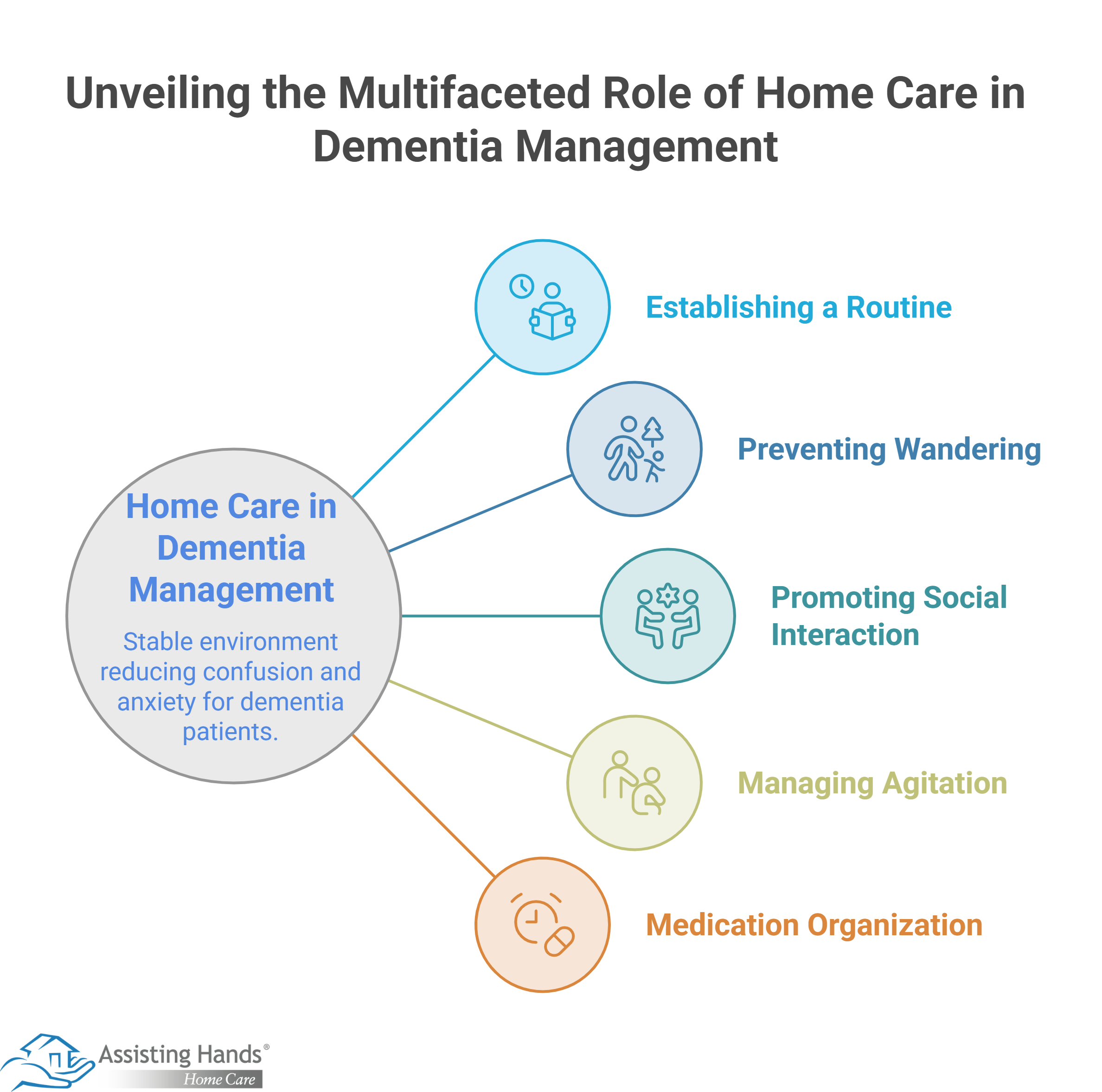
Home care plays a pivotal role in managing dementia symptoms by creating a stable, familiar environment that significantly reduces confusion and anxiety for dementia patients. By providing consistent supervision and personalized assistance, caregivers help individuals maintain their daily routines and safety while living with dignity. This approach allows family members to focus on their relationship with their senior loved one rather than solely on the demands of caregiving.
How Does Establishing a Routine Reduce Anxiety?
One of the most effective ways to manage dementia symptoms is through the implementation of a structured daily routine. Memory loss often leads to feelings of chaos and uncertainty, which can manifest as anxiety or aggression. Home care professionals are trained to establish and maintain predictable schedules for waking up, meals, activities, and bedtime.
When your loved one knows what to expect throughout the day, his or her cognitive load is reduced. This consistency can anchor your loved one in time and space, often resulting in fewer behavioral outbursts and a calmer demeanor.
Can Home Care Prevent Dangerous Wandering?
Wandering is a common and dangerous symptom associated with various stages of dementia. Home care providers ensure safety by offering constant supervision and monitoring, which prevents your loved one from leaving the house unaccompanied or entering unsafe areas of the home.
Caregivers employ several strategies to manage this behavior:
- Redirecting attention – Gently guiding your loved one to a new activity when he or she shows signs of restlessness
- Securing the environment – Ensuring doors are locked and pathways are clear of tripping hazards
- Encouraging exercise – Engaging your loved one in physical activity during the day to reduce restlessness at night
Caring for seniors with dementia can be challenging for family caregivers. Luckily, there is dementia care Portland families can rely on. Professional dementia caregivers help seniors with dementia stay safe and comfortable at home by preventing wandering, providing cognitive stimulation, and assisting with household chores.
Does Social Interaction Reduce the Risk of Cognitive Decline?
Isolation can accelerate the progression of dementia symptoms, leading to depression and faster cognitive decline. Home caregivers provide essential companionship and social stimulation that might otherwise be difficult for family members to provide around the clock.
Caregivers engage clients in meaningful conversations, look through photo albums, play music, or participate in simple games and puzzles. These interactions keep the brain active and can preserve language skills and memory for a longer period.
How Do Caregivers Manage Agitation during Daily Tasks?
Activities of daily living (ADLs), such as bathing, dressing, and eating, are common triggers for agitation in dementia patients. The loss of independence and the confusion surrounding these tasks can be frustrating. Professional home caregivers are trained in techniques to handle these situations with patience and empathy.
Instead of rushing your loved one, a caregiver will break tasks down into small manageable steps and offer reassurance throughout the process. By handling these sensitive tasks with professional care, caregivers minimize stress and prevent the escalation of aggressive behaviors.
Performing daily tasks while simultaneously managing the symptoms of a serious illness can be challenging for seniors. The Portland 24-hour care experts at Assisting Hands Home Care are available 24/7 to make sure your loved one has the care he or she needs to remain safe and comfortable while aging in place.
Is Medication Organization Part of Dementia Home Care?
Adhering to a medication schedule is critical for managing both the underlying dementia and any co-occurring health conditions. Missed doses can lead to a sudden worsening of symptoms or hospitalization.
While the scope of practice varies by state and qualification level, home care providers generally ensure clients take the right medication at the right time. They can provide reminders, log intake, and watch for side effects, ensuring the medical aspect of symptom management remains consistent.
The type of home care service Portland seniors need can vary. Some need assistance a few hours a day, while others require more extensive around-the-clock assistance. At Assisting Hands Home Care, we tailor our care plans based on each senior’s individual care needs, and the plans can be adjusted at any time. We are a trusted provider of respite and 24-hour care, and we also offer specialized Alzheimer’s, dementia, Parkinson’s, and stroke care for seniors. If you need professional care for your loved one, reach out to one of our Care Specialists today.
Frequently Asked Questions
Is home care better than a nursing home for dementia patients?
+
For many individuals, home care is preferable because remaining in a familiar environment minimizes the confusion and stress often caused by moving to a new facility.
How many hours of home care are typically needed?
+
The hours required vary greatly depending on the stage of dementia. Early stages may require only a few hours of support daily, while advanced stages often necessitate 24-hour supervision.
Can home caregivers administer injections or change sterile dressings?
+
Standard home caregivers generally provide nonmedical support. However, home health nurses can be hired to perform skilled medical tasks like injections or wound care.
What happens if the regular caregiver calls in sick?
+
Reputable home care agencies typically have a roster of backup caregivers to ensure your loved one is never left without necessary support.
