
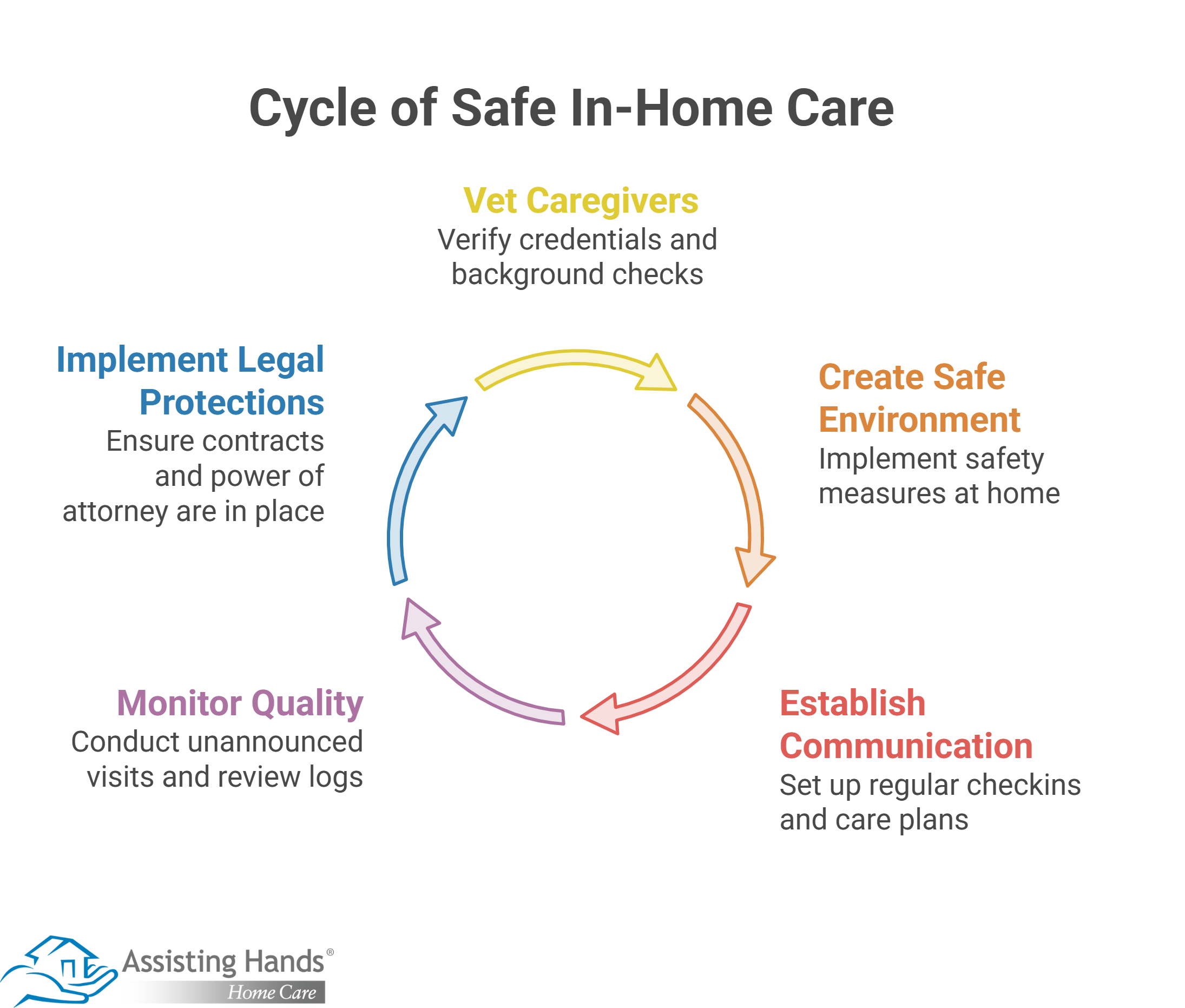
Ensuring safety for seniors receiving in-home care requires thorough caregiver vetting, clear communication protocols, and regular monitoring of both the care environment and the quality of service provided. Families can take proactive steps to create secure, supportive settings that prioritize their senior loved ones’ wellbeing. This guide outlines the essential measures to help you establish and maintain a safe in-home care experience.
What Should You Look for when Hiring a Caregiver?
Selecting the right caregiver is the foundation of safe in-home care. Start by verifying credentials, certifications, and training. Look for caregivers with:
- Valid certifications – CPR, first aid, and specialized training in dementia or mobility assistance if needed
- Background checks – Criminal history and reference verification to ensure trustworthiness
- Experience – A proven track record with seniors who have similar care needs
- Compatibility – A personality and communication style that aligns with your loved one’s preferences
Consider using licensed home care agencies that conduct rigorous screening and provide ongoing supervision. If hiring independently, invest time in multiple interviews and trial periods to assess the caregiver’s competence and rapport with your family member.
For many seniors in northwest Oregon, Portland 24-hour home care is an essential component of aging in place safely and comfortably. However, it’s important for them to have caregivers they can trust and rely on. At Assisting Hands Home Care, we extensively screen all of our caregivers and only hire those who have experience in the senior home care industry. Our strict requirements ensure seniors can remain in the comfort of home with a reduced risk of injury or serious illness.
How Can You Create a Safe Home Environment?
A well-prepared home reduces the risk of accidents and supports independent living. Conduct a thorough safety assessment focusing on:
- Fall prevention – Remove tripping hazards like loose rugs, install grab bars in bathrooms, and ensure adequate lighting throughout the home.
- Accessibility – Arrange furniture to create clear pathways, especially for seniors using walkers or wheelchairs.
- Emergency preparedness – Keep emergency contact numbers visible, install smoke detectors and carbon monoxide alarms, and ensure easy access to medications and medical devices.
- Security measures – Install secure locks, consider a home security system, and provide the caregiver with emergency protocols.
Regular home safety audits help caregivers identify new risks as mobility or cognitive abilities change over time.
One of the most challenging tasks of helping an elderly relative age in place safely and comfortably is researching agencies that provide home care. Families can turn to Assisting Hands Home Care for reliable, high-quality Portland homecare for aging adults. We offer 24-hour care for seniors who require extensive assistance, and we also offer respite care for family caregivers who need a break from their caregiving duties.
What Communication Practices Promote Safety?
Open, consistent communication among family members, caregivers, and healthcare providers is essential for maintaining safety standards. Establish clear expectations by:
- Creating a care plan – Document daily routines, medication schedules, dietary restrictions, and emergency procedures.
- Setting up regular check-ins – Schedule weekly calls or video chats to discuss any concerns, changes in condition, or incidents.
- Using care management tools – Consider apps or logbooks where caregivers can record daily activities, medications taken, and any observations.
- Encouraging transparency – Make it clear that caregivers should report accidents, behavioral changes, or health concerns immediately.
Building a collaborative relationship with caregivers fosters accountability and helps you address potential issues before they escalate.
How Can You Monitor the Quality of Care?
Ongoing monitoring ensures care standards remain high and your loved one’s needs are being met. Effective monitoring strategies include:
- Unannounced visits – Drop by at different times to observe interactions and the condition of the home.
- Installing monitoring devices – With your loved one’s consent, use cameras or medical alert systems to track safety and wellbeing.
- Reviewing care logs – Regularly check documentation of meals, medications, activities, and any incidents.
- Soliciting feedback – Ask your family member about his or her comfort level, satisfaction with care, and any concerns he or she may have.
- Engaging third-party assessments – Periodic evaluations by a case manager or healthcare professional can provide an objective perspective.
Stay alert to warning signs such as unexplained injuries, changes in hygiene, mood shifts, or reluctance to be alone with the caregiver.
What Legal and Financial Protections Should Be in Place?
Protecting your loved one legally and financially is a critical component of safe in-home care. Take these steps to safeguard their interests:
- Written contracts – Ensure all care agreements are documented, including duties, hours, payment terms, and termination clauses.
- Power of attorney – Designate a trusted family member to make healthcare and financial decisions if your loved one becomes unable to do so.
- Insurance coverage – Verify the caregiver or agency carries liability insurance and workers’ compensation.
- Financial oversight – Monitor bank accounts and credit reports for unusual activity, and consider limiting access to financial information.
Consulting with an elder law attorney can help you navigate complex legal considerations and protect your family member from exploitation or abuse.
Safety is an even greater concern for aging adults living with Alzheimer’s or another form of dementia. Caring for seniors with dementia can be challenging for family caregivers. Luckily, there is dementia home care Portland families can rely on. Professional dementia caregivers help seniors with dementia stay safe and comfortable at home by preventing wandering, providing cognitive stimulation, and assisting with household chores. To hire a dedicated caregiver, call Assisting Hands Home Care today.
Frequently Asked Questions
How can I ensure my loved one’s medications are managed safely?
+
Use a locked medication organizer, maintain an updated medication list, require caregivers to log each dose taken, and schedule regular medication reviews with a healthcare provider.
What should be included in a caregiver’s daily log?
+
The log should document medications taken, meals served, activities completed, vital signs if applicable, behavioral observations, and any incidents or concerns that arose during the shift.
Should I use a home care agency or hire an independent caregiver?
+
Agencies typically conduct background checks, provide insurance, and offer backup caregivers, but they may cost more. Independent caregivers can be more affordable but require you to handle all vetting and legal responsibilities.
How often should I visit my loved one receiving in-home care?
+
Visit as frequently as possible, varying the times to get a complete picture of the care being provided. At minimum, aim for weekly visits with additional phone or video check-ins.
What are the warning signs of caregiver abuse or neglect?
+
Watch for unexplained bruises, sudden weight loss, poor hygiene, withdrawal, or fearfulness around the caregiver. Trust your instincts and investigate any concerns immediately.
