
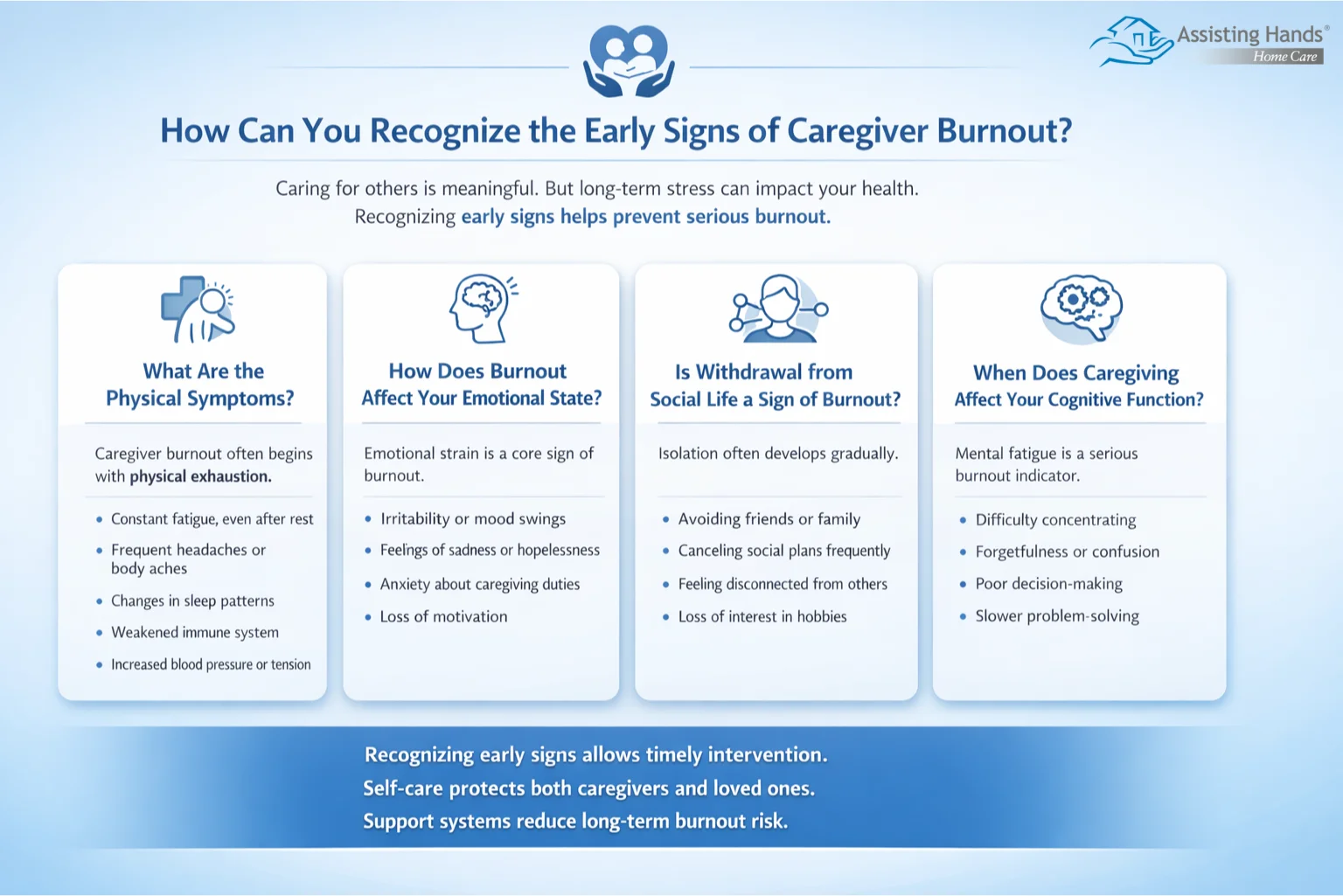
Caregiver burnout shows up as persistent physical exhaustion, emotional strain, social withdrawal, and mental fog caused by prolonged caregiving stress. Caring for a senior loved one is a profound act of love and dedication, but it often comes at a steep personal cost. When the demands of caregiving consistently outweigh your physical and emotional reserves, burnout can set in, affecting both your wellbeing and the quality of care you provide. Identifying the early warning signs is the first step toward reclaiming your health and finding a sustainable balance.
What Are the Physical Symptoms of Caregiver Burnout?
Your body often signals distress long before your mind acknowledges it. Chronic stress triggers a release of cortisol and adrenaline, which, over time, can wreak havoc on your physical health. Caregivers frequently ignore these symptoms, attributing them to aging or simple fatigue, but persistent physical issues are often a red flag.
Watch for these physical indicators:
- Constant fatigue – Feeling exhausted even after a full night’s sleep or finding it difficult to get out of bed in the morning
- Sleep issues – Having insomnia, waking up frequently during the night, or sleeping too much as an escape mechanism
- Changes in appetite – Significant weight gain or loss due to stress eating or skipping meals entirely
- Frequent illness – A weakened immune system leading to frequent colds, flu, or infections that take longer than usual to heal
- Unexplained aches – Chronic headaches, back pain, or muscle tension that doesn’t seem to have a direct physical cause
If you’re feeling overwhelmed by your caregiving responsibilities, you don’t have to manage everything on your own. The type of home care service Portland seniors need can vary. Some need assistance a few hours a day, while others require more extensive around-the-clock assistance. At Assisting Hands Home Care, we tailor our care plans based on each senior’s individual care needs, and the plans can be adjusted at any time. We are a trusted provider of respite and 24-hour care, and we also offer specialized Alzheimer’s, dementia, Parkinson’s, and stroke care for seniors.
How Does Burnout Affect Your Emotional State?
Emotional exhaustion is a hallmark of burnout. You might feel like you’re on an emotional roller coaster or, conversely, completely numb. These feelings can lead to guilt, which only compounds the stress. It’s crucial to understand these emotions are symptoms of a condition, not a reflection of your character or love for the person you care for.
Common emotional warning signs include:
- Irritability and anger – Snapping at your loved one, other family members, or even strangers over minor issues
- Anxiety and dread – Feeling overwhelming worry about the future or a sense of dread when facing daily caregiving tasks
- Loss of interest – No longer finding joy in hobbies, social activities, or events that used to make you happy
- Hopelessness – Feeling trapped in your situation with no way out, often accompanied by a sense of helplessness
- Resentment – Feeling resentful toward your loved one, other family members who aren’t helping, or your situation in general
Is Withdrawal from Social Life a Sign of Burnout?
Social isolation is both a cause and a symptom of caregiver burnout. As the demands of caregiving increase, you may find yourself declining invitations, avoiding phone calls, or simply feeling too drained to interact with others. This withdrawal can create a dangerous cycle where the lack of support deepens the feelings of stress and loneliness.
Behaviors to look out for include:
- Canceling plans – Frequently backing out of social engagements at the last minute due to fatigue or guilt
- Strained relationships – Drifting away from friends and family because you feel they don’t understand your situation or because you lack the energy to maintain the connection
- Loss of support network – Feeling like you’re the only one who can provide care, leading you to reject offers of help from others
- Loneliness – Feeling alone even when you’re with others, often stemming from the belief that no one truly understands your burden
Whether you need respite from your caregiving duties or your aging loved one needs Portland live-in care, Assisting Hands Home Care can meet your family’s care needs. Our dedicated caregivers are available around the clock to provide transportation to doctor’s appointments, ensure seniors take their prescribed medications, and help with a variety of tasks in and outside the home.
When Does Caregiving Start to Affect Your Cognitive Function?
Chronic stress doesn’t just tire out your body—it also fogs your brain. Cognitive symptoms are often overlooked but can significantly impact your ability to manage caregiving duties effectively. You might find simple tasks becoming difficult or feel like you’re “losing it.”
Cognitive warning signs often manifest as:
- Difficulty concentrating – Having difficulty focusing on tasks, reading a book, or following a conversation
- Forgetfulness – Missing appointments, forgetting medication schedules, or losing track of daily to-do lists
- Indecisiveness – Finding it hard to make simple decisions, from what to cook for dinner to important medical choices
- Brain fog – A general feeling of mental cloudiness or slowness that makes processing information difficult
Frequently Asked Questions
What is respite home care, and how does it work?
Respite home care provides temporary relief for primary caregivers by offering professional care for their loved ones, either at home or in a care facility.
How can respite care prevent caregiver burnout?
It allows caregivers to take breaks, recharge, and focus on their own wellbeing, reducing stress and enhancing their ability to provide long-term care.
How often can I use respite home care services?
The frequency is flexible and depends on your needs, ranging from a few hours a week to extended periods during vacations or emergencies.
What should I look for in a respite care provider?
Choose a provider with experience, positive reviews, and the ability to meet your loved one’s specific needs and preferences.
Is respite care covered by insurance or government programs?
Some insurance plans, Medicaid, and veteran benefits may cover respite care, but it’s important to check specific eligibility and coverage details.
Family caregivers need to care for their own wellbeing. If you’re caring for an aging loved one and are feeling overwhelmed, consider hiring a professional caregiver to provide respite care Portland families can trust. To prevent burnout, you can turn to Assisting Hands Home Care. One of our professional caregivers can assist your loved one at home while you take a nap, go to work, run errands, or go on vacation. To learn more about our reliable, compassionate in-home care services, contact us today.
