
Marriage vows mention “in sickness and in health,” but few people are truly prepared for the reality of becoming full-time caregivers for their partners. This profound shift in your relationship dynamic can bring a complex wave of emotions that can be difficult to navigate alone.
The Shift from Partner to Caregiver
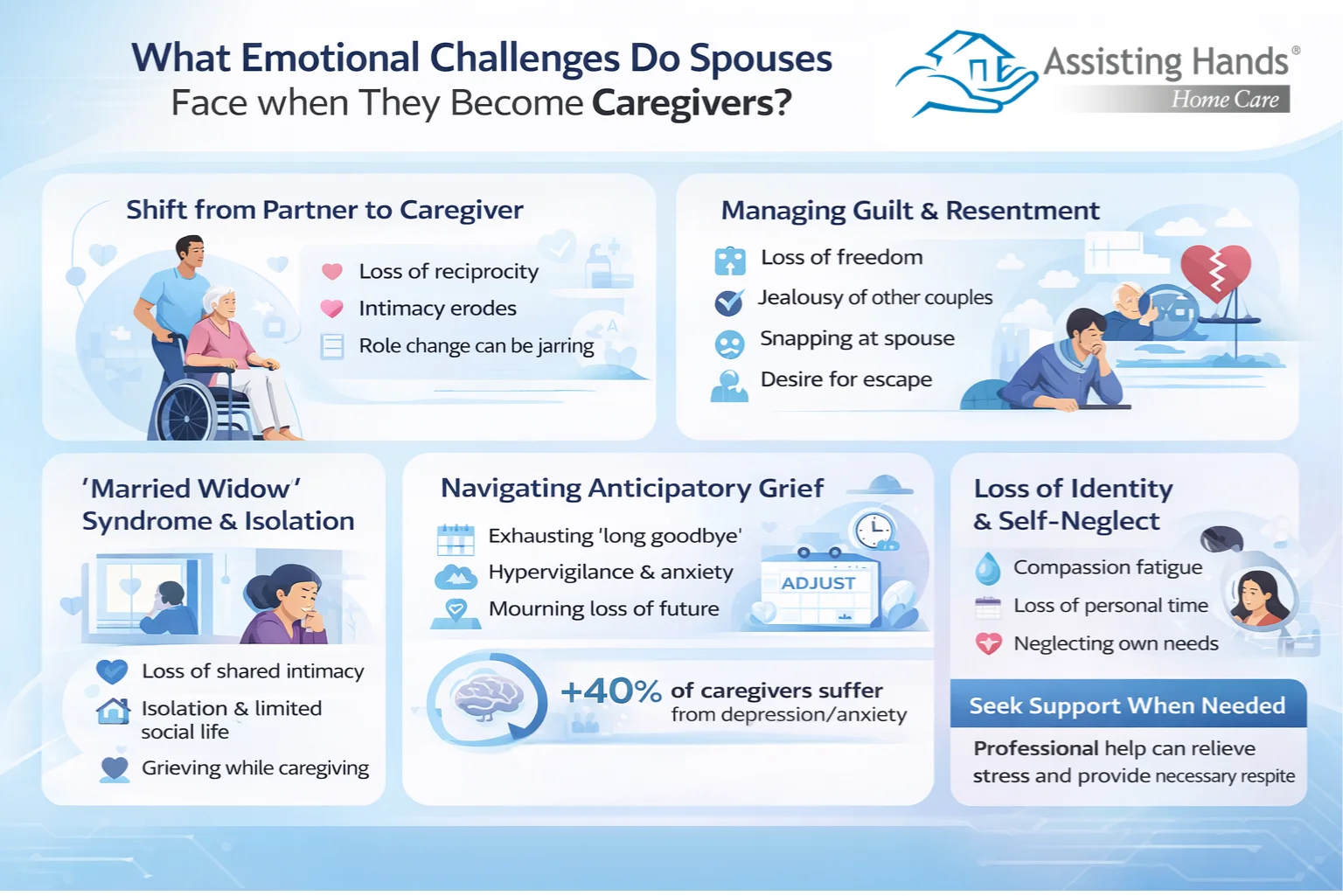
One of the most jarring adjustments is the fundamental change in the nature of your relationship. You’re no longer just a husband, wife, or partner. You’ve become a nurse, a scheduler, and a fierce advocate. This transition can erode the intimacy and equal footing that previously defined your marriage.
It’s common to mourn the romantic aspect of the relationship even while your spouse is still physically present. You might feel like you’re losing your best friend to a patient–caregiver dynamic, where conversations about dreams and daily events are replaced by discussions about medications, appointments, and symptoms. This loss of reciprocity—where you no longer lean on each other equally—can leave a deep emotional void.
Managing Guilt and Resentment
Caregivers frequently battle a cycle of guilt and resentment, feelings that are often kept secret due to shame. You may feel resentful of the illness for stealing your future or even resentful of your spouse for his or her dependence on you. These feelings are often immediately followed by intense guilt for having them in the first place.
Common triggers for these conflicting emotions include:
- Loss of freedom – Feeling trapped by the constant demands of caregiving and unable to leave the house or pursue personal hobbies
- Jealousy – Seeing other couples enjoying their retirement or golden years while your life revolves around your spouse’s care
- Impatience – Snapping at your spouse over small things and then feeling terrible about it later
- Desire for escape – Fantasizing about a life without these responsibilities, which can lead to profound self-judgment
The “Married Widow” Syndrome and Isolation
Spousal caregiving can be an incredibly isolating experience. Even if you’re constantly with your partner, you may feel profoundly lonely if he or she can no longer communicate effectively or share in emotional intimacy. Psychologists sometimes refer to this as the “married widow” syndrome—grieving the loss of the person you knew while still caring for the person he or she has become.
Externally, social circles often shrink. Friends may stop visiting because they’re uncomfortable with the illness or assume you’re too busy. You might decline invitations because it’s too difficult to arrange respite care or because you’re simply too exhausted to socialize. This isolation creates a dangerous feedback loop where your entire world shrinks to the four walls of your home, amplifying feelings of depression and anxiety.
If you’re the primary caregiver for your spouse, Portland respite care is available when you need time away from your important caregiving duties. At Assisting Hands Home Care, our home caregivers are available 24 hours a day, 7 days a week to help your loved one manage everyday tasks in the comfort of home while you have the chance to take a much-needed break.
Unlike sudden loss, caring for a spouse with a chronic or terminal illness involves a long, slow goodbye. This is known as anticipatory grief—the process of mourning a loss before it has actually occurred. You’re grieving the loss of your shared future, your retirement plans, and the personality traits your spouse may have already lost to illness.
This state of limbo is emotionally exhausting. You must remain hopeful and present for daily care while simultaneously processing the inevitable decline. It can cause hypervigilance, where you’re constantly waiting for the “other shoe to drop,” making it nearly impossible to relax or find moments of peace.
Consider hiring a professional caregiver if you need help caring for your spouse. Portland senior care experts are available to provide high-quality care to seniors on an as-needed basis. From assistance with mobility and exercise to providing transportation to the doctor’s office and social events, there are a variety of ways professional caregivers can help your aging loved one continue to live independently.
Loss of Identity and Self-Neglect
When your primary role becomes caring for another, it’s easy to lose sight of who you are outside of that responsibility. Your identity as a professional, a friend, or a community member often takes a backseat to your spouse’s all-consuming needs. Over time, this self-neglect can lead to compassion fatigue, where your ability to empathize is depleted because you’ve poured everything you have into someone else without refilling your own cup.
Whether you need respite from your caregiving duties or your loved one needs live-in care, Assisting Hands Home Care Portland can meet your family’s care needs. Our dedicated caregivers are available around the clock to provide transportation to doctor’s appointments, ensure seniors take their prescribed medications, and help with a variety of tasks in and outside the home. To learn about our high-quality in-home care options, give us a call today.
