
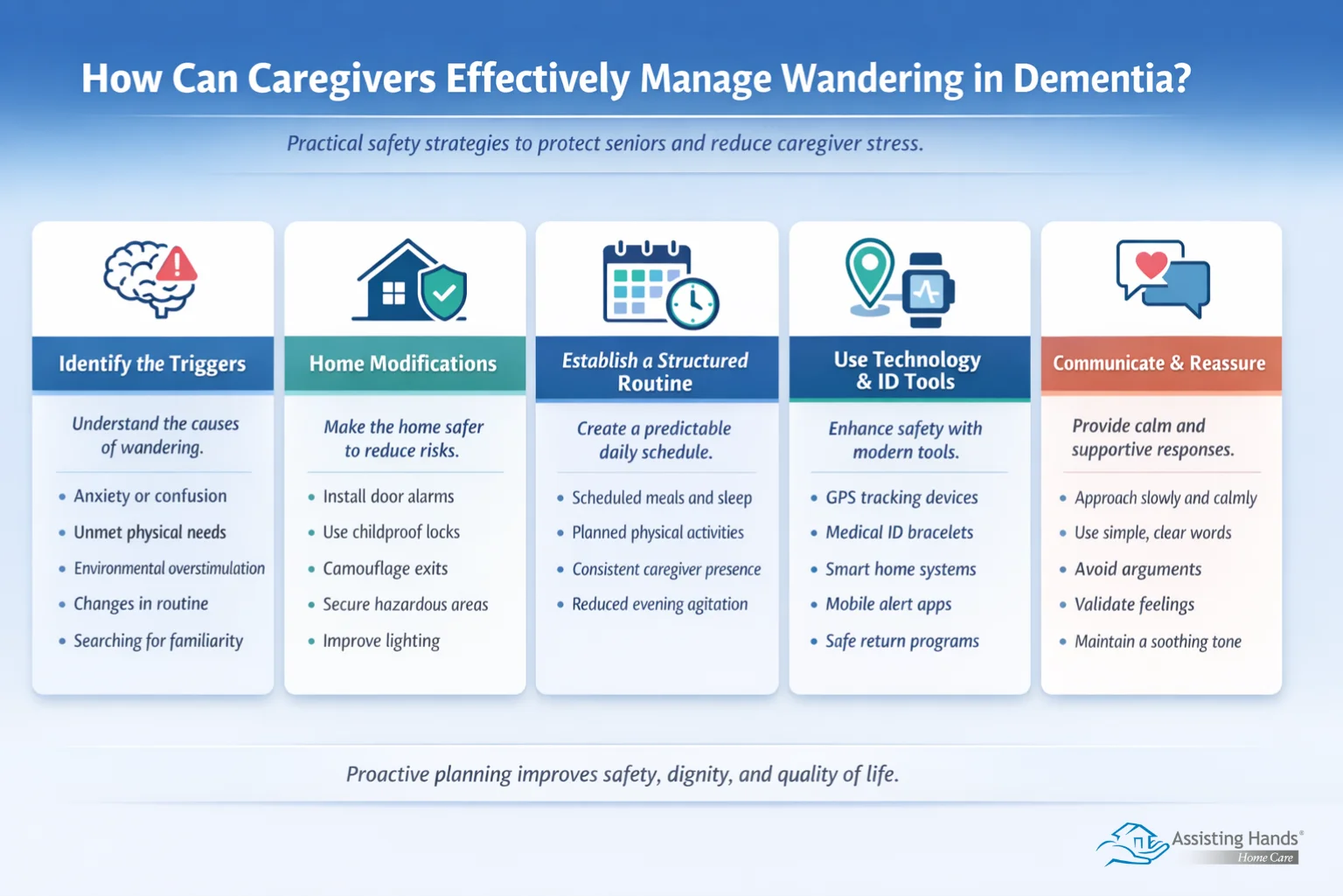
Wandering in dementia is typically caused by confusion, unmet needs, or past routines. The most effective ways to manage it include identifying triggers, securing the home, establishing structured routines, using technology for safety, and responding with reassurance and validation. These strategies reduce risks and help caregivers keep their loved ones safe.
How Can You Identify the Triggers that Cause Wandering in Dementia?
The first step in managing wandering is understanding why it happens. A person with dementia rarely wanders without a reason. Usually, the individual is trying to fulfill a need or follow a past routine. For example, your loved one might be looking for a bathroom, searching for food, or attempting to “go to work” as he or she did for decades.
Keep a journal to track when wandering occurs. Note the time of day, the environment, and what your loved one was doing beforehand. Common triggers include:
- Basic needs – Hunger, thirst, or the need to use the restroom
- Discomfort – Pain, specialized medication side effects, or feeling too hot or cold
- Boredom – A lack of stimulating activities or social interaction
- Past routines – The internal clock telling your loved one it’s time to leave for a job or pick up children
If you’re concerned about the possibility of your loved one wandering, consider hiring a professional caregiver to keep him or her safe. The type of home care Portland seniors need can vary. Some need assistance a few hours a day, while others require more extensive around-the-clock assistance. At Assisting Hands Home Care, we tailor our care plans based on each senior’s individual care needs, and the plans can be adjusted at any time. We are a trusted provider of respite and 24-hour care, and we also offer specialized Alzheimer’s, dementia, Parkinson’s, and stroke care for seniors.
What Home Modifications Can Reduce Wandering Risks for Loved Ones?
Modifying the home is crucial to prevent a loved one from leaving unnoticed. The goal is to make exits less accessible or less obvious without making the home feel like a prison. Simple visual tricks and hardware changes can make a significant difference.
Consider installing slide bolts or deadbolts either high up or low down on external doors, as people with dementia often only look for locks at eye level. You can also place dark mats in front of doors. To a person with dementia, a dark patch may look like a hole, which can deter him or her from stepping on it. Other effective modifications include:
- Door alarms – Simple battery-operated alarms that chime when a door is opened
- Camouflage – Painting the door and the doorknob the same color as the wall or placing a “Stop” sign or a curtain over the door
- Fencing – Ensuring the backyard is securely fenced with locked gates so your loved one can go outside safely
Certain age-related conditions can make it more challenging for older adults to age in place safely and comfortably, but experts in live-in care for Portland seniors are available around the clock to help aging adults manage their health. Whether your loved one is living with dementia or recovering from a stroke, you can trust the professional caregivers from Assisting Hands Home Care to enhance his or her quality of life.
How Does Establishing a Structured Routine Prevent Wandering?
Restlessness often leads to wandering. Creating a predictable daily schedule provides a sense of security and reduces anxiety. Structure the day to include meaningful activities that burn off excess energy and keep the mind engaged.
Exercise is particularly helpful. A daily walk (with supervision) or light seated exercises can reduce agitation and enhance sleep at night, which is when “sundowning” and wandering often occur. When planning the day, consider these factors:
- Sleep hygiene – Limit daytime naps to ensure your loved one is tired enough to sleep through the night.
- Engaging activities – Involve your loved one in simple household chores like folding laundry or drying dishes.
- Quiet time – Reduce noise and clutter in the evening to promote calmness.
What Technology and Identification Tools Enhance Safety for Wandering Seniors?
Despite the best precautions, there’s always a risk that a person with dementia may manage to leave the home. Being prepared for this scenario is vital for a quick and safe return. Ensure your loved one always carries some form of identification, even inside the house.
Medical ID bracelets specifically designed for dementia patients are essential. These should include your loved one’s name, his or her medical condition (e.g., “memory impaired”), and your contact number. Beyond physical ID, modern technology offers robust safety nets:
- GPS trackers – Wearable devices (watches, pendants, or shoe insoles) allow you to track your loved one’s location in real time via a smartphone app.
- Community alert systems – Register with programs like MedicAlert or local Silver Alert systems.
- Recent photos – Keep a current close-up photo of your loved one on hand to share with law enforcement or neighbors in the event he or she goes missing.
How Should Caregivers Communicate and Reassure Someone Who Is Wandering?
If you catch your loved one trying to leave or pacing anxiously, how you react matters. Avoid correcting your loved one harshly or using logic to explain why he or she can’t go out, as this often escalates agitation. Instead, use validation therapy.
Acknowledge your loved one’s feelings and the reality he or she is experiencing. If your loved one says he or she needs to go to work, validate that feeling by saying “You’ve always been such a hard worker.” Then redirect your loved one’s attention. You might say “The office is closed for the night. Let’s have some ice cream while we wait for it to open.” Focus on providing reassurance that your loved one is safe and you’re there to help him or her.
Frequently Asked Questions
How can dementia home care services prevent wandering?
Caregivers create safe environments, establish routines, and provide supervision to reduce the risk of wandering.
What are common triggers for wandering in individuals with dementia?
Wandering can be triggered by confusion, stress, boredom, or the need to fulfill a perceived task or goal.
Can caregivers respond effectively if wandering occurs?
Yes, caregivers are trained to calmly redirect individuals and ensure their safety while addressing the underlying cause of wandering.
How do home care services make the home safer for individuals prone to wandering?
Caregivers can suggest safety measures like door alarms, locks, and clear signage to prevent wandering and ensure a secure environment.
What should families do if their loved ones have a history of wandering?
Families should share this information with caregivers, implement safety precautions, and work together to create structured and engaging daily routines.
Caring for seniors with dementia can be challenging for family caregivers. Luckily, there is dementia care Portland families can rely on. Professional dementia caregivers help seniors with dementia stay safe and comfortable at home by preventing wandering, providing cognitive stimulation, and assisting with household chores. If you need professional care for your senior loved one, Assisting Hands Home Care is just a phone call away. Reach out to one of our Care Specialists today.
