
Early dementia isn’t simply a memory problem—it’s a condition that gradually erodes a person’s ability to make safe, sound decisions even when reminders are in place. Families often underestimate this distinction early on, assuming notes on the fridge or daily phone calls will be enough to keep their senior loved ones safe. Understanding why supervision is essential, not optional, can make a critical difference in the quality of care provided.
Why Are Reminders Not Enough for Someone with Early Dementia?
Reminders rely on a person’s ability to recognize, process, and act on information—all of which are compromised by dementia. Even in the early stages, your loved one may:
- Read a reminder but forget he or she read it moments later
- Misinterpret written instructions due to cognitive confusion
- Acknowledge a reminder without understanding its urgency
- Complete a task incorrectly despite being reminded to do it
Reminders assume the brain can bridge the gap between reading a message and executing an appropriate response. For someone with dementia, that bridge is weakening.
If your loved one has recently been diagnosed with dementia, now is the best time to plan for professional care at home. The type of home care Portland seniors need can vary. Some need assistance a few hours a day, while others require more extensive around-the-clock assistance. At Assisting Hands Home Care, we tailor our care plans based on each senior’s individual care needs, and the plans can be adjusted at any time. We are a trusted provider of respite and 24-hour care, and we also offer specialized Alzheimer’s, dementia, Parkinson’s, and stroke care for seniors.
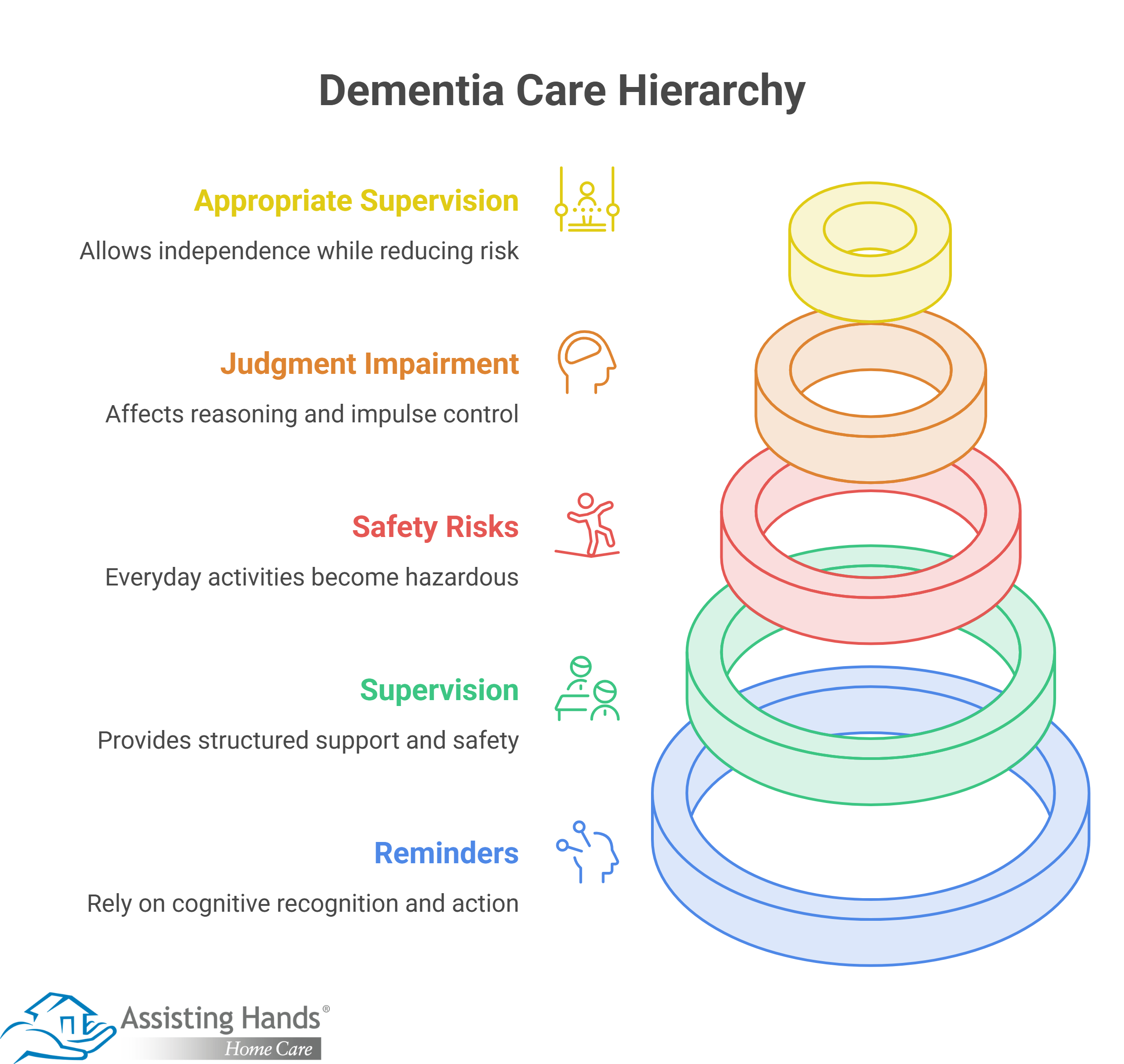
What Safety Risks Arise without Proper Supervision?
Without consistent supervision, everyday activities can quickly become hazardous. Common risks include:
- Cooking accidents – Leaving the stove on, forgetting boiling water, or misusing kitchen appliances
- Medication errors – Taking double doses, skipping medications, or mixing up prescriptions
- Falls and injuries – Poor judgment about physical limitations, leading to dangerous falls
- Wandering – Leaving the home and becoming disoriented or lost
- Financial vulnerability – Susceptibility to scams or making large unexplained purchases
These aren’t hypothetical risks. They’re among the most frequently reported incidents involving people with early-stage dementia living without adequate oversight.
How Does Early Dementia Affect Judgment and Decision-Making?
Memory loss is the most visible symptom of dementia, but impaired judgment is often just as dangerous. Early dementia affects the frontal lobe, which governs reasoning, planning, and impulse control. This means your loved one may:
- Believe he or she is managing perfectly well when that isn’t true
- Make poor decisions with genuine confidence
- Have difficulty assessing risk in familiar situations
- React unpredictably in stressful or unfamiliar circumstances
This disconnect between perceived ability and actual ability is precisely why supervision—not reminders—is the appropriate response.
What Does Appropriate Supervision Look Like?
Supervision doesn’t mean removing all independence. The goal is to provide a structured layer of support that allows a person with dementia to retain dignity while reducing risk. Effective supervision may include:
- Regular in-person check-ins from a family member or professional caregiver
- In-home care services that assist with daily tasks and monitor safety
- Structured daily routines that reduce the need for real-time decision-making
- Smart home technology, such as stove shutoff devices and GPS tracking, used alongside human oversight
- Memory care communities for those who require more consistent monitoring
The right level of supervision will depend on your loved one’s symptoms, living situation, and support network.
Caring for a loved one with early-onset dementia or another type of cognitive decline can be challenging for family members. Portland overnight care and respite care professionals can assist seniors with a wide array of daily tasks, offering family caregivers the chance to focus on other personal responsibilities or take a break to prevent burnout. Whether it’s for a few hours a day or a few days a week, home care is the perfect solution for family caregivers who are feeling overwhelmed.
When Should Families Move from Reminders to Supervision?
The shift from reminders to supervision should happen as soon as safety concerns arise, not after an incident occurs. Key signs that supervision is needed include:
- Repeated missed medications or appointments despite reminders
- Evidence of unsafe behavior at home (e.g., burns, unexplained bruises)
- Increasing confusion about time, place, or familiar people
- Withdrawal from routine activities or decreasing personal hygiene
- Expressions of fear, paranoia, or significant mood changes
Waiting for a crisis to trigger action is one of the most common—and preventable—mistakes families make.
Aging in place can present a few challenges for seniors living with dementia. However, with professional dementia home care that offers Portland families peace of mind, they can still live independently at home. Families can rely on Assisting Hands Home Care to provide their elderly loved ones with mental and social stimulation, timely medication reminders, assistance with meal prep, and much more. Our caregivers are available around the clock to help your loved one live a happier and healthier life. To create a customized in-home care plan for your loved one, call us today.
Frequently Asked Questions
Can a person with early dementia live alone safely?
+
It depends on the severity of symptoms, but many people with early dementia benefit from some level of daily oversight. Regular professional assessments can help you determine when independent living is no longer safe.
How is early dementia different from normal aging?
+
Normal aging may cause occasional forgetfulness, but dementia involves a consistent and progressive decrease in memory, reasoning, and daily functioning that goes well beyond typical age-related changes.
What’s the difference between a caregiver and a caregiver for someone with dementia?
+
A caregiver assists with daily tasks such as bathing, meals, and medication, while dementia care refers more broadly to monitoring safety and wellbeing. In practice, these roles often overlap significantly.
How can I talk to my loved one about needing more supervision without upsetting him or her?
+
Frame conversations around safety and support rather than loss of independence. Involving a doctor or geriatric care specialist in the discussion can also reduce resistance.
When should I consider a memory care facility?
+
Memory care is worth exploring when in-home supervision can no longer consistently meet your loved one’s safety needs.
