
Helping a senior with dementia maintain personal hygiene involves establishing consistent routines, creating a safe and comfortable bathroom environment, using clear communication, and encouraging as much independence as possible. A calm and patient approach can reduce anxiety while preserving dignity during daily care activities.
Caring for a senior loved one with dementia presents unique challenges, with personal hygiene often becoming a significant source of stress for both you and your loved one. As cognitive functions decline, the simple steps involved in bathing, brushing teeth, or dressing can become confusing or frightening, requiring a compassionate and strategic approach to care.
Why Is a Consistent Hygiene Routine Important in Dementia Care?
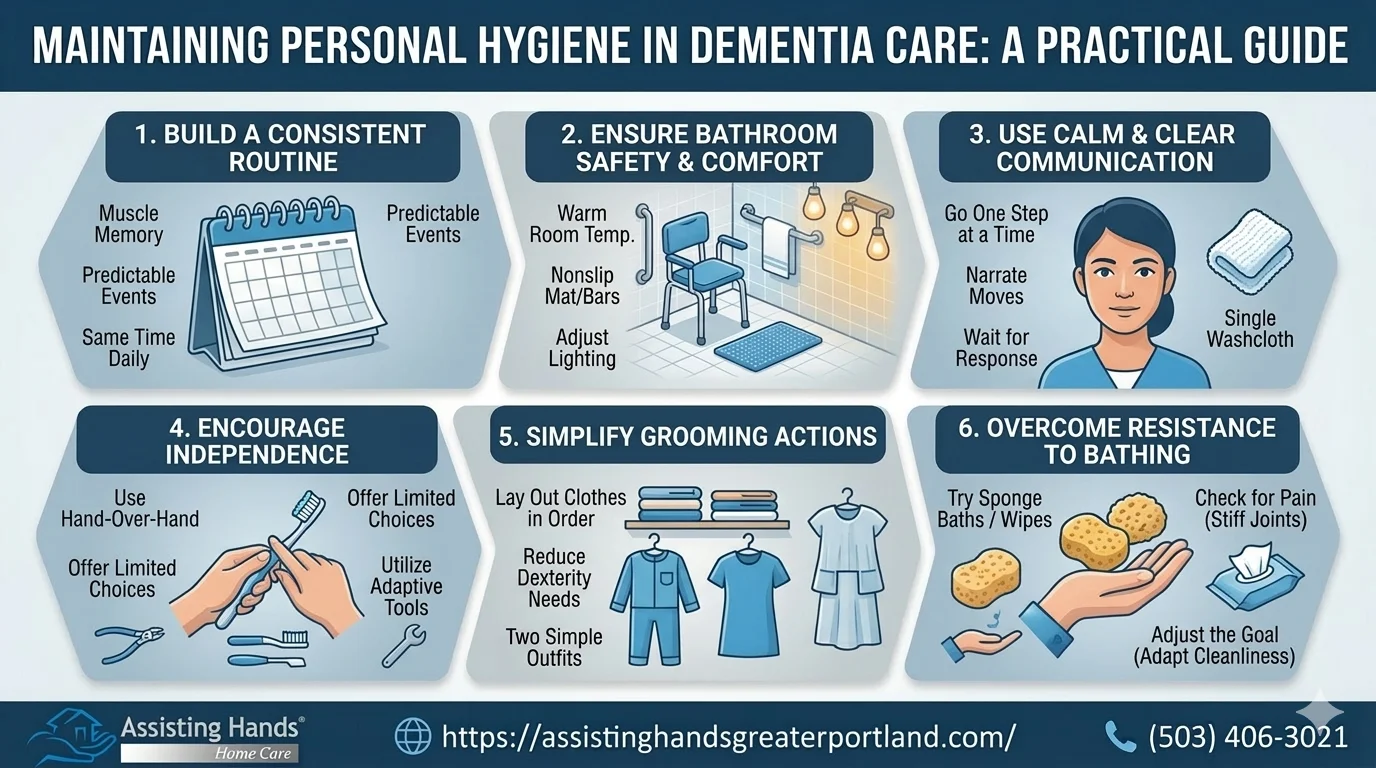
Consistent routines help dementia patients feel more secure and reduce confusion during daily care activities. Routine is the bedrock of dementia care. Dementia patients often rely on muscle memory and established habits when their short-term memory fails. Disrupting a lifelong schedule can cause unnecessary anxiety and resistance. If your loved one has always showered in the morning, moving that activity to the evening might cause confusion or agitation.
By keeping hygiene activities at the same time every day, you normalize the event. It becomes a predictable part of the day rather than a surprise interruption.
- Stick to your loved one’s schedule – Try to match the hygiene routine to the time of day your loved one is most alert and agreeable.
- Create cues – Use nonverbal cues to signal it’s time for care, such as playing familiar music or laying out towels in a visible spot.
- Don’t rush – Allow ample time for the process so neither of you feels pressured or stressed.
If your senior loved one has been diagnosed with a serious condition and needs help with tasks like meal prep, transportation, bathing, and grooming, reach out to Assisting Hands Home Care, a leading provider of Portland in-home care. We also offer comprehensive care for seniors with dementia, Alzheimer’s, and Parkinson’s.
How Can You Make the Bathroom Safer and More Comfortable?
Creating a safe and comfortable bathroom environment by ensuring a comfortable temperature, installing safety features, adjusting lighting, and covering mirrors can significantly reduce anxiety and resistance to hygiene tasks. For someone with dementia, the bathroom can be a terrifying place. It’s often cold, filled with hard surfaces, and involves nudity, which can make your loved one feel vulnerable. Visual perception changes in dementia patients can also make a dark bath mat look like a hole in the floor or the reflection in a mirror look like a stranger.
Making the environment feel safe and spa-like can drastically reduce resistance.
- Check the temperature – Ensure the room is warm before your loved one undresses. Check the water temperature to ensure it’s comfortable—not too hot or too cold.
- Install safety features – Use nonslip mats, shower chairs, and grab bars to reduce the fear of falling.
- Adjust lighting – Ensure the room is well lit to reduce shadows that might look frightening.
- Cover mirrors – If your loved one becomes agitated by his or her reflection, consider covering the bathroom mirror or removing it.
In addition to assistance with personal hygiene, a professional caregiver can help your parent with a variety of daily tasks. Whether you need respite from your caregiving duties or your aging loved one needs live-in care in Portland, Assisting Hands Home Care can meet your family’s care needs. Our dedicated caregivers are available around the clock to provide transportation to doctor’s appointments, ensure seniors take their prescribed medications, and help with a variety of tasks in and outside the home.
What Communication Techniques Help during Hygiene Care?
Simple, calm communication helps dementia patients understand what’s happening and reduces fear. Bathing involves many steps: undressing, stepping into the water, soaping up, rinsing, drying, and dressing again. For a dementia patient, processing all these steps at once is impossible. Caregivers should guide the process using simple, direct, and reassuring language.
Narrating your actions before you touch your loved one can help him or her understand what’s happening and reduce the shock of physical contact.
- Go one step at a time – Give short, simple instructions like “Lift your arm” or “Sit down.” Wait for your loved one to complete the action before giving the next instruction.
- Narrate your moves – Say things like “I’m going to wash your shoulder now” so your loved one isn’t startled by the sensation of the washcloth.
- Keep a calm tone – Even if you feel frustrated, try to keep your voice low, slow, and pleasant. Your stress can easily transfer to your loved one.
How Can You Encourage Independence and Simplify Grooming?
Maintaining a sense of autonomy is vital for your loved one’s dignity. Even as his or her abilities fade, allow your loved one to do as much grooming as he or she can independently. This can distract your loved one from the intrusive nature of the care and make him or her feel more in control.
Simplifying the grooming tools and choices can facilitate this independence.
- Try the hand-over-hand technique – If your loved one has forgotten the motion of brushing teeth or combing hair, place your hand over his or hers to guide the movement, then let your loved one take over if possible.
- Simplify choices – Lay out clothes in the order they should be put on. Offer only two choices of outfits to prevent decision fatigue.
- Use adaptive tools – Electric toothbrushes, pump-bottle soaps, and easy-to-grip hairbrushes can make self-care easier for those with limited dexterity.
What Should You Do if a Person with Dementia Refuses to Bathe?
Resistance to bathing is common, and caregivers should respond with patience and flexibility. There will be days when your loved one simply refuses to bathe. It’s important not to force the issue, as this can lead to physical altercations and a breakdown of trust. Understanding the root of the resistance—whether it’s pain, fear, or cold—can help you solve the problem.
Sometimes, the definition of “clean” needs to be adjusted to fit the reality of the situation.
- Try alternatives – If a shower is too overwhelming, try a sponge bath or use specialized bathing wipes.
- Check for pain – Resistance might be a reaction to physical discomfort. Ensure your loved one isn’t in pain from stiff joints or sensitive skin.
- Use distractions – Give your loved one a washcloth to hold or fold, or engage him or her in conversation about a favorite topic while you work.
Caring for seniors with dementia can be challenging for family caregivers. Luckily, there is dementia care Portland families can rely on. Professional dementia caregivers help seniors with dementia stay safe and comfortable at home by preventing wandering, providing cognitive stimulation, and assisting with household chores. If you need professional care for your loved one, Assisting Hands Home Care is just a phone call away. Reach out to one of our Care Managers today.
Frequently Asked Questions
What is dementia care?
+
Dementia care provides specialized support for individuals with dementia, focusing on their physical, emotional, and cognitive needs to enhance their quality of life.
What services are included in dementia care?
+
Services may include assistance with daily activities, memory care programs, medication reminders, and creating a safe, supportive environment.
How do I know if my loved one needs dementia care?
+
Signs include difficulty managing daily tasks, increased confusion, safety concerns, or caregiver burnout.
Are there different types of dementia care?
+
Yes, options include in-home care, adult day programs, assisted living with memory care, and specialized nursing facilities.
How can I choose the right dementia care provider?
+
Look for providers with experience in dementia care, personalized care plans, and a safe, compassionate environment tailored to your loved one’s needs.
