
The most effective way to step out of a family caregiving role is to introduce professional care gradually, maintain open communication, and allow time for adjustment. A structured transition that includes overlap, clear expectations, and emotional support ensures continuity of care while reducing stress for both you and your loved one.
How Should I Discuss the Change with My Loved One?
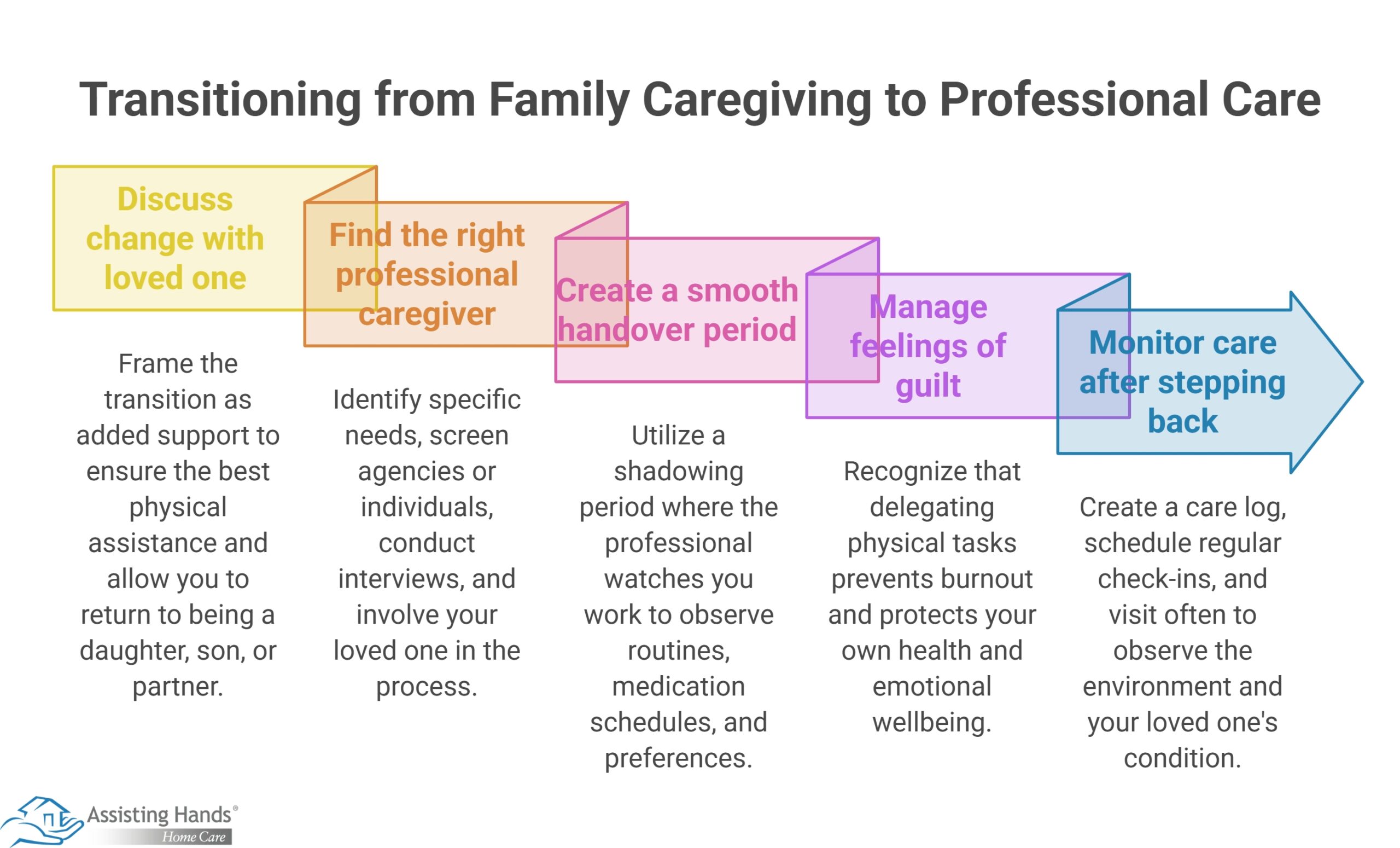
Framing the transition as added support rather than a loss of involvement can ease concerns. Start the conversation by emphasizing this change is about adding support, not removing your love or presence. Frame the professional help as a way to ensure your loved one gets the best physical assistance possible, which allows you to return to being a daughter, son, or partner rather than just a caregiver. Be honest about your own limitations and explain bringing in help will actually allow you to spend more high-quality, stress-free time together.
What Steps Should I Take to Find the Right Professional Caregiver?
Selecting the right caregiver requires careful evaluation of both qualifications and compatibility. Finding the right fit requires diligence and a focus on personality as much as skill. You’re inviting someone into a private home environment, so comfort levels are paramount.
- Identify specific needs – Make a list of tasks you currently handle, from medical needs to companionship.
- Screen agencies or individuals – Verify certifications, background checks, and references.
- Conduct interviews – Ask scenario-based questions to understand how they handle difficult situations or emergencies.
- Involve your loved one – If possible, let your loved one sit in on the final interview to see if he or she clicks with the candidate.
One of the most challenging tasks of helping an elderly relative age in place safely and comfortably is researching agencies that provide home care. Families can turn to Assisting Hands Home Care for reliable, high-quality Portland at-home care for aging adults. We offer 24-hour care for seniors who require extensive assistance, and we also offer respite care for family caregivers who need a break from their caregiving duties.
How Can I Create a Smooth Handover Period?
A gradual transition with overlap allows for greater continuity and comfort. A “cold turkey” switch is rarely effective. Instead, utilize a shadowing period where the professional watches you work. Have the new caregiver come in for a few hours while you’re still there to observe routines, medication schedules, and the small preferences that make your loved one comfortable. This overlap builds trust and allows the professional to ask questions in real time without the pressure of being alone immediately.
How Do I Manage Feelings of Guilt during the Transition?
Recognizing the value of professional support can help you reframe feelings of guilt. It’s common to feel like you’re abandoning your duties, but you must remind yourself you’re preventing burnout. Professional caregivers are trained to handle physical tasks that might be dangerous or exhausting for family members. By delegating these duties, you protect your own health and emotional wellbeing, which ultimately makes you a better support system for your loved one.
Families who find it difficult to care for their aging loved ones without assistance can benefit greatly from professional Portland overnight care or respite care for a few hours a day or a few days a week. Family caregivers who need a break from their caregiving duties can turn to Assisting Hands Home Care. Our caregivers can encourage your loved one to eat well, exercise regularly, get plenty of mental and social stimulation, and focus on other lifestyle factors that promote longevity.
How Do I Monitor Care after I Step Back?
Maintaining structured communication helps you stay informed without micromanaging. Staying involved doesn’t mean hovering. It means establishing clear communication channels.
- Create a care log – Ask the caregiver to document daily activities, meals, and mood changes.
- Schedule regular check-ins – Set aside time weekly to discuss how things are going with the agency or the caregiver.
- Visit often – Continue to visit for social reasons, which allows you to observe the environment and your loved one’s condition naturally.
Whether you need respite from your caregiving duties or your aging loved one needs 24-hour home care in Portland, Assisting Hands Home Care can meet your family’s care needs. Our dedicated caregivers are available around the clock to provide transportation to doctor’s appointments, ensure seniors take their prescribed medications, and help with a variety of tasks in and outside the home. To learn more about our highly trained caregivers, call us today.
Frequently Asked Questions
How much does professional in-home care typically cost?
+
Costs vary by location and level of care, but hourly rates generally range from $25 to $35 per hour for nonmedical home care. Insurance or Medicare may cover specific skilled nursing services, but custodial care is often paid for out of pocket.
What if my loved one refuses outside help?
+
Start with a trial period or frame the help as being for you rather than for your loved one to reduce defensiveness. Introduce the caregiver as a “friend” or “assistant” initially until a rapport is built.
How long should the transition period last?
+
A transition period of two to four weeks is ideal. This allows enough time for the new caregiver to learn the routine and for your loved one to build trust.
Is it better to hire an agency or a private individual?
+
Agencies offer more reliability with backup staff if someone calls in sick, and they handle liability insurance. Private individuals may be cheaper and offer more consistency with the same person, but you assume the role of the employer regarding taxes and background checks.
Can I hire help for just a few hours a day?
+
Yes, many agencies and private caregivers offer hourly shifts. This is a great way to start the transition or provide respite care without committing to 24/7 service.
