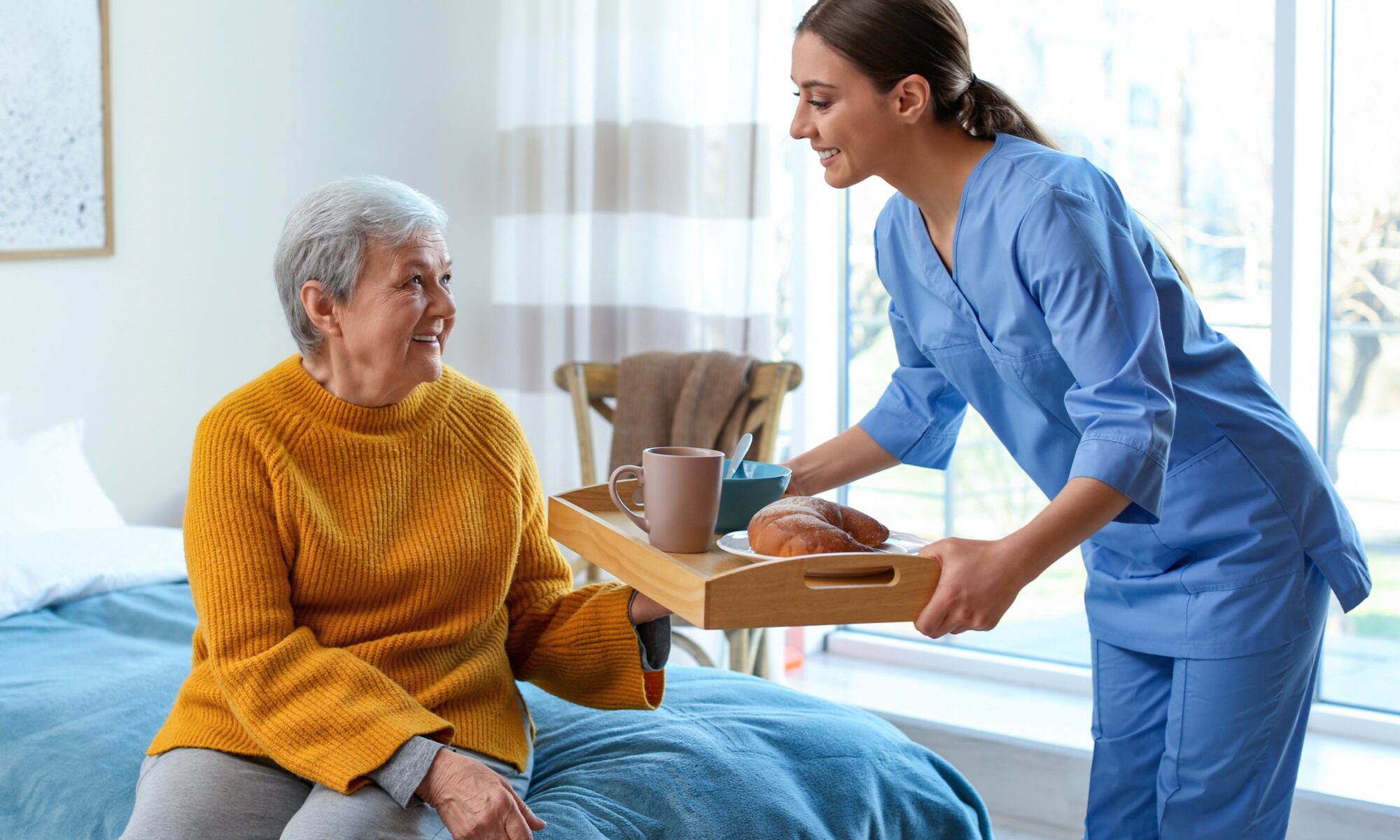
You can make mealtimes easier for a senior with special care needs by creating a calm environment, using adaptive dining tools, modifying food textures, providing respectful assistance, and encouraging hydration.
Mealtimes are about more than just nutrition. They’re moments of connection and comfort that contribute significantly to quality of life. However, for seniors with special care needs, such as dementia, mobility issues, or swallowing difficulties, dining can become a source of stress and frustration. With patience and a few strategic adjustments, you can transform these challenges into positive manageable experiences for your senior loved one.
Why Do Calm and Consistent Environments Help Seniors Eat More Easily?
The atmosphere in which a meal takes place can have a profound impact on your loved one’s appetite and ability to focus on eating. Distractions like a loud television, radio noise, or high-traffic areas can be overwhelming, particularly for those with cognitive impairments.
To foster a better dining experience:
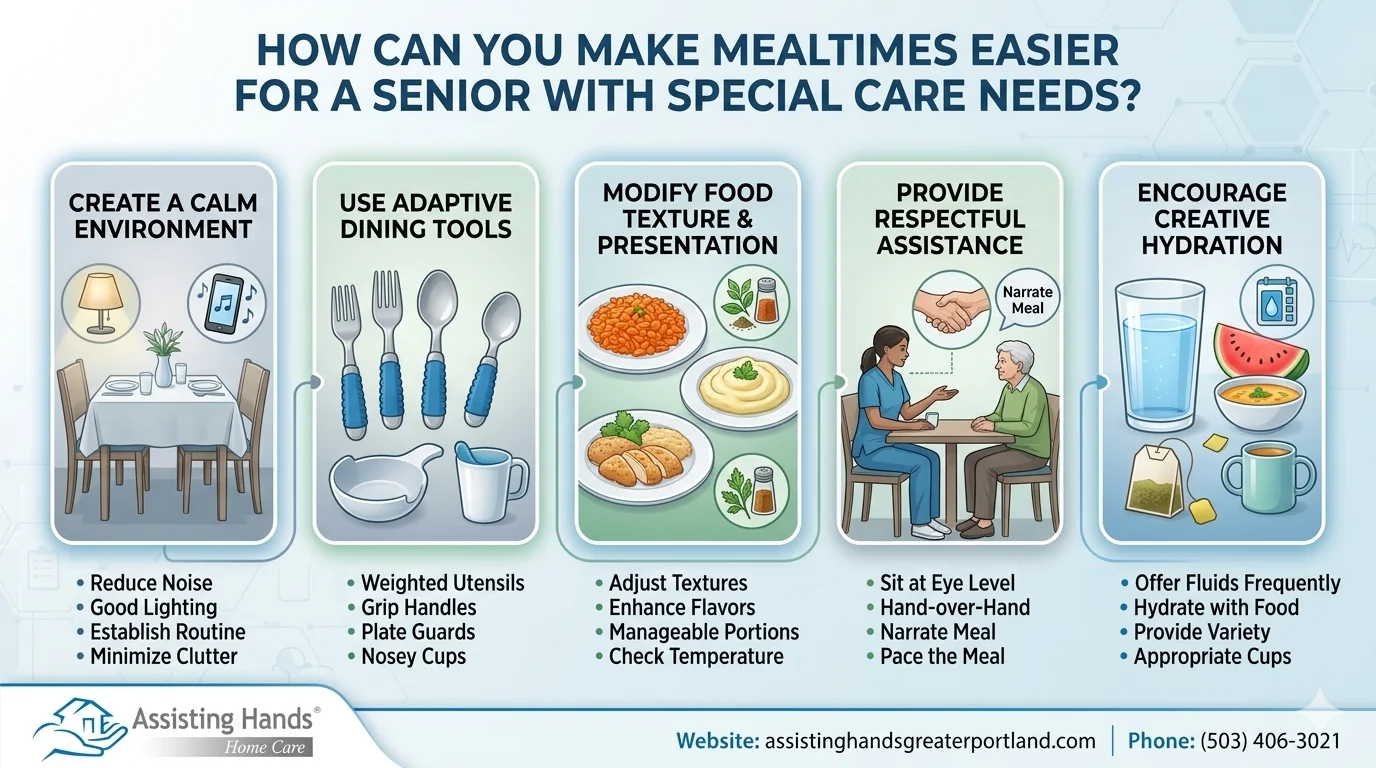
- Reduce noise – Turn off the TV and play soft, soothing music if it helps your loved one relax.
- Ensure good lighting – Well-lit rooms help seniors see their food clearly, which is crucial for those with vision impairments.
- Establish a routine – Serve meals at the same time and in the same place every day. This predictability can provide a sense of security and cue the body that it’s time to eat.
- Minimize table clutter – Keep the table setting simple. Too many utensils or condiments can be confusing.
Caring for a loved one with cognitive decline due to dementia can be extremely challenging, and a compassionate professional caregiver can be a wonderful source of support. Aging in place can present a few challenges for seniors living with dementia. However, with professional dementia care that offers Portland families peace of mind, they can still live independently at home. Families can rely on Assisting Hands Home Care to provide their elderly loved ones with mental and social stimulation, timely medication reminders, assistance with meal prep, and much more. Our caregivers are available around the clock to help your loved one live a happier and healthier life.
How Can Adaptive Dining Tools Support Independence during Meals?
Maintaining independence during meals is vital for your loved one’s dignity and self-esteem. Standard cutlery and plates often pose challenges for individuals with limited dexterity, tremors, or arthritis, but adaptive dining aids can bridge this gap.
Consider incorporating these tools:
- Weighted utensils – These stabilize hand tremors and provide better sensory feedback.
- Built-up handles – Forks and spoons with thick rubberized grips are easier to hold for seniors with weak grip strength.
- Plate guards and scoop bowls – Raised edges or distinct curves push food onto the utensil, preventing spills and frustration.
- Nosey cups – These cups have cutout sections that allow users to drink without tilting their heads back, which is safer for those with swallowing difficulties (dysphagia).
Eating issues can make caring for aging adults increasingly challenging. One of the most challenging tasks of helping an elderly relative age in place safely and comfortably is researching agencies that provide home care. Families can turn to Assisting Hands Home Care for reliable, high-quality Portland senior home care. We offer 24-hour care for seniors who require extensive assistance, and we also offer respite care for family caregivers who need a break from their caregiving duties.
How Should Food Texture and Presentation Be Adjusted for Safety and Nutrition?
Swallowing difficulties, dental issues, and changes in taste perception are common as we age. Adapting the food itself is often necessary to ensure safety and adequate nutrition. However, safety shouldn’t come at the cost of an appetizing presentation.
Strategies for food modification include:
- Adjust textures safely – Follow speech therapist guidelines for texture modification (e.g., pureed, minced, or soft-bite).
- Enhance flavors – Aging can dull taste buds. Use herbs, spices, and lemon juice to boost flavor without relying heavily on salt or sugar.
- Serve manageable portions – Large plates of food can be intimidating and overwhelming. Serve smaller, more frequent meals to maintain energy levels without causing fatigue.
- Check the temperature – Ensure food isn’t too hot, as sensitivity may be reduced, increasing the risk of burns.
How Can You Offer Mealtime Assistance while Preserving Dignity?
There will be times when physical assistance is required. The goal is to assist rather than take over, preserving your loved one’s autonomy for as long as possible. How this help is offered matters just as much as the help itself.
When providing direct support:
- Sit at eye level – Avoid standing over your loved one, which can feel intimidating. Sitting creates an equal social dynamic.
- Use hand-over-hand feeding – Guide your loved one’s hand with your own to help him or her bring the utensil to his or her mouth. This leverages muscle memory and keeps your loved one involved in the action.
- Narrate the meal – Describe the food you’re offering (e.g., “Here are some warm carrots”). This prepares your loved one for the taste and texture.
- Pace the meal – Allow plenty of time for chewing and swallowing. Rushing can cause choking and anxiety.
Why Is Creative Hydration Important for Seniors with Special Care Needs?
Dehydration is a significant risk for seniors, leading to confusion, urinary tract infections, and weakness. Because many older adults lose their sense of thirst or limit fluids to avoid frequent bathroom trips, making fluids accessible and appealing is a key part of mealtime care.
Ways to boost hydration include:
- Offer fluids frequently – Don’t wait for meals. Offer small sips of water throughout the day.
- Hydrate with food – Incorporate foods with high water content, such as soups, watermelon, cucumbers, and gelatin desserts.
- Provide a variety – Water can get boring. Offer herbal teas, diluted juices, or flavored water to make drinking more enjoyable.
- Use appropriate cups – Ensure the cup is lightweight and easy to hold. A two-handled mug can provide extra stability.
Some seniors only require help with a few daily tasks so they can maintain their independence. However, those living with serious illnesses may need more extensive assistance. Luckily, there is professional 24-hour care for Portland seniors with health conditions that require extra support. Home can be a safer and more comfortable place for your loved one to live with the help of an expertly trained and dedicated around-the-clock caregiver. Assisting Hands Home Care can be your trusted partner when your loved one needs help with the challenges of aging. Call us today to learn about our high-quality in-home care services.
Frequently Asked Questions
How can home care services assist with mealtimes?
+
Caregivers can help with meal preparation, serving, and ensuring clients eat safely and comfortably during mealtimes.
Can home care services accommodate special dietary needs during meals?
+
Yes, caregivers can prepare meals that align with specific dietary restrictions, allergies, or medical conditions.
What if my loved one has difficulty eating independently?
+
Caregivers provide assistance with feeding and encourage independence when possible, ensuring dignity and proper nutrition.
Do caregivers create pleasant mealtime environments?
+
Yes, caregivers focus on making mealtimes enjoyable by fostering calm, engaging, and supportive atmospheres.
Can home care services help with meal planning and grocery shopping?
+
Absolutely. Caregivers can plan balanced meals, create shopping lists, and purchase fresh ingredients to support healthy eating habits.
