
Family caregivers can handle guilt by recognizing it as a normal response, setting realistic boundaries, seeking support from others, and practicing self-compassion. These strategies can help caregivers maintain their mental health while providing effective care for a senior loved one.
Caring for a loved one is a labor of love, but it often comes with a heavy emotional toll that few people talk about openly. Guilt is one of the most persistent and draining feelings caregivers experience, stemming from the belief that no matter how much you do, it never feels like enough. Understanding where this guilt comes from and learning how to manage it is essential for protecting your own emotional health while caring for someone else.
Why Do Family Caregivers Often Feel Guilty?
The first step in handling guilt is recognizing it’s a common reaction to an overwhelming situation. You might feel guilty for taking time for yourself, for losing your patience, or for wishing the situation were different. These feelings don’t make you a bad person—they make you human.
Often, guilt arises from unrealistic expectations. You may hold yourself to a standard of perfection that’s impossible to maintain. Acknowledge that you’re navigating a complex and often unpredictable role. Remind yourself daily that you’re doing the best you can with the resources and energy you have available.
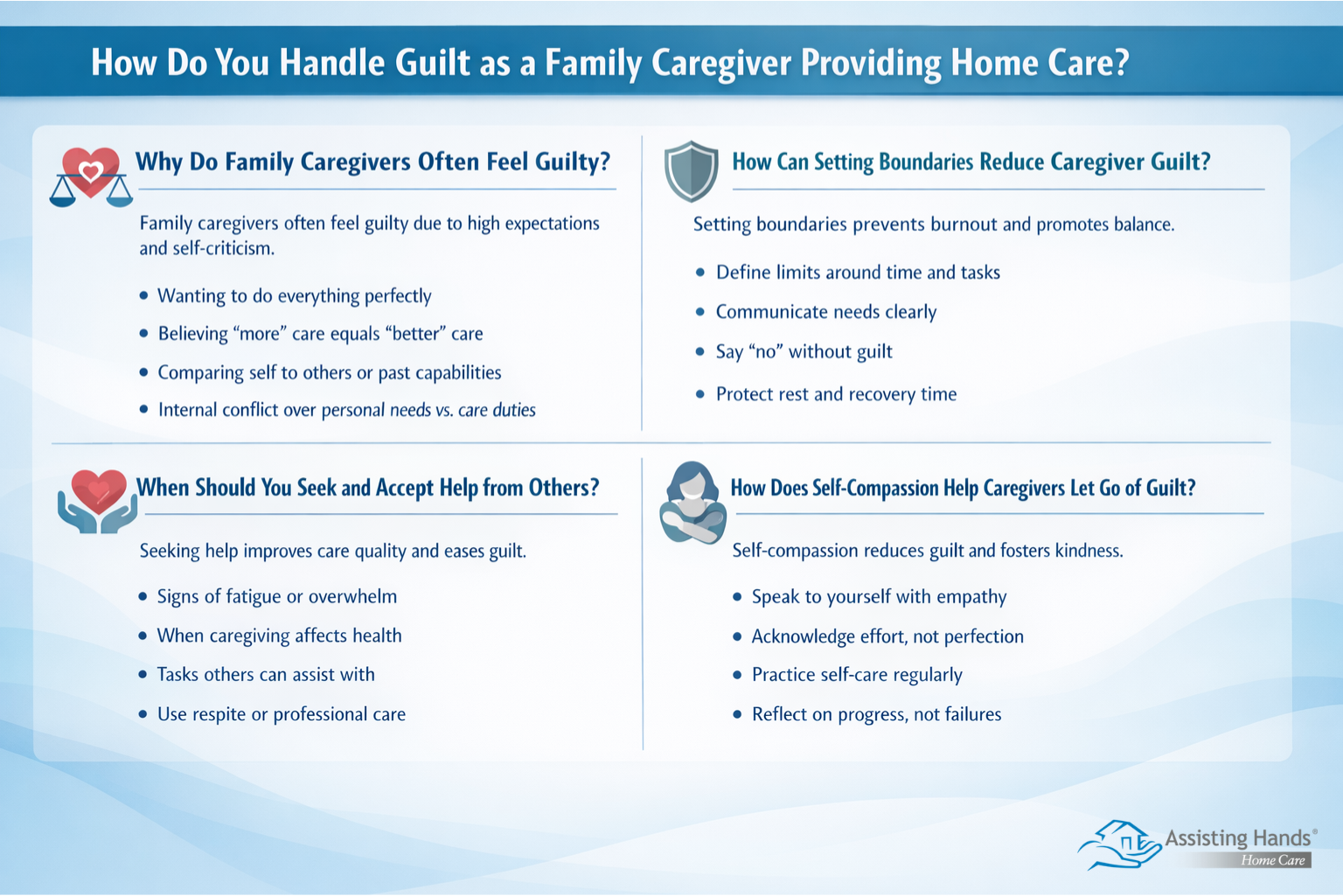
How Can Setting Boundaries Reduce Caregiver Guilt?
One of the most effective ways to combat guilt is to set clear, realistic boundaries. You cannot pour from an empty cup, yet many caregivers try to do exactly that. Establishing boundaries is necessary for sustainable caregiving.
- Say “no” without explanation – You don’t need to justify why you cannot take on additional tasks.
- Designate “off-duty” time – Even if it’s just 15 minutes a day, carve out time when you’re not responsible for anyone but yourself.
- Differentiate between needs and wants – Focus your energy on your loved one’s essential needs and recognize that you cannot fulfill every single desire or preference he or she might have.
When Should You Seek and Accept Help from Others?
Many caregivers fall into the trap of believing they must do everything themselves. This “superhero syndrome” is a fast track to burnout and increased guilt. Accepting help doesn’t mean you’re failing. It means you’re building a support system.
Reach out to friends, family, or community resources. Be specific about what you need. Instead of a vague request for help, ask someone to pick up groceries, sit with your loved one for an hour, or handle a specific chore.
- Look into respite care – Professional services can provide temporary relief, allowing you to recharge.
- Join a support group – Talking to others who are in similar situations can validate your feelings and provide practical advice on managing guilt.
Seniors can face a variety of age-related challenges. Though some families choose to take on the caregiving duties, there may come a time when they need trusted homecare for their loved ones living in Portland. Families sometimes need respite from their duties so they can focus on their other responsibilities, and some seniors need around-the-clock assistance that their families are not able to provide. Assisting Hands Home Care is here to help.
How Does Self-Compassion Help Caregivers Let Go of Guilt?
It’s easy to be your own harshest critic. If a friend were in your shoes, you would likely offer him or her kindness and understanding. It’s crucial to extend that same grace to yourself. When feelings of guilt arise, try to counter them with self-compassion.
Instead of focusing on what you didn’t do perfectly, acknowledge what you did achieve. Did you ensure your loved one was fed? Did you organize your loved one’s medication? Did you offer a comforting presence? These are victories.
- Reframe your thoughts – Replace “I should have done more” with “I did what I could today.”
- Forgive yourself – Everyone has moments of frustration. Apologize if necessary, but then let it go and move forward.
An in-home caregiver can provide high-quality care to your senior loved one, allowing you to take some time off to relax, de-stress, and prevent negative emotions like guilt. Whether you need respite from your caregiving duties or your aging loved one needs live-in care in Portland, Assisting Hands Home Care can meet your family’s care needs. Our dedicated caregivers are available around the clock to provide transportation to doctor’s appointments, ensure seniors take their prescribed medications, and help with a variety of tasks in and outside the home.
Family caregivers need to care for their own wellbeing. If you’re caring for an aging loved one and are feeling overwhelmed, consider hiring a professional caregiver to provide respite care Portland families can trust. To prevent burnout, you can turn to Assisting Hands Home Care. One of our professional caregivers can assist your loved one at home while you take a nap, go to work, run errands, or go on vacation. To hire a professionally trained caregiver for your parent, give us a call today.
Frequently Asked Questions
What is respite care?
+
Respite care provides temporary relief for primary caregivers by offering short-term care for individuals with special needs, disabilities, or chronic illnesses.
Who can benefit from respite care?+
Families and caregivers of individuals who require constant care, such as seniors, children with disabilities, or those recovering from illness, can benefit from respite care.
What types of respite care are available?+
Respite care can be provided in the home, at specialized facilities, or through community programs, depending on the needs of the individual and caregiver.
How long does respite care last?+
Respite care can range from a few hours to several days or weeks, depending on the caregiver’s needs and the home care provider’s offerings.
How do I find respite care services near me?+
You can search online, contact local caregiving organizations, or consult healthcare providers for recommendations tailored to your area.
