
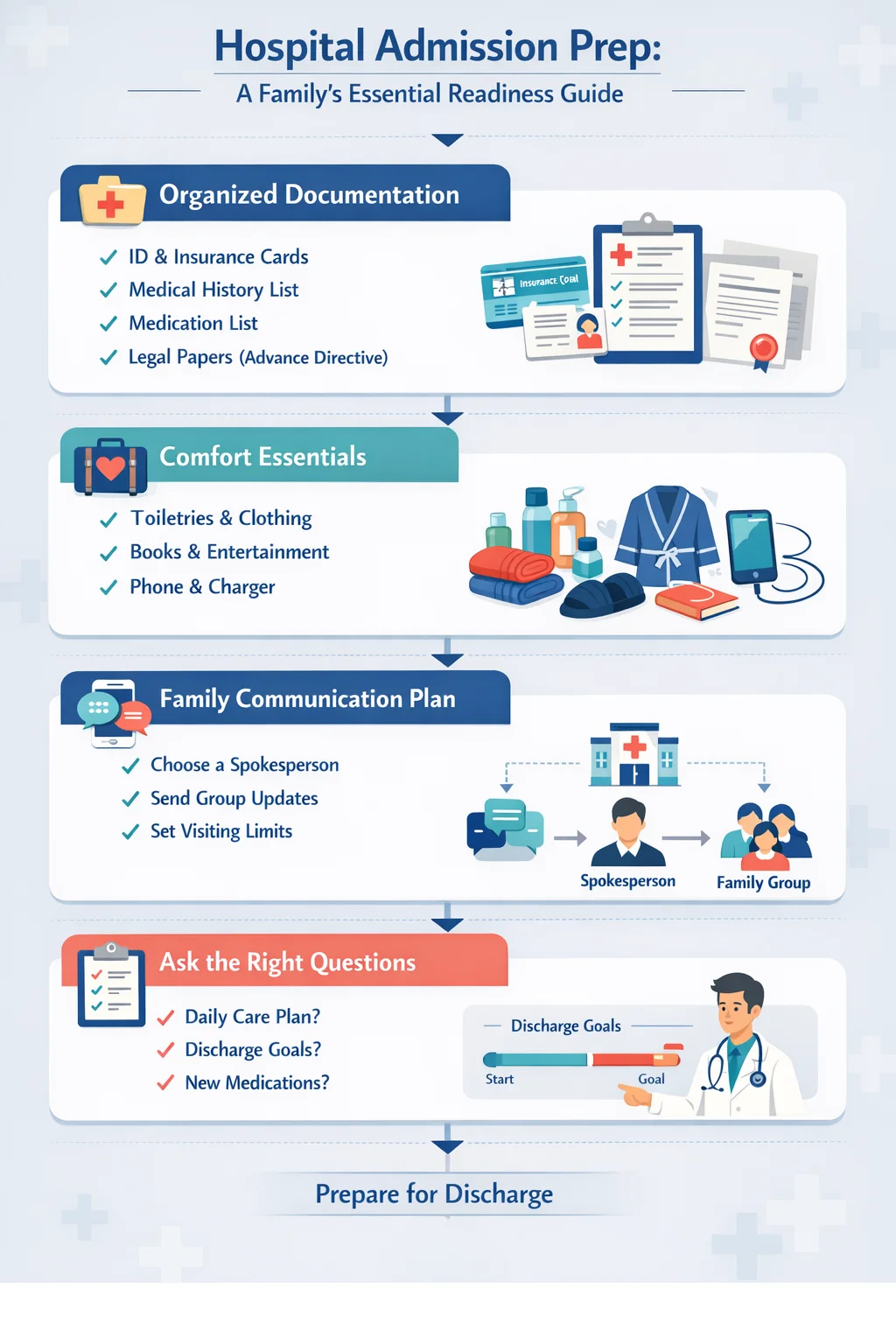
You can prepare for a loved one’s hospital stay by organizing essential documents, packing comfort-focused personal items, coordinating family communication, and preparing clear questions for the medical team. This preparation reduces stress, prevents delays in care, and allows you to focus on supporting his or her recovery instead of managing last-minute logistics.
Having a senior loved one in the hospital can be an overwhelming experience filled with uncertainty and logistical challenges. However, a little preparation can go a long way toward making the stay more comfortable for your loved one and less stressful for you. By organizing essential items and information ahead of time, you can focus on what matters most: supporting your loved one’s recovery.
What Documents and Information Should You Gather?
Before heading to the hospital (or as soon as possible after admission), it’s crucial to consolidate all necessary paperwork. Hospitals require significant documentation to ensure proper care and billing, and having these ready prevents delays and confusion.
Create a folder or binder containing the following:
- Photo ID and insurance cards – Ensure you have your loved one’s driver’s license or state ID along with his or her current health insurance and prescription cards.
- Medical history list – Write down a comprehensive list of past surgeries, chronic conditions, and any known allergies to food or medication.
- Current medication list – Include dosages and frequency for all prescriptions, over-the-counter drugs, and supplements.
- Legal documents – Bring copies of an advance directive, living will, or power of attorney for healthcare if they exist. These documents guide medical decisions if your loved one cannot speak for him or herself.
What Personal Items Should You Pack to Keep Your Loved One Comfortable?
Hospital rooms are sterile and functional, but they often lack the warmth of home. Packing a “comfort bag” can significantly boost your loved one’s morale and physical comfort during the stay. While hospitals provide basics, personal items make a huge difference in how a patient feels.
Consider packing these essentials:
- Toiletries – Travel-sized shampoo, body wash, toothpaste, a toothbrush, and deodorant help your loved one feel refreshed. Lip balm and unscented lotion are also vital, as hospital air is often very dry.
- Clothing – A robe, nonskid slippers, and loose-fitting pajamas or loungewear are often more comfortable than hospital gowns. Ensure clothing is easy to put on and take off.
- Entertainment – Books, magazines, a tablet with headphones, or a deck of cards can pass the time during recovery.
- Communication – A cell phone and an extra-long charging cable (outlets are often far from the bed) are essential for staying in touch with family and friends.
How Can You Coordinate Communication with Family?
One of the most exhausting parts of a hospital stay is updating concerned friends and family members. Fielding constant phone calls and texts can drain your energy when you need it most. Establishing a communication plan early on streamlines this process.
- Designate a spokesperson – Choose one family member to be the primary point of contact with medical staff. This prevents confusion and ensures doctors aren’t repeating updates to multiple people.
- Use technology – Specialized websites or group chat apps allow you to post one update that reaches everyone simultaneously. This saves you from retelling the same details repeatedly.
- Set boundaries – It’s okay to limit visitors or phone calls if your loved one needs rest. Let family know specific times when updates will be shared so they know what to expect.
For some families, caring for a senior loved one can be overwhelming at times. Luckily, they can rely on professional respite care provided by the experienced professionals from Assisting Hands Home Care Portland. We are a trusted name in respite and hourly care, and our caregivers are available around the clock to assist seniors with bathing, transportation, medication reminders, exercise, and much more, allowing families the time they need to focus on other important responsibilities or just take a break.
What Questions Should You Ask the Medical Team?
Advocating for your loved one involves understanding his or her condition and the care plan. Doctors and nurses are busy, so being prepared with specific questions helps you get the information you need during rounds.
Keep a notebook handy to jot down answers to questions like:
- What’s the daily care plan? – Ask about scheduled tests, physical therapy sessions, or medication changes for the day.
- What are the goals for discharge? – Understanding specific milestones your loved one needs to reach (e.g., walking a certain distance, eating solid food) helps you manage expectations.
- Who’s in charge of care? – Hospital shifts change frequently. Ask for the name of the attending physician and the nurse assigned to the shift.
- Are there new medications? – If a new drug is prescribed, ask what it’s for and what side effects to watch out for.
After your loved one returns home from the hospital, he or she may need 24/7 home care. If your senior loved one needs around-the-clock assistance at home, the Portland live-in care professionals at Assisting Hands Home Care are here to help. Our caregivers promote longevity by encouraging seniors to focus on healthy eating, regular exercise, mental engagement, and other important lifestyle factors.
Frequently Asked Questions
Should I bring valuables to the hospital?
No. Leave jewelry, large amounts of cash, and other valuables at home, as hospitals cannot guarantee their security.
Can I stay overnight in my loved one’s hospital room?
Most hospitals allow one family member to stay overnight, though accommodations vary by facility and patient condition.
How often will doctors provide updates on my loved one’s condition?
Typically once daily during morning rounds, though you can request additional updates if your loved one’s condition changes.
What should I do if I disagree with a treatment decision?
Request a meeting with the attending physician to discuss your concerns and ask about alternative treatment options.
Are hospital meals sufficient, or should I bring outside food?
Hospital meals generally meet nutritional needs, but check with the care team about dietary restrictions before bringing outside food.
Aging in the comfort of home can be difficult for seniors with serious health issues. One of the most challenging tasks of helping an elderly relative age in place safely and comfortably is researching agencies that provide home care. Families can turn to Assisting Hands Home Care for reliable, high-quality at-home care for aging adults in Portland and the surrounding communities. We offer 24-hour care for seniors who require extensive assistance, and we also offer respite care for family caregivers who need a break from their caregiving duties. Reach out to one of our dedicated Care Specialists today to learn about the high quality of our in-home care services.
