
Caring for a senior loved one with dementia can be a significant emotional and financial challenge. Understanding the potential costs and planning ahead can make a substantial difference. This guide outlines the expenses associated with dementia care and explores options for financial assistance.
Common Dementia Care Costs
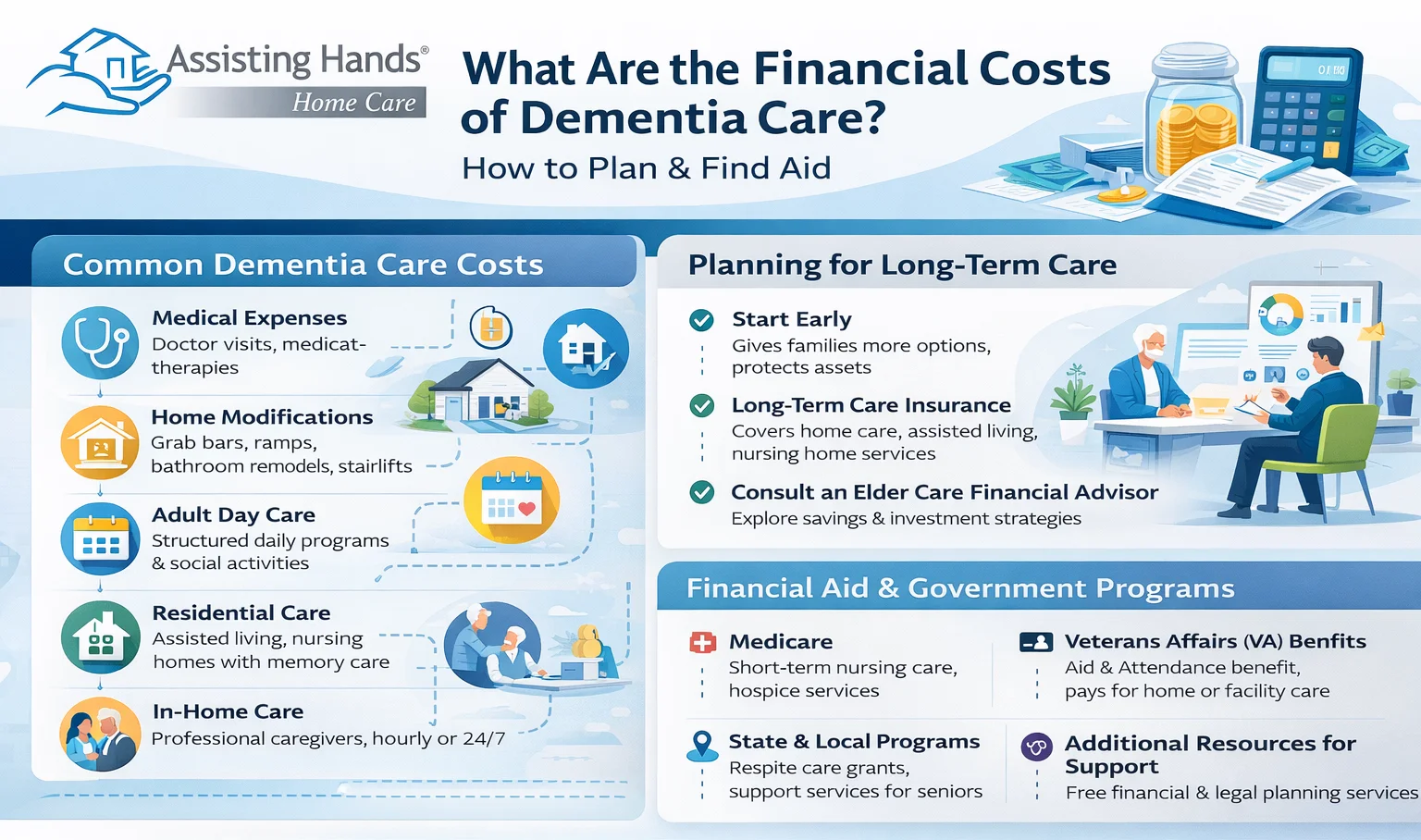
The financial impact of dementia care varies depending on the level of support needed. Initial costs may be minor, but they often increase as the condition progresses.
- Medical expenses – These include costs for doctor visits, specialist consultations, prescription medications, and therapies.
- Home modifications – Simple safety updates, such as installing grab bars and ramps, can make a home safer. More significant changes might involve bathroom remodels or stairlifts.
- Adult day care – These centers provide safe, structured environments for individuals with dementia during the day, offering social engagement and therapeutic activities.
- Residential care – As dementia advances, many families consider assisted living facilities or nursing homes that offer specialized memory care units. This is often the most significant expense.
- In-home care – Hiring professional caregivers for assistance with daily activities like bathing, dressing, and meal preparation can range from a few hours a week to 24/7 support.
If you have a senior loved one who needs help maintaining a high quality of life while aging in place, reach out to Assisting Hands Home Care, a leading provider of elder care Portland families can trust. Our caregivers help seniors focus on healthy lifestyle habits such as eating nutritious foods, exercising regularly, and maintaining strong social ties, and we offer mentally stimulating activities that can boost cognitive health and delay the onset of dementia.
Planning for Long-Term Care
Proactive financial planning is crucial for managing the high costs of dementia care. An early start allows families more options and can protect assets. Consider creating a comprehensive financial plan that includes long-term care insurance, which can cover some of the costs of home care, assisted living, and nursing home services. It’s also wise to consult with a financial advisor who specializes in elder care to explore savings strategies and investment options tailored to these needs.
Financial Aid and Government Programs
Several programs can offset the costs of dementia care. Eligibility requirements vary, so it’s important to research each option carefully.
- Medicare – While Medicare doesn’t cover long-term custodial care, it may pay for short-term skilled nursing care after a qualifying hospital stay as well as some home health services and hospice care.
- Medicaid – This joint federal and state program can cover the cost of nursing home care for eligible low-income individuals. Some states also offer waivers that pay for in-home and community-based care.
- Veterans Affairs (VA) benefits – Veterans and their spouses may be eligible for financial assistance through programs like the Aid and Attendance benefit, which can pay for care in the home, a nursing home, or an assisted living facility.
- State and local programs – Many states offer additional assistance programs for older adults, including respite care grants and support services. Check with your local Area Agency on Aging to learn what’s available in your community.
Certain age-related conditions can make it more challenging for seniors to age in place safely and comfortably, but live-in care experts are available around the clock to help Portland seniors manage their health. Whether your loved one is living with dementia or recovering from a stroke, you can trust the professional caregivers from Assisting Hands Home Care to enhance his or her quality of life. At Assisting Hands Home Care, we take measures to help seniors prevent illness and injury by assisting with exercise and mobility, preparing nutritious meals, helping with bathing and other personal hygiene tasks, and much more.
Additional Resources for Support
Navigating the financial aspects of dementia care can be overwhelming, but you don’t have to do it alone. Nonprofit organizations like the Alzheimer’s Association and the Dementia Society of America provide valuable resources, including free financial and legal planning services, support groups, and educational materials. Contacting these organizations can connect you with experts who can guide you through the process and help you find the support your family needs.
Highly trained caregivers with experience in caring for seniors with dementia can be a fantastic resource for family members. For trusted and reliable Portland dementia care, families can turn to Assisting Hands Home Care. We are experts in caring for seniors with memory-related conditions, our caregivers are available 24/7, and all of our dementia care programs are backed with a 100% satisfaction guarantee. Reach out to us at Assisting Hands Home Care if you need compassionate professional care for your loved one. Call one of our friendly Care Specialists today.
