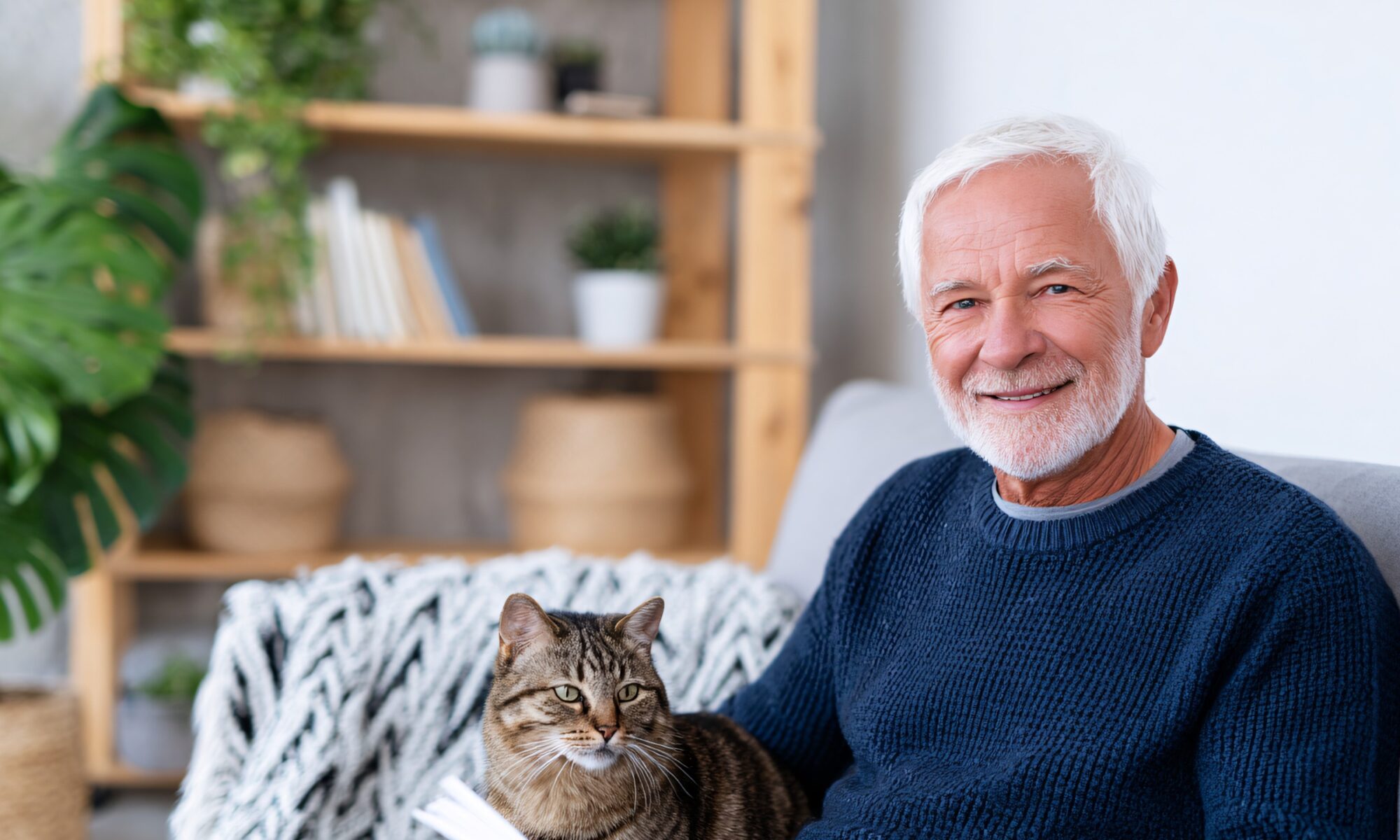
Pet therapy can be a powerful tool for boosting the wellbeing of seniors, especially for those receiving in-home care. Integrating trained animals into a care plan offers a range of physical, emotional, and cognitive benefits that can enhance your senior loved one’s quality of life.
Reduces Loneliness and Isolation
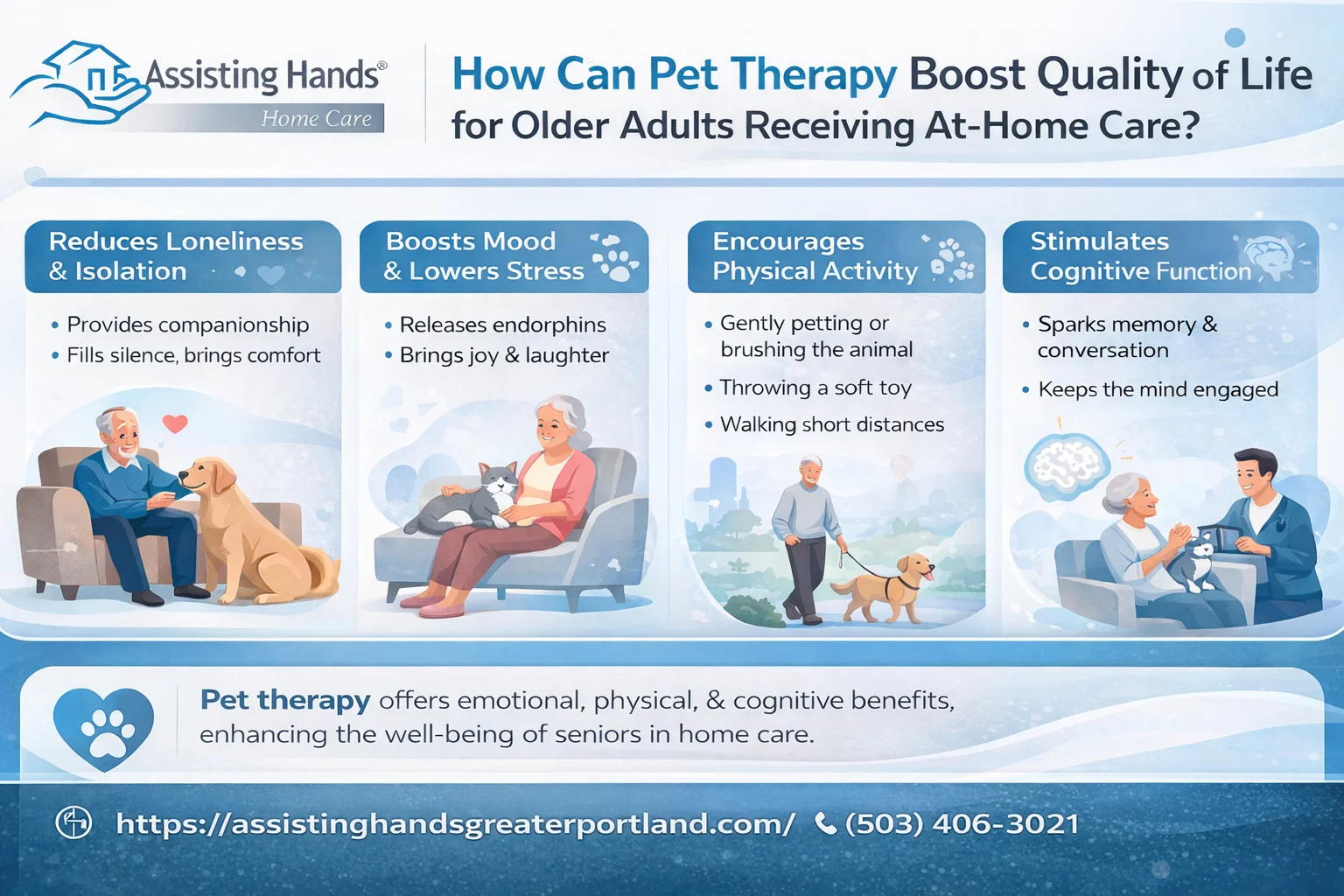
Many seniors who receive in-home care experience feelings of loneliness. A visiting therapy animal provides companionship that can significantly lessen these feelings. The simple presence of a friendly dog or cat offers comfort and a sense of connection. This interaction fills the silence and provides a warm, living presence in the home, which is especially meaningful for seniors who may not have many daily visitors.
Respite care can be a wonderful solution for Portland families when their aging loved ones need companionship and socialization a few hours a week or just need minor assistance with daily household tasks. At Assisting Hands Home Care, we thrive on helping seniors maintain their independence while living in the comfort of home.
Boosts Mood and Lowers Stress
Interacting with animals has a scientifically proven effect on mood. Petting a dog or cat can trigger the release of endorphins such as serotonin and oxytocin, which are hormones that produce feelings of happiness and calm. This natural mood boost lowers stress and anxiety levels. The unconditional affection from a therapy animal can bring joy and laughter into your loved one’s day, creating positive emotional experiences and reducing the impact of depression.
Engaging in pet therapy is known to boost quality of life, but seniors often require additional assistance to remain healthy and happy. Many older adults are choosing to age in place, and some need a helping hand to continue living at home safely and comfortably. Luckily, there is professional elderly home care Portland seniors can trust and rely on.
Encourages Physical Activity
While seniors in home care may have limited mobility, pet therapy can motivate them to engage in light physical activity. Activities can include:
- Gently petting or brushing the animal’s fur
- Throwing a soft toy for a dog to fetch
- Walking a short distance with the animal and its handler
These small movements enhance motor skills, increase joint movement, and can even contribute to better cardiovascular health. The motivation to interact with the animal makes physical activity feel less like a chore and more like a fun activity.
Stimulates Cognitive Function
Pet therapy also provides valuable mental stimulation. Engaging with an animal can spark memories of past pets, leading to conversation and reminiscence, which is a beneficial cognitive exercise. The presence of a new animal can also create new memories and give your loved one something positive to look forward to. Following simple commands or learning the animal’s name keeps the mind active and engaged, promoting cognitive health, which is especially important for seniors experiencing cognitive decline due to dementia or Alzheimer’s.
Aging in place can present a few challenges for seniors living with dementia. However, with professional dementia care that offers Portland families peace of mind, they can still live independently at home. Families can rely on Assisting Hands Home Care to provide their elderly loved ones with mental and social stimulation, timely medication reminders, assistance with meal prep, and much more. Our caregivers are available around the clock to help your loved one live a happier and healthier life. If you need professional care for your loved one, reach out to one of our Care Specialists today.
