
Caregiving is one of life’s most demanding yet rewarding roles, often leaving caregivers emotionally drained and overwhelmed. When you’re constantly focused on your senior loved one’s needs, your own mental health can take a back seat. Journaling offers a simple, accessible way to process the complex emotions that come with caregiving while helping you maintain your wellbeing.
Caregiver Stress and Its Impact
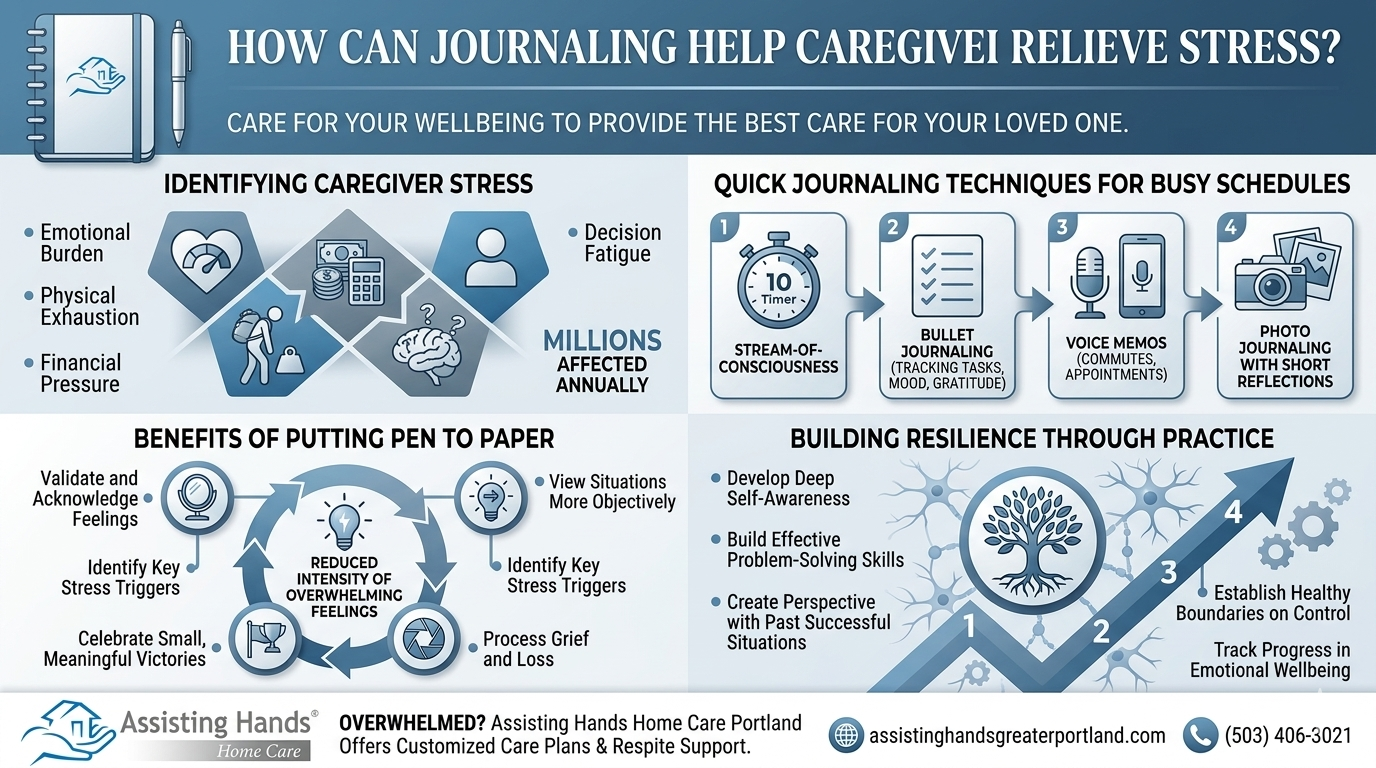
Caregiver stress affects millions of people who provide care for family members, friends, or clients with chronic illnesses, disabilities, or age-related conditions. This unique form of stress stems from:
- Emotional burden – Watching a loved one face challenges with health issues
- Physical exhaustion – Managing daily care tasks and medical appointments
- Financial pressure – Balancing work responsibilities with caregiving duties
- Social isolation – Having less time for personal relationships and activities
- Decision fatigue – Making constant choices about care options and treatments
Research shows chronic caregiver stress can lead to depression, anxiety, compromised immune function, and an increased risk of heart disease. Recognizing these warning signs early can prevent burnout and help you maintain your ability to provide high-quality care.
Professional caregivers can be a wonderful source of support for family caregivers who are feeling the effects of stress. When researching agencies that provide homecare for Portland seniors, families are usually looking for flexible care plans, compassionate and highly trained caregivers, and 24/7 availability. Whether you need respite care to take a break from your caregiving duties or your senior loved one needs around-the-clock assistance at home, you can rely on Assisting Hands Home Care.
How Journaling Helps Caregivers Process Difficult Emotions
Writing about your experiences creates a safe space to explore feelings without judgment. Journaling can help by:
- Validating your emotions – Acknowledging frustration, guilt, or resentment are normal responses
- Identifying patterns – Recognizing triggers that increase stress levels
- Creating emotional distance – Viewing situations more objectively after putting them on paper
- Processing grief – Working through losses related to your loved one’s worsening health
- Celebrating small victories – Documenting positive moments that might otherwise be forgotten
The act of writing engages both emotional and analytical parts of your brain, helping you make sense of complex situations. This process can reduce the intensity of overwhelming feelings and provide clarity during difficult decisions.
Practical Journaling Techniques for Busy Caregivers
Finding time to journal doesn’t require hours of commitment. These techniques may work with your schedule:
- Stream-of-consciousness writing – Set a timer for 10 minutes and write continuously without editing or censoring yourself. This technique can help you release pent-up emotions quickly.
- Bullet journaling – Use simple symbols and short phrases to track:
- Daily caregiving tasks
- Mood changes
- Stress levels
- Moments of gratitude
- Voice journaling – Record voice memos on your phone during commutes or while waiting at medical appointments. Transcribe them later or leave them as audio entries.
- Question-based prompts – Answer specific questions like:
- What challenged me most today?
- What am I grateful for right now?
- How did I show strength today?
- What support do I need?
- Photo journaling – Take pictures of meaningful moments and write brief reflections about them.
If you’re feeling stressed and overwhelmed by your caregiving responsibilities, a professional caregiver can provide the support and encouragement you and your loved one need. Family caregivers need to care for their own wellbeing. If you’re caring for an aging loved one and are feeling overwhelmed, consider hiring a professional caregiver to provide respite care Portland families can trust. To prevent burnout, you can turn to Assisting Hands Home Care. One of our professional caregivers can assist your loved one at home while you take a nap, go to work, run errands, or go on vacation.
Building Resilience through Regular Writing Practice
Consistent journaling builds emotional resilience over time. Regular writing helps you:
- Develop self-awareness – Understanding your emotional responses and coping mechanisms
- Build problem-solving skills – Working through challenges on paper before taking action
- Create perspective – Seeing how you’ve handled similar situations successfully in the past
- Establish boundaries – Identifying what you can and cannot control
- Track progress – Noticing progress in your emotional wellbeing and coping abilities
Start with just five minutes daily, writing at the same time each day to establish a routine. Morning journaling can set intentions for the day, while evening reflection can help you process experiences and emotions.
Making Journaling Sustainable Long-Term
To maintain a journaling practice that truly serves you:
- Choose the right format – Whether digital apps, traditional notebooks, or voice recordings, pick what feels most natural and accessible.
- Set realistic expectations – Some days you might write pages, others just a sentence. Both are valuable.
- Focus on consistency over perfection – Regular short entries are more beneficial than infrequent long ones.
- Use prompts when stuck – Keep a list of questions ready for days when you don’t know where to start.
- Consider sharing – Some caregivers benefit from sharing journal entries with support groups or therapists.
Remember journaling isn’t about creating perfect prose—it’s about creating space for your own emotional needs while navigating the challenges of caregiving.
Whether you need respite from your caregiving duties or your aging loved one needs live-in care, Assisting Hands Home Care Portland can meet your family’s care needs. Our dedicated caregivers are available around the clock to provide transportation to doctor’s appointments, ensure seniors take their prescribed medications, and help with a variety of tasks in and outside the home. Assisting Hands Home Care will work with you to tailor a care plan that’s just right for your loved one’s needs. Call one of our friendly Care Specialists today to learn more about our customized care plans.
