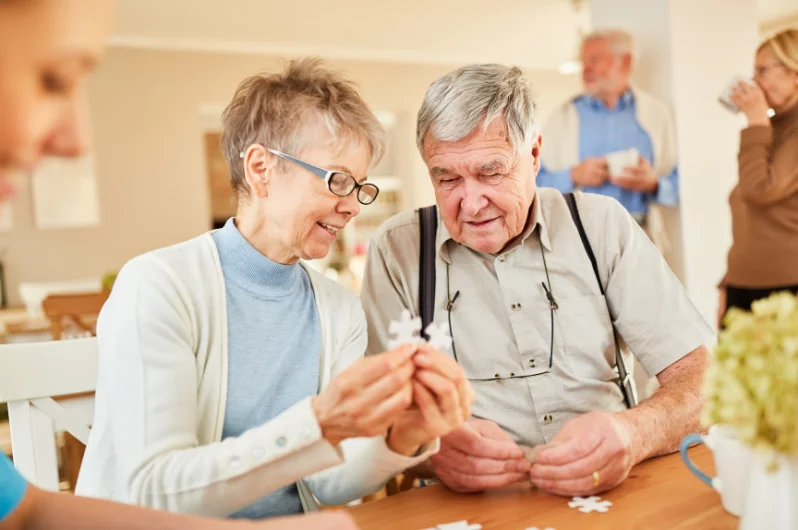
Staying mentally active after a stroke can make a world of difference in recovery. Simple brain exercises, such as puzzles, can boost memory, increase focus, and support overall brain function. They don’t just pass the time—they help seniors regain cognitive strength and confidence in a fun, engaging way.
Crossword Puzzles: A Classic Mind Booster
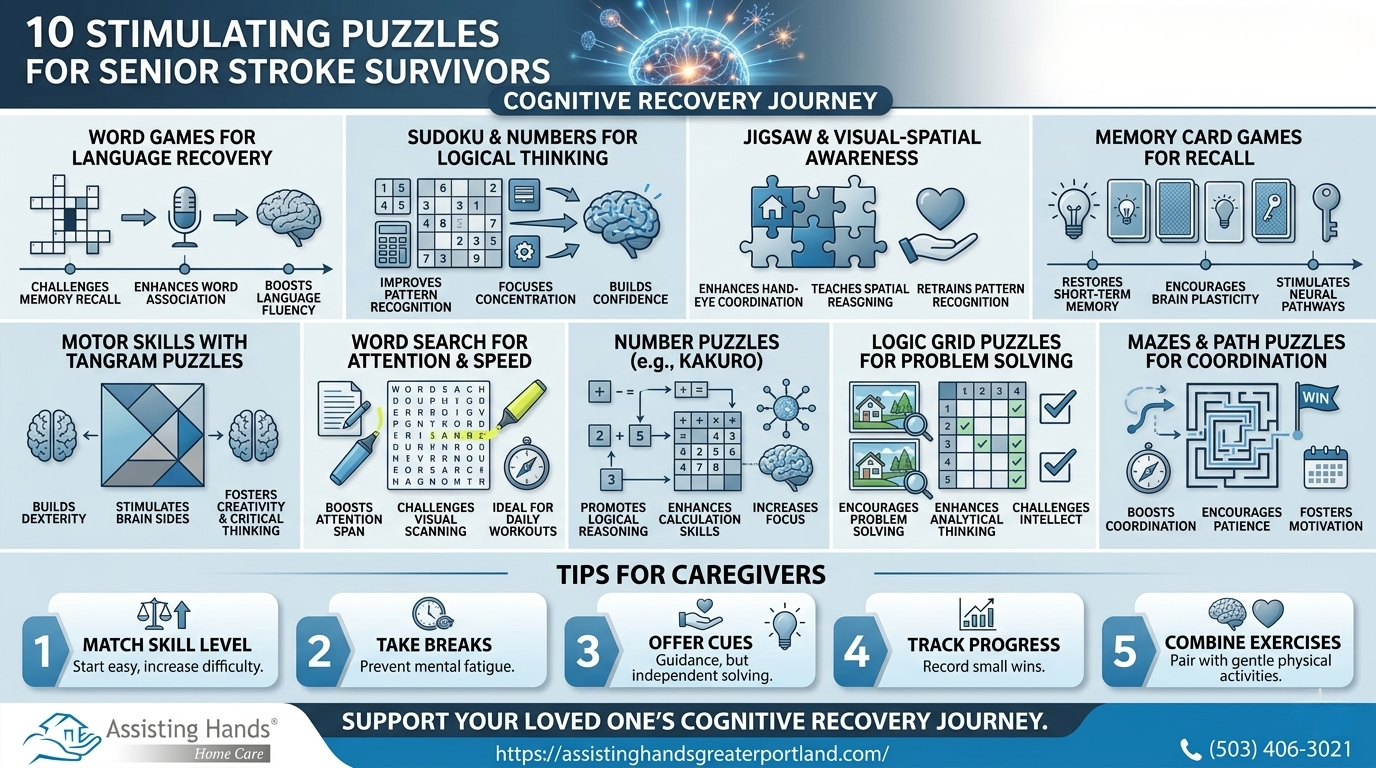
Crossword puzzles are one of the most effective ways to challenge memory recall and word association. For stroke survivors, they enhance language recovery and stimulate parts of the brain responsible for communication. Start with simpler puzzles and progress to complex grids as skills improve. Regular participation can make a noticeable difference in language fluency and problem-solving.
For those receiving home care, caregivers can help seniors enjoy these word games daily as part of their cognitive exercise routine.
Sudoku: Strengthening Logical Thinking
Sudoku engages the logical side of the brain, improving pattern recognition and concentration. It encourages analytical reasoning while keeping seniors focused and calm. The key is to start with easy levels and gradually increase difficulty, which ensures steady progress and builds confidence.
For seniors receiving hourly care services, Sudoku can be a perfect hourly activity to keep the brain active between rest periods.
Jigsaw Puzzles: Visual and Spatial Awareness
Jigsaw puzzles enhance hand-eye coordination and visual-spatial reasoning, two areas often affected after a stroke. Matching shapes and colors requires patience and focus, retraining the brain to recognize patterns and connections. They’re also great for promoting relaxation and mindfulness, offering mental stimulation without stress.
Word Search Puzzles: Boosting Attention and Speed
Word searches may seem simple, but they challenge visual scanning and pattern detection, essential cognitive skills. These puzzles enhance attention span and processing speed, making them ideal for daily mental workouts.
Caregivers providing live-in care can integrate word search sessions into morning or evening routines, offering both relaxation and brain engagement.
Memory Card Games: Strengthening Recall
Memory-based games can restore short-term and working memory, which are often impacted by strokes. Matching cards or remembering object sequences stimulates neural pathways, encouraging brain plasticity, the brain’s ability to rewire itself after injury.
These games are simple yet effective, making them suitable for all recovery stages.
Number Puzzles: Enhancing Cognitive Balance
Number puzzles, such as Kakuro or MathDoku, engage multiple parts of the brain at once. They promote logical reasoning, calculation skills, and memory retention. Regularly solving them can increase focus, decision-making, and mental clarity.
For those needing constant monitoring, 24-hour care services can include such cognitive exercises to help seniors maintain brain activity throughout the day.
Tangram Puzzles: Rebuilding Motor Skills
Tangrams use geometric shapes to form pictures or patterns, making them great for visual and motor coordination. Stroke survivors benefit by enhancing their dexterity and spatial reasoning. The process of turning, flipping, and placing shapes stimulates both sides of the brain, fostering creativity and critical thinking.
Logic Grid Puzzles: Encouraging Problem Solving
Logic grid puzzles require reasoning through clues to find answers. They enhance analytical thinking, decision-making, and pattern detection. This form of puzzle is perfect for seniors who enjoy structured problem-solving and want to challenge their intellect regularly.
Spot the Difference Games: Sharpening Visual Focus
These puzzles enhance concentration and attention to detail. They require observation skills and memory recall, which are essential for post-stroke cognitive recovery. With consistent practice, seniors can boost visual recognition and mental alertness while enjoying a relaxing, game-like activity.
Mazes and Path Puzzles: Boosting Coordination and Patience
Navigating a maze challenges both cognitive and motor skills. It encourages patience, attention, and logical planning. The satisfaction of completing a maze fosters motivation, a key element for long-term recovery and emotional wellbeing.
Benefits of Puzzle Therapy for Stroke Recovery
| Type of Puzzle | Primary Benefit | Cognitive Skill Affected |
| Crossword | Enhances language and recall | Verbal fluency |
| Sudoku | Strengthens logic | Problem-solving |
| Jigsaw | Enhances visual-spatial ability | Coordination |
| Word Search | Boosts focus and scanning | Attention |
| Memory Games | Strengthens recall | Short-term memory |
| Tangram | Builds dexterity | Visual reasoning |
| Logic Grid | Encourages planning | Critical thinking |
Tips for Caregivers Supporting Puzzle Therapy
- Choose puzzles that match your loved one’s skill level and gradually increase difficulty.
- Encourage breaks to prevent mental fatigue.
- Offer verbal cues when necessary, but allow your loved one to problem-solve independently.
- Track progress, as even small improvements show significant cognitive recovery.
- Combine puzzles with gentle physical activities for balanced rehabilitation.
Frequently Asked Questions
What puzzles are best for stroke recovery?
+
Crosswords, Sudoku, and memory card games are most effective because they strengthen brain areas related to speech, logic, and memory.
How often should stroke survivors do puzzles?+
Engaging in puzzles for 20–30 minutes daily can provide steady mental stimulation without overwhelming the brain.
Are puzzles helpful for emotional recovery after a stroke?+
Yes. Puzzles promote relaxation, confidence, and a sense of achievement, which all support emotional healing.
Can caregivers help seniors with puzzles during recovery?+
Absolutely. Caregivers can assist with organization, guidance, and motivation, making puzzle sessions both effective and enjoyable.
Are there digital puzzles suitable for stroke survivors?+
Yes. Many apps offer adaptive puzzles that allow customization for difficulty levels, accessibility, and specific recovery goals.
