
Pet therapy brings warmth, comfort, and emotional balance into a senior’s daily life. The presence of a gentle animal can ease stress, spark connection, and create moments of joy that feel natural and healing. Whether through soft companionship or uplifting interaction, animals offer a unique sense of calm that enhances wellbeing in meaningful ways.
How Pet Therapy Supports Emotional Wellness
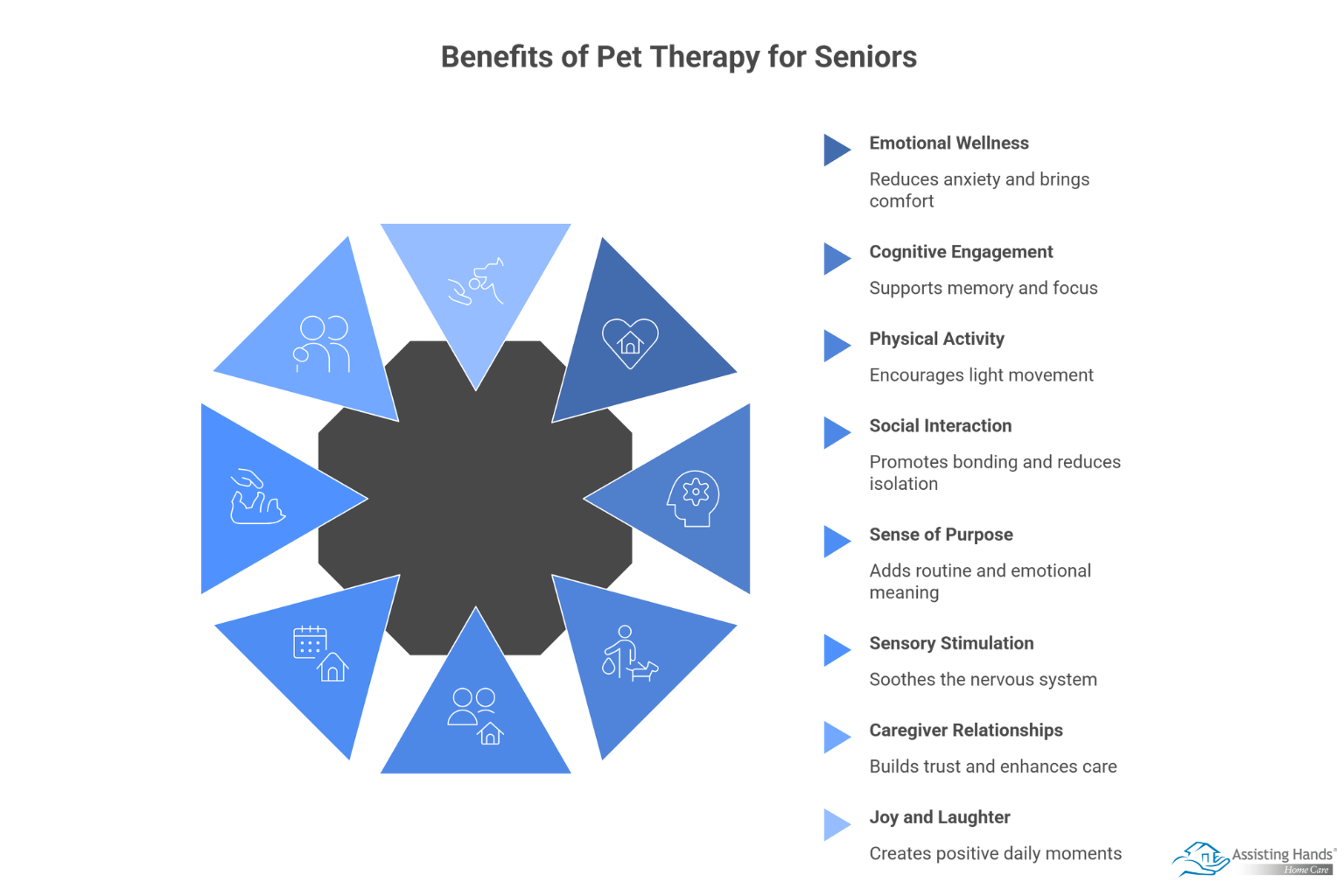
The connection between seniors and animals is powerful, offering emotional relief and a comforting sense of security. When older adults receive personalized support through home care, caregivers often incorporate structured or informal pet interactions to boost daily mood. Gentle interactions with pets can reduce loneliness, encourage positive engagement, and decrease feelings of anxiety. Many seniors find that simply sitting beside a calm dog or cat brings balance, grounding, and happiness. Emotional wellness plays a major role in healthy aging, and pet therapy creates an environment that supports better rest, increased motivation, and deeper comfort throughout the day.
Reducing Stress Through Calm Animal Interaction
Stress can impact sleep, appetite, and mental clarity for aging adults, making calming activities especially helpful. Gentle pet interaction signals the body to slow down, breathe deeply, and shift toward relaxation. Warm cuddles, rhythmic petting, or quiet companionship naturally lower stress hormones and promote a peaceful mindset. When providing support such as 24-hour care, caregivers may encourage brief, soothing pet sessions to help seniors unwind before meals or rest. These small emotional resets throughout the day create healthier patterns and reduce persistent tension or worry. Many seniors appreciate the steady comfort animals bring, especially during moments that feel overwhelming.
Boosting Cognitive Engagement
Pet therapy encourages mental stimulation and cognitive activity, especially for seniors who benefit from gentle sensory engagement. Watching an animal move, recalling its name, or participating in simple care tasks activates memory and attention. Cognitive engagement is essential for supporting daily function and helping seniors maintain sharper recall and clearer thinking. For those receiving Alzheimer’s care, guided pet therapy can introduce soft, familiar sensations that spark recognition and emotional connection. Structured routines, such as talking to pets, offering treats, or brushing their fur, enhance focus and encourage meaningful participation. These interactions support mental wellbeing and help older adults stay engaged with their surroundings.
Strengthening Social Interaction
Pets often act as natural social bridges, encouraging conversation and positive connection. Seniors who experience isolation frequently open up more easily when animals are present. Simple interactions, such as telling stories about past pets or laughing at an animal’s playful behavior, can reduce emotional distance and increase engagement. This added social bonding contributes to a more active lifestyle and supports mental health. Pets create opportunities for interaction with caregivers, visitors, and peers, helping seniors feel more included and valued. This increased social engagement leads to increased confidence and creates an uplifting daily atmosphere.
Supporting Physical Health Through Gentle Activity
Pet therapy promotes light physical movement, especially when seniors engage in mild activities like brushing, feeding, or walking an animal. These small actions help seniors maintain flexibility, fine-motor coordination, and mobility. Movement associated with pet care encourages a more active routine, even for those with limited physical strength. Studies suggest that interacting with pets may boost cardiovascular health by reducing blood pressure and supporting respiratory balance. Light activity also helps seniors maintain independence and energy, contributing to increased overall wellness. Pet therapy offers an accessible way for older adults to stay physically engaged without feeling overwhelmed or pressured.
Enhancing Sense of Purpose
- Interacting with pets gives seniors a meaningful sense of responsibility, even through simple tasks like feeding or offering gentle care.
- These small daily actions add structure and routine, helping older adults feel needed, valued, and emotionally connected.
- A steady sense of purpose supports motivation, confidence, and mental health by giving seniors something uplifting to look forward to.
- Pet therapy encourages consistent engagement, which enhances emotional balance and strengthens overall wellbeing.
- Moments of bonding with animals create emotional fulfillment that helps seniors maintain a positive outlook throughout the day.
Creating Gentle Sensory Stimulation
Pet therapy offers soothing sensory input that supports calmness and emotional grounding. The warmth of an animal’s fur, the rhythm of their breathing, or the gentle pressure of the pet’s presence soothes the nervous system. Sensory stimulation is especially supportive for older adults experiencing cognitive changes, anxiety, or confusion. These therapeutic interactions encourage relaxation, increase awareness of surroundings, and promote a comforting sensory experience. Different textures, sounds, and movements from animals create multi-sensory engagement that supports both emotional and cognitive wellbeing.
Building Trust and Enhancing Caregiver Relationships
Animals naturally create a sense of trust and comfort, which can strengthen the relationship between seniors and their caregivers. When pets are present during activities or routines, seniors often feel more open, relaxed, and willing to participate. This increased cooperation supports smoother daily care, better communication, and enhanced emotional connection. Animals bridge emotional gaps, reduce resistance to assistance, and build a foundation of trust that enhances the overall care experience. This added layer of comfort is especially beneficial for seniors who feel anxious or reserved during personal care routines.
Encouraging Joy, Laughter, and Positive Daily Moments
Joyful moments are essential to quality of life, and pet therapy introduces happiness into ordinary routines. Seniors often smile, laugh, or express excitement when interacting with gentle animals. These uplifting moments can transform the tone of the day, spark energy, and create lasting emotional benefits. Positive feelings associated with pet therapy boost mood, encourage participation, and strengthen emotional resilience. Whether through playful interaction or quiet companionship, animals bring a lighthearted presence that enriches daily living.
Key Benefits of Pet Therapy for Seniors
| Benefit Category | How It Helps Seniors |
| Emotional Wellness | Reduces anxiety, brings comfort, boosts mood |
| Cognitive Engagement | Supports memory, focus, and sensory recall |
| Physical Activity | Encourages light movement and fine-motor coordination |
| Social Interaction | Promotes bonding and reduces feelings of isolation |
| Sense of Purpose | Adds routine, structure, and emotional meaning |
Frequently Asked Questions
What is pet therapy and how does it help seniors?
+
Pet therapy involves guided animal interaction designed to support emotional and physical wellbeing. Seniors often feel calmer, more connected, and more engaged during sessions. This supportive interaction enhances mood and contributes to healthier daily routines.
Is pet therapy safe for seniors with health conditions?+
Yes, pet therapy can be safely adapted to individual needs and mobility levels. Gentle, well-trained animals are used to ensure comfort and safety during interactions. Care providers tailor sessions to avoid overstimulation and maintain a calm environment.
Which animals are most commonly used in senior pet therapy?+
Dogs and cats are the most frequent therapy companions due to their calm, friendly nature. Some programs also include small animals like rabbits or birds. The chosen animal depends on the senior’s comfort, interests, and therapeutic goals.
Can pet therapy help with memory challenges in seniors?+
Yes, guided pet interactions can support recognition, sensory recall, and emotional stability. Simple tasks like talking to or touching an animal stimulate cognitive activity. These sessions offer gentle engagement without overwhelming the individual.
How often should seniors participate in pet therapy?+
Weekly or bi-weekly sessions are typically beneficial, though frequency depends on personal preference and care needs. Consistent interaction helps seniors maintain emotional balance and cognitive stimulation. Many seniors enjoy having pet therapy as part of their regular routine.
