
Managing a long-term health condition at home can feel overwhelming, especially when symptoms fluctuate and care needs gradually increase. In-home caregivers support daily stability by assisting with routines, monitoring changes, and helping individuals remain safe and comfortable in familiar surroundings.
Why Managing a Chronic Illness at Home Requires Consistent Support
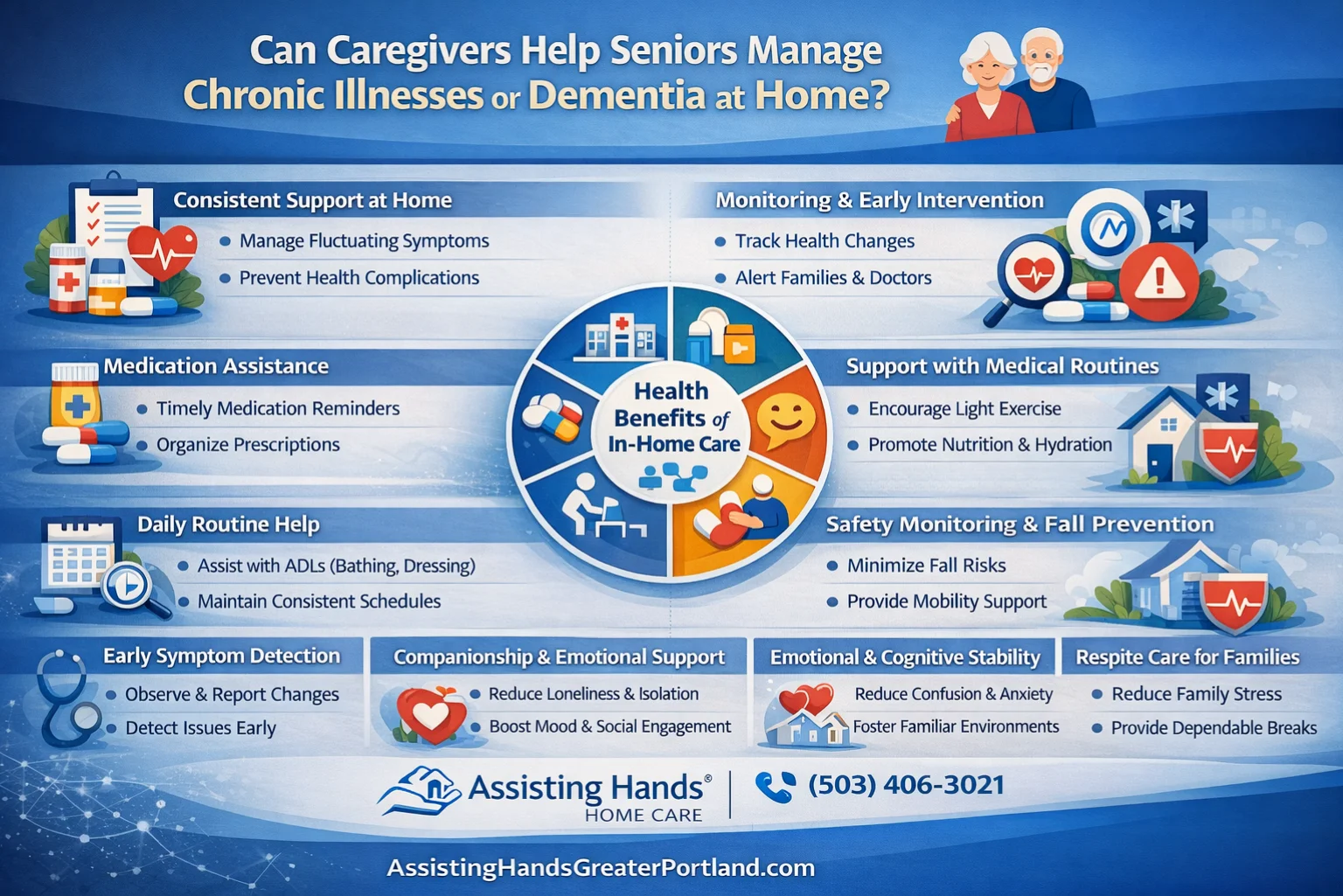
Living with a chronic condition often means managing symptoms that change from day to day. Fatigue, pain levels, mobility challenges, and medication side effects can all affect how well someone functions at home. Consistency becomes one of the most important factors in preventing complications, yet many individuals have difficulty maintaining structured routines on their own. This is where in-home caregiving plays an essential role by reinforcing daily habits that support long-term health.
When providing home care, caregivers help individuals follow predictable schedules that support physical stability and emotional wellbeing. Having regular assistance reduces missed medications, uneven meal timing, and physical overexertion. According to the CDC, poor routine adherence is one of the leading causes of chronic condition flare-ups. Caregivers act as a stabilizing presence, helping individuals manage daily demands without feeling overwhelmed.
How Caregivers Support Daily Symptom Monitoring and Prevention
One of the most valuable roles of caregivers is observing subtle changes that may signal a health concern. Chronic conditions rarely worsen overnight. Instead, symptoms often shift gradually. Changes in appetite, sleep patterns, mobility tolerance, or mood can provide early warning signs that something is wrong. Without regular observation, these signs are often missed until medical intervention becomes urgent.
Caregivers monitor these daily patterns and relay concerns to families or healthcare providers when appropriate. This ongoing observation can reduce emergency room visits and allows for earlier clinical intervention. Studies published in BMC Geriatrics show that routine monitoring at home improves chronic disease outcomes by helping patients address symptoms before escalation. This kind of support is especially meaningful for older adults living alone.
Supporting Medication Adherence and Medical Routines at Home
Medication schedules are a major challenge for individuals managing chronic illness, particularly when multiple prescriptions are involved. Forgetting doses or taking them inconsistently can lead to serious health consequences. Caregivers providing hourly care can reinforce medication routines without removing independence, offering timely reminders and oversight during critical parts of the day.
Beyond medication, caregivers can assist with physician-recommended routines such as light mobility exercises, hydration schedules, and dietary guidelines. Research from The Journal of Patient Safety indicates supervised home routines significantly reduce medication errors among older adults. When these routines are integrated gently into daily life, individuals are more likely to stay compliant and experience fewer health disruptions.
Why Dementia Care at Home Supports Cognitive and Emotional Stability
Dementia affects more than memory. It influences judgment, communication, emotional regulation, and behavior. Home environments provide familiarity, which plays a critical role in maintaining cognitive comfort. Structured dementia care focuses on preserving routines that anchor individuals to their surroundings, reducing anxiety and confusion.
Caregivers trained in memory support understand how to respond to behavioral changes using patience, validation, and redirection rather than confrontation. According to the Alzheimer’s Association, individuals with dementia who remain in familiar environments often experience fewer behavioral disturbances. Home-based support allows caregivers to adapt care strategies as cognition changes while preserving dignity and minimizing distress.
Safety Management for Individuals with Cognitive Decline
As dementia progresses, safety becomes a growing concern. Risks such as falls, wandering, and improper medication use increase significantly without supervision. Caregivers can mitigate these risks by providing environmental awareness and gentle guidance throughout the day. They ensure pathways are clear, assist with mobility, and watch for behaviors that may indicate confusion or disorientation.
Research from the National Institute on Aging shows supervised home environments reduce injury-related hospitalizations among people with dementia. By addressing safety proactively rather than reactively, caregivers can help individuals remain at home longer while maintaining personal dignity and comfort.
The Impact of InHome Caregiving on Health Outcomes
Research consistently shows in-home caregiving boosts both physical and emotional health outcomes for individuals managing chronic illness or cognitive decline. The National Institute on Aging highlights that remaining at home with appropriate support is associated with better sleep quality, reduced stress levels, and increased emotional stability. Caregivers play a central role in monitoring changes, reinforcing healthy habits, and preventing complications that often lead to hospitalizations.
Health benefits associated with structured caregiving include:
- Fewer emergency room visits due to early symptom detection
- Increased medication adherence and routine consistency
- Better nutrition and hydration outcomes
- Reduced anxiety, isolation, and depressive symptoms
- Increased mobility and daily functioning
In addition, caregiver involvement reduces burnout for family members by sharing responsibilities and offering professional insight.
Emotional Wellbeing and Companionship in Long-Term Care
Chronic illness and dementia often lead to social withdrawal, which negatively affects mental and physical health. Caregivers provide regular companionship that reduces loneliness and emotional stress. Consistent interaction boosts mood, encourages engagement, and supports cognitive stimulation through conversation and daily activities.
According to research published in The Gerontologist, social engagement is directly linked to slower cognitive decline and increased emotional resilience in older adults. Caregivers foster this engagement naturally within daily routines, strengthening both mental health and quality of life over time.
Comparison: Living with and without Structured Caregiver Support
| Care Area | Without Caregiver Support | With Trained Caregiver Support |
| Medication adherence | Frequently inconsistent | Structured and monitored |
| Fall risk | Higher due to lack of supervision | Reduced through daily support |
| Symptom tracking | Often delayed | Proactive observation |
| Emotional wellbeing | Increased isolation | Consistent companionship |
| Family stress | High | Shared responsibility |
Frequently Asked Questions
Can caregivers help seniors manage chronic illnesses long term?
+
Yes, caregivers support daily routines, symptom monitoring, and lifestyle consistency, all of which are essential for long-term condition management.
Is home caregiving appropriate for early dementia stages?+
Early-stage dementia often responds well to structured routines and familiar environments, reducing confusion and anxiety.
How flexible is in-home caregiving support?+
Care plans can be adjusted over time, allowing support to increase gradually as physical or cognitive needs change.
Can caregiving prevent hospitalizations?+
Ongoing symptom observation and routine reinforcement lower the risk of avoidable emergency visits.
Does in-home care support family caregivers too?+
Yes, professional caregivers reduce family caregiver burnout by sharing responsibilities and providing informed support.
