
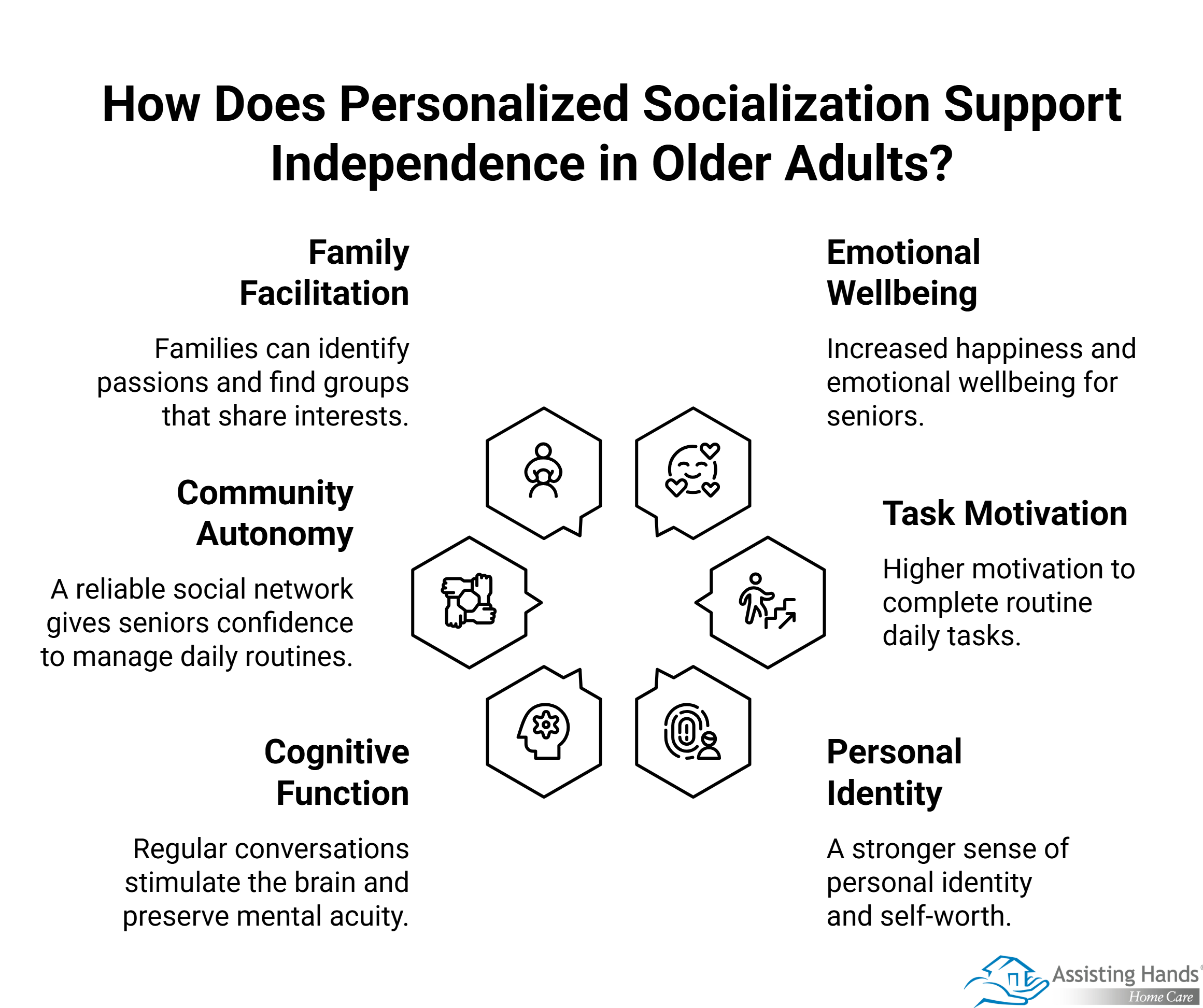
Personalized socialization supports independence in seniors by providing tailored engagement that builds confidence, maintains cognitive skills, and fosters a strong sense of purpose. When older adults participate in activities aligned with their specific interests, they remain more active and connected to their communities. This targeted approach helps them navigate daily life with greater autonomy and joy.
Why Does Tailored Engagement Matter for Older Adults?
Tailoring social activities ensures older adults remain genuinely interested and motivated to participate. When hobbies and conversations match a person’s unique background, he or she is much more likely to engage consistently.
Key benefits include:
- Increased emotional wellbeing and happiness
- Higher motivation to complete routine daily tasks
- A stronger sense of personal identity and self-worth
When their aging loved ones need companionship and socialization a few hours a week or just need minor assistance with daily household tasks, Portland respite and overnight care can be wonderful solutions. At Assisting Hands Home Care, we thrive on helping seniors maintain their independence while living in the comfort of home.
How Do Social Connections Boost Cognitive Function?
Regular meaningful conversations stimulate the brain and preserve mental acuity over time. Engaging in thought-provoking discussions, sharing memories, or playing strategic games with friends keeps the mind sharp and focused.
Ways socialization aids cognition:
- Boosts memory retention through active storytelling
- Enhances problem-solving skills during group activities or collaborative projects
- Reduces the risk of severe cognitive decline by keeping neural pathways active
What Role Does Community Play in Daily Autonomy?
Having a reliable social network gives seniors the confidence to manage their daily routines independently. Knowing they have peers to rely on for advice, conversation, or companionship reduces the anxiety sometimes associated with living alone.
Community support encourages:
- Active participation in local events, volunteering, and hobby clubs
- Routine physical movement, such as walking to meet with friends
- Self-reliance backed by a comfortable safety net of trusted peers
How Can Families Facilitate Personalized Socialization?
Families can help by identifying their loved ones’ lifelong passions and finding local or virtual groups that share those exact interests. It’s highly effective to ask seniors what they currently enjoy doing rather than making assumptions about their preferences.
Actionable steps for families:
- Set up user-friendly technology for virtual meetups with distant relatives and friends.
- Arrange reliable transportation to community centers, book clubs, or art classes.
- Host small manageable gatherings with your loved one’s closest friends to encourage intimate conversation.
At-home care experts are available to provide high-quality care to Portland seniors on an as-needed basis. From meaningful companionship to assistance with mobility and exercise and providing transportation to social events, there are a variety of ways professional caregivers can help your aging loved one continue to live independently.
Aging in place can present a few unique challenges for older adults in Northwestern Oregon. Some only require part-time assistance with companionship, exercise, or meal preparation, while others are living with serious illnesses and benefit more significantly from receiving Portland 24-hour home care. Assisting Hands Home Care are leaders in the elderly in-home care industry for good reason. We tailor our care plans based on each senior’s individual needs, our caregivers continue to receive updated training in senior care as new developments arise, and we also offer comprehensive care for seniors with Alzheimer’s, dementia, and Parkinson’s. To hire a dedicated caregiver, call Assisting Hands Home Care today.
Frequently Asked Questions
What is personalized socialization?
+
It’s the practice of tailoring social interactions and activities to an individual’s specific interests, background, and personal preferences. This ensures the engagement is highly meaningful and enjoyable for the participant.
Why is independence important for seniors?
+
Maintaining independence helps older adults preserve their dignity, self-esteem, and overall happiness. It allows them to feel in control of their own schedules, choices, and living environments.
Can virtual socialization be effective?
+
Yes, video calls and online hobby groups offer excellent ways for seniors to stay connected with others. Virtual options are especially helpful for older adults who experience limited mobility or lack reliable transportation.
How often should seniors engage in social activities?
+
Older adults benefit greatly from daily or regular weekly interactions to prevent feelings of isolation and loneliness. The exact frequency should align perfectly with their personal energy levels and daily preferences.
