
A single missed dose can be more than a minor oversight—it can be an early warning sign of deeper gaps in your senior loved one’s care. Medication adherence is one of the clearest indicators of how well a care system is functioning. When it breaks down, even once, it’s worth asking why.
Why Do Seniors Miss Medications?
Missed medications rarely happen without a reason. Common causes include:
- Forgetfulness or cognitive decline, particularly in older adults
- Complex medication schedules that are difficult to manage independently
- Side effects that discourage seniors from continuing a prescription
- Cost barriers that make refills inaccessible
- Poor communication among providers, caregivers, and seniors
Understanding the root cause is the first step toward addressing it.
If your senior loved one has been diagnosed with a serious condition and needs help with tasks like meal prep, transportation, medication reminders, bathing, and grooming, reach out to Assisting Hands Home Care, a leading provider of Portland homecare services. We also offer comprehensive care for seniors with dementia, Alzheimer’s, and Parkinson’s.
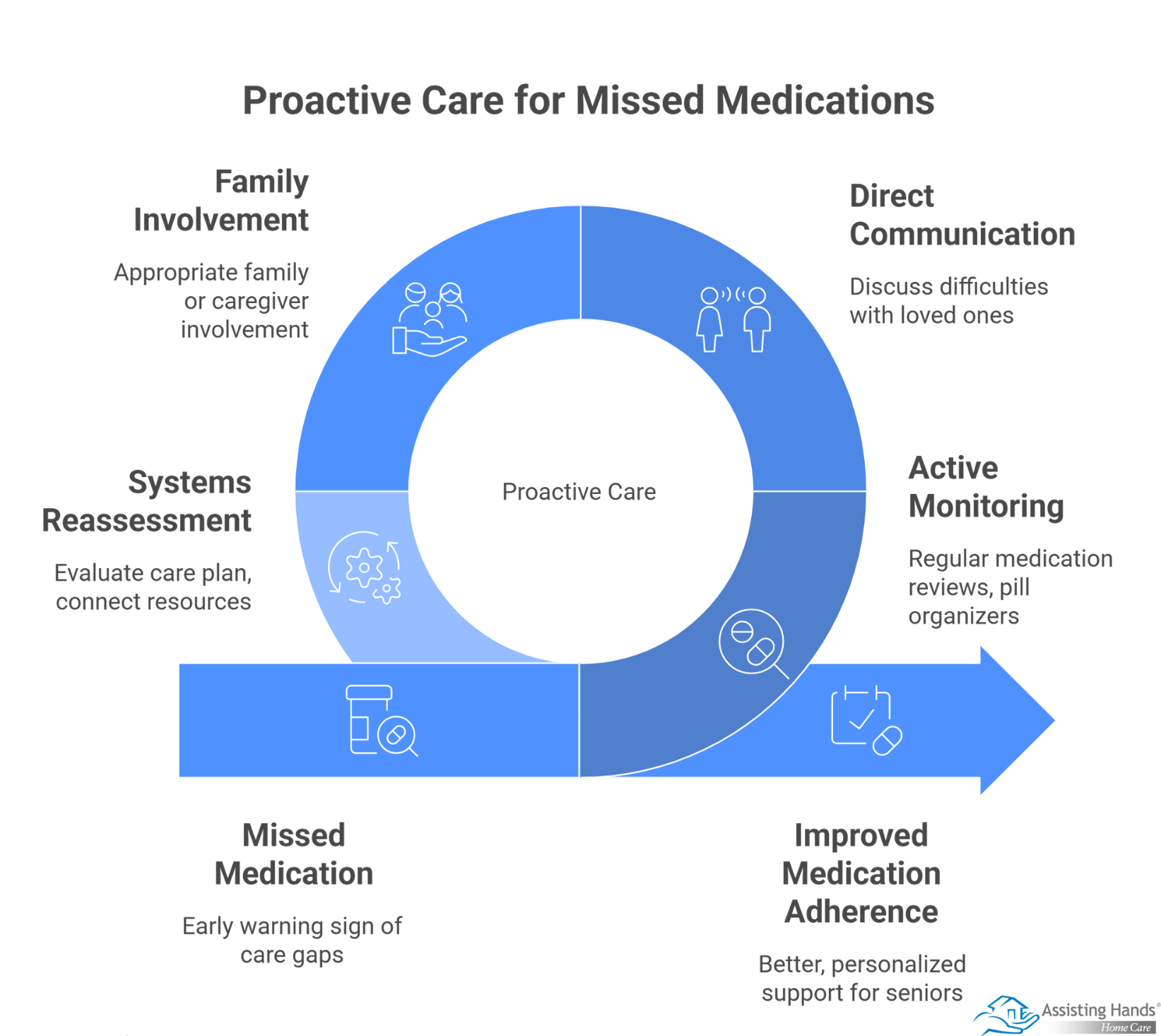
What Does One Missed Dose Really Indicate?
A single missed medication may seem trivial, but it can reflect a broader pattern. It may indicate your loved one lacks adequate support at home, that his or her care team isn’t checking in frequently enough, or that he or she doesn’t fully understand the treatment plan. In chronic disease management—where conditions like diabetes, hypertension, or heart failure require consistent medication—even brief lapses can have serious health consequences.
How Can Caregivers and Providers Identify the Problem Early?
Early detection requires active monitoring, not passive observation. Practical steps include:
- Regular medication reviews during care visits or telehealth check-ins
- Pill organizers or blister packs to make adherence easier to track
- Pharmacy refill data as a proxy for whether medications are being taken
- Direct conversations about any difficulties your loved one is experiencing
- Family or caregiver involvement when appropriate
Catching a pattern of missed doses early gives care teams the opportunity to intervene before health outcomes decline.
Assisting with medication organization can be a challenging task for overworked caregivers. Whether you need respite from your caregiving duties or your aging loved one needs 24-hour care in Portland, Assisting Hands Home Care can meet your family’s care needs. Our dedicated caregivers are available around the clock to provide transportation to doctor’s appointments, ensure seniors take their prescribed medications, and help with a variety of tasks in and outside the home.
What Systems Failures Might Be Behind Nonadherence?
Sometimes the problem isn’t the senior—it’s the system around him or her. Nonadherence can be traced back to:
- Fragmented care, where multiple specialists prescribe medications without coordinating with each other
- Inadequate discharge planning after a hospital stay
- Lack of follow-up appointments to reassess whether a medication is still appropriate
- Insufficient education at the point of prescribing
When these systemic gaps exist, missed medications become a predictable outcome rather than an isolated incident.
How Can Care Teams Use Missed Medications as a Trigger for Action?
Rather than treating a missed dose as a compliance issue, care teams can use it as a cue to reassess the bigger picture. This means:
- Scheduling a follow-up to review your loved one’s full medication list
- Evaluating whether the care plan is still appropriate given your loved one’s current circumstances
- Connecting your loved one with additional resources, such as home care services or social support
- Documenting the incident to identify recurring patterns
Proactive care teams treat missed medications as data—information that helps them deliver better, more personalized support.
For some families, caring for a senior loved one can be overwhelming at times. Luckily, Portland families can rely on exceptional respite and overnight care provided by the experienced professionals from Assisting Hands Home Care. We are a trusted name in respite and hourly care, and our caregivers are available around the clock to assist seniors with bathing, transportation, medication reminders, exercise, and much more, allowing families the time they need to focus on other important responsibilities or just take a break. To learn more about our premier in-home care plans, call us today.
Frequently Asked Questions
What is medication nonadherence?
+
Medication nonadherence refers to when someone doesn’t take medications as prescribed, whether by missing doses, stopping early, or taking incorrect amounts.
How common is medication nonadherence?
+
Nonadherence is widespread across all populations, and it’s particularly prevalent among those managing chronic conditions that require long-term medication use.
Can missing one dose cause serious harm?
+
For some medications—such as blood thinners, antiepileptics, or insulin—missing even a single dose can have significant health consequences. The severity depends on the medication type and the individual’s condition.
What role do caregivers play in preventing missed medications?+
Caregivers can provide reminders and communicate any observed changes in a client’s routine or behavior to the care team.
When should a missed medication be reported to a healthcare provider?+
Any missed dose of a high-risk medication should be reported promptly. Recurring missed doses, regardless of medication type, should also be flagged so the care team can investigate underlying causes.
