
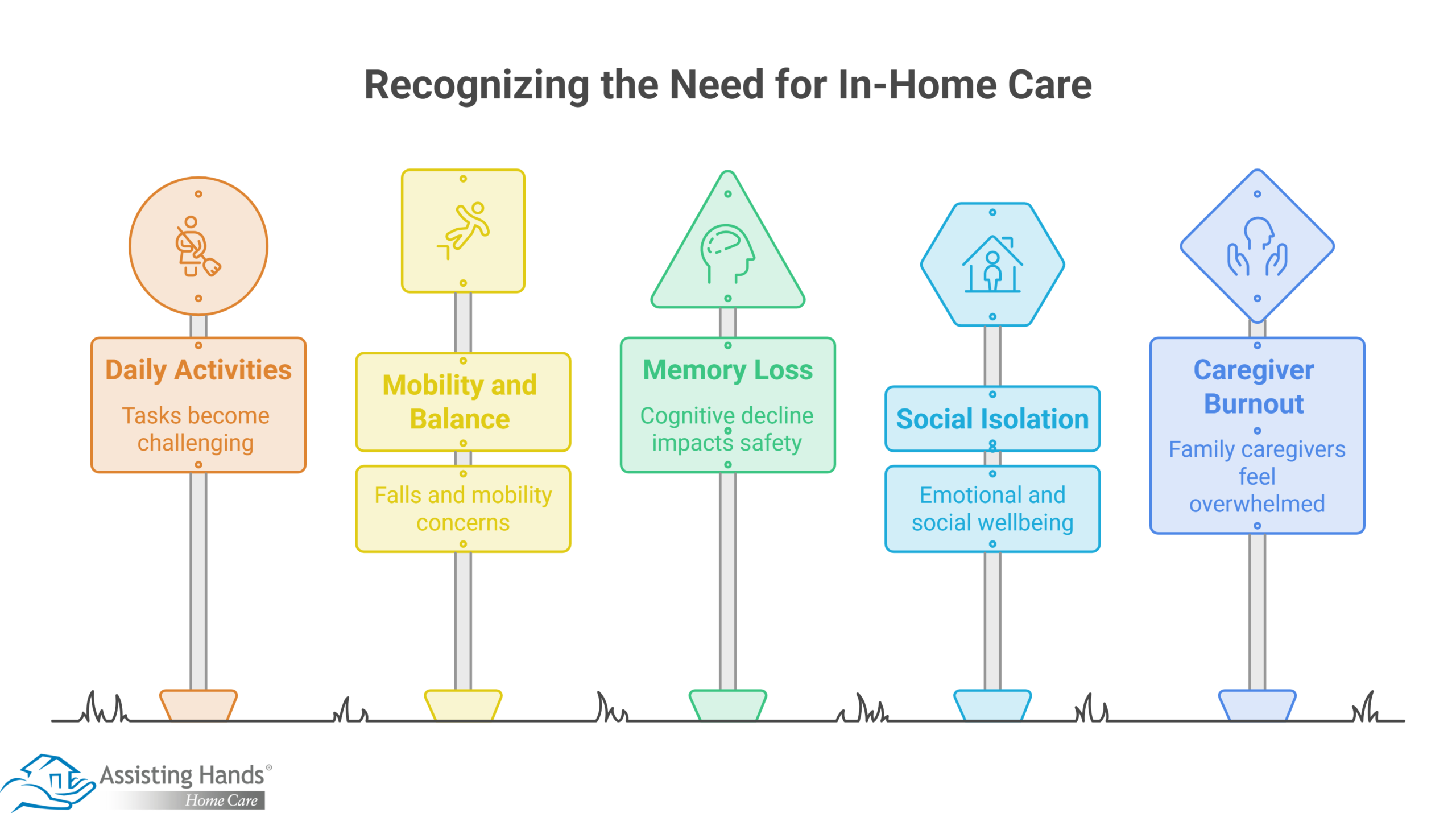
Recognizing when a senior loved one needs professional home care involves watching for signs like difficulty with daily tasks, frequent falls, memory issues, poor hygiene, or social withdrawal. These indicators suggest your loved one may need extra support to maintain his or her safety, health, and quality of life at home.
How Can You Tell if Daily Activities Are Becoming Too Difficult?
One of the clearest signs your loved one may need professional home care is when routine daily activities become challenging or unsafe. Watch for these warning signs:
- Poor personal hygiene – Notice if your loved one is wearing the same clothes repeatedly, skipping showers, or neglecting dental care.
- Household neglect – Look for piles of unopened mail, spoiled food in the refrigerator, or a generally unkempt living space.
- Meal preparation challenges – Is your loved one eating properly, or do you find expired food or evidence he or she is skipping meals?
- Medication organization issues – Missing doses, taking incorrect amounts, or confusion about prescriptions can pose serious health risks.
When these basic self-care tasks become overwhelming, professional caregivers can step in to provide the necessary support while helping your loved one maintain his or her independence and dignity.
Are Mobility and Balance Growing Concerns?
Falls and mobility challenges are among the most serious indicators additional care may be needed. Consider these red flags:
- Frequent falls or near-falls – Even one serious fall can lead to injuries and loss of confidence.
- Difficulty navigating stairs – Hesitation or unsteadiness on stairs increases injury risk significantly.
- Using furniture for support – If your loved one is steadying him or herself on walls or furniture while walking, his or her balance may be compromised.
- Bruises or unexplained injuries – These may indicate falls your loved one hasn’t mentioned or doesn’t remember.
Professional caregivers can provide physical support, monitor mobility, and implement fall-prevention strategies to keep your loved one safe at home.
There are a variety of age-related health conditions that can make it more challenging for seniors to live independently. However, many of the challenges they face can be easier to manage if their families opt for professional Portland home care. Families can rely on expertly trained caregivers to keep their loved ones safe and comfortable while aging in place.
Are There Signs of Memory Loss or Cognitive Decline?
Cognitive changes can make independent living unsafe and stressful for everyone involved. Watch for these concerning behaviors:
- Forgetting important appointments – Missing doctor visits or other commitments may indicate memory issues.
- Getting lost in familiar places – Disorientation in your loved one’s own neighborhood is a serious safety concern.
- Leaving appliances on – Finding the stove left on or water running suggests dangerous forgetfulness.
- Confusion about time or place – Not knowing what day it is or where he or she is requires immediate attention.
- Difficulty following conversations – This may present as trouble keeping up with discussions or repeatedly asking the same questions.
Professional caregivers trained in dementia and cognitive care can provide supervision, structured routines, and compassionate support tailored to your loved one’s needs.
There are a variety of reasons to consider professional Portland dementia care. Dementia caregivers are available 24/7 to help seniors maintain better cognitive health, and they can also assist with various tasks like medication reminders, transportation to medical appointments, and nutritious meal preparation.
Is Social Isolation Becoming a Problem?
Emotional and social wellbeing are just as important as physical health. Signs of isolation include:
- Withdrawing from favorite activities – Losing interest in hobbies, social groups, or family gatherings may signal depression or declining abilities.
- Rarely leaving the house – Limited outings can lead to physical deconditioning and emotional distress.
- Expressing feelings of loneliness – Direct statements about feeling alone or abandoned shouldn’t be dismissed.
- Changes in mood – Increased irritability, sadness, or anxiety can stem from isolation and lack of stimulation.
Home care professionals provide companionship, facilitate social engagement, and can transport your loved one to community activities or appointments, helping him or her stay connected and engaged.
What if Family Caregivers Are Feeling Overwhelmed?
Sometimes the clearest sign professional care is needed comes from assessing your own situation as a family caregiver:
- Caregiver burnout – Feeling exhausted, resentful, or unable to meet your own needs indicates you need support.
- Balancing multiple responsibilities – Juggling work, children, and caregiving can become unsustainable.
- Lacking specialized skills – Some health or mobility needs require professional training and expertise.
- Family conflict – Disagreements about care responsibilities can strain relationships and compromise your loved one’s wellbeing.
Bringing in professional home care isn’t admitting defeat—it’s ensuring your loved one receives the best possible care while protecting your own health and family relationships.
Whether you need respite from your caregiving duties or your aging loved one needs 24-hour care in Portland or a nearby area in northwestern Oregon, Assisting Hands Home Care can meet your family’s care needs. Our dedicated caregivers are available around the clock to provide transportation to doctor’s appointments, ensure seniors take their prescribed medications, and help with a variety of tasks in and outside the home. Trust Assisting Hands Home Care to provide high-quality compassionate professional care for your loved one. If your loved one needs help with the challenges of aging, call one of our compassionate Care Specialists today.
Frequently Asked Questions
How do I bring up the topic of home care with my loved one?
+
Approach the conversation with empathy and focus on maintaining independence and safety. Frame professional care as a way to help your loved one stay in his or her own home longer rather than as a loss of autonomy.
What’s the difference between home care and home health care?
+
Home care provides nonmedical assistance with daily activities like bathing, meals, and companionship. Home health care involves medical services from licensed professionals like nurses or physical therapists, typically ordered by a physician.
How much does professional home care typically cost?
+
Costs vary widely based on location, level of care needed, and frequency of visits. On average, home care ranges from $25 to $50 per hour, with many agencies offering flexible scheduling to fit different budgets.
How quickly can home care services begin?
+
Many home care agencies can arrange services within a few days to a week after the initial assessment. In urgent situations, some providers offer expedited placement within 24 to 48 hours
