
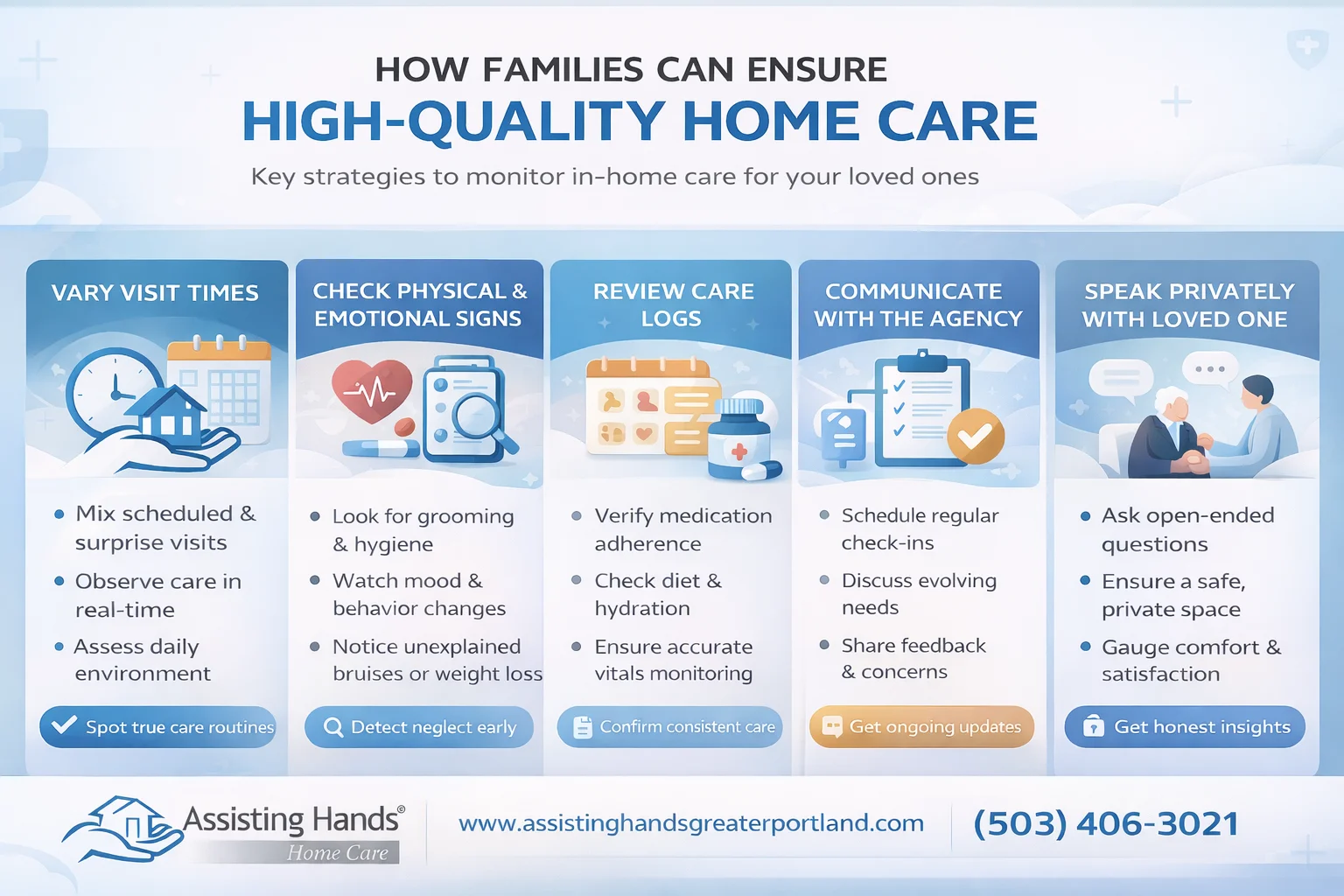
The most effective ways to monitor in-home care quality include conducting both scheduled and unannounced visits, tracking your loved one’s physical and emotional wellbeing, reviewing care documentation, communicating regularly with the agency, and speaking privately with your loved one. Together, these strategies create a reliable system of oversight.
Entrusting a senior family member’s health and safety to an in-home caregiver is a significant decision that requires ongoing vigilance. To ensure your loved one receives the compassionate support he or she deserves, it’s essential to establish a system for consistent oversight and feedback.
How Can Varying Visit Times Reveal the True Quality of Care?
One of the most reliable methods for assessing care quality is to vary your visiting schedule. While scheduled visits allow you to discuss long-term care plans and build a rapport with the caregiver, they often represent the “best behavior” scenario. Dropping in unannounced offers a transparent view of the daily routine and the genuine dynamic between the caregiver and your loved one.
During these pop-in visits, pay attention to the environment and the immediate atmosphere. Is the home clean and organized? Is the television on loud while the caregiver is on the phone, or is he or she engaged in conversation? These spontaneous checks can reveal if the care plan is being followed when no one is watching.
If you have a senior loved one who needs help maintaining a high quality of life while aging in place, reach out to Assisting Hands Home Care, a leading provider of homecare services Portland families can rely on. All of our caregivers are bonded, licensed, and insured, there are no hidden fees, and we never ask our clients to sign long-term contracts.
What Physical and Emotional Signs Indicate the Level of Care Being Provided?
Your loved one’s physical appearance and emotional state are powerful indicators of the quality of care he or she is receiving. While some decrease may be related to your loved one’s underlying condition, sudden changes often signal neglect or incompatibility with a caregiver.
Keep a close eye on the following physical signs:
- Hygiene – Are your loved one’s clothes clean? Is his or her hair brushed? Does he or she look well groomed?
- Weight – Sudden weight loss could indicate issues with meal preparation or feeding assistance.
- Injuries – Unexplained bruises, bedsores, or scratches should be investigated immediately.
Emotionally, look for signs of withdrawal or anxiety. If your family member seems fearful or unusually quiet when the caregiver is present, it’s vital to investigate further.
If your loved one has cognitive decline due to dementia, you’ll need to rely more on your observations of his or her mood and behavior. For trusted and reliable dementia care in Portland, families can turn to Assisting Hands Home Care. We are experts in caring for seniors with memory-related conditions, our caregivers are available 24/7, and all of our dementia care programs are backed with a 100% satisfaction guarantee.
Why Is Reviewing Care Logs and Medication Records So Important?
Professional in-home care usually involves detailed documentation. A high-quality caregiver or agency will maintain a log of daily activities, meals, bathroom habits, and medication reminders. Reviewing these logs regularly helps you track consistency and identify any gaps in care.
Specific details to verify include:
- Medication adherence – Are pills being taken at the correct times and dosages?
- Dietary intake – Is your loved one eating balanced meals and drinking enough water?
- Vitals – If the caregiver is required to take blood pressure or blood sugar readings, are these numbers recorded accurately?
If the logs are consistently incomplete or vague, it suggests a lack of attention to detail that needs to be addressed with the agency manager.
How Does Ongoing Communication with the Agency Support Better Care?
A strong relationship with the care agency is just as important as the relationship with the individual caregiver. Regular check-ins with the agency’s case manager ensure the care plan remains relevant as your loved one’s needs evolve.
Don’t hesitate to provide feedback, both positive and negative. If the caregiver is doing an excellent job, let the agency know. Conversely, if you notice minor issues—like tardiness or excessive personal phone calls—report them early before they become major problems. A responsive agency will take your concerns seriously and implement training or staffing changes if necessary.
How Can Direct Conversations with Your Loved One Reveal Care Quality?
Unless your family member has significant cognitive impairment, he or she is the best source of information regarding his or her own care. Create a safe, private space to ask about your loved one’s experience without the caregiver present.
Ask specific open-ended questions to gauge your loved one’s comfort level:
- “How do you feel when the caregiver helps you with bathing?”
- “Do you like the meals the caregiver prepares for you?”
- “Do you feel listened to and respected?”
- “Is there anything you would like to change about your daily routine?”
Even if your loved one cannot articulate complex feelings, his or her general attitude toward the caregiver can tell you if the match is a success.
Aging in place can present a few unique challenges for older adults. Some only require part-time assistance with exercise or meal preparation, while others are living with serious illnesses. If your elderly loved one needs around-the-clock Portland live-in care, turn to Assisting Hands Home Care. Our caregivers encourage seniors to focus on eating nutritious foods, exercising on a regular basis, maintaining strong social ties, and other lifestyle factors known to increase longevity. To create a comprehensive in-home care plan for your loved one, give us a call today.
Frequently Asked Questions
What are home care services?
+
Home care services provide support for individuals in their own homes, helping with daily tasks, personal care, and maintaining independence.
Who provides home care services?
+
Trained caregivers, including certified nursing assistants and home health aides, deliver home care services based on the client’s needs.
What’s the difference between home care and home health care?
+
Home care focuses on nonmedical assistance like personal care and housekeeping, while home health care includes medical services provided by licensed professionals
How do I know if home care is right for my loved one?
+
Home care is ideal for individuals who need help with daily activities but wish to remain in the comfort of their own homes.
Are home care services customizable?
+
Yes, home care plans are tailored to meet the unique needs and preferences of each individual.
