
Starting your caregiving journey can feel overwhelming, especially during those crucial first 24 hours. If you’re caring for an aging parent or another family member with a chronic condition, knowing what to expect and how to prepare can make all the difference in providing high-quality care while maintaining your own wellbeing.
Establish Essential Communication Channels
Your first priority should be creating clear lines of communication with healthcare providers, family members, and emergency contacts. Start by gathering all relevant phone numbers and organizing them in an easily accessible format.
Key contacts to establish:
- Primary care physician and specialists
- Home healthcare agencies or visiting nurses
- Pharmacy contact information
- Emergency contacts for family members
- Insurance representatives
Set up a dedicated notebook or smartphone app to track important conversations, medication changes, and care instructions. This documentation will prove invaluable as you navigate the complexities of caregiving responsibilities.
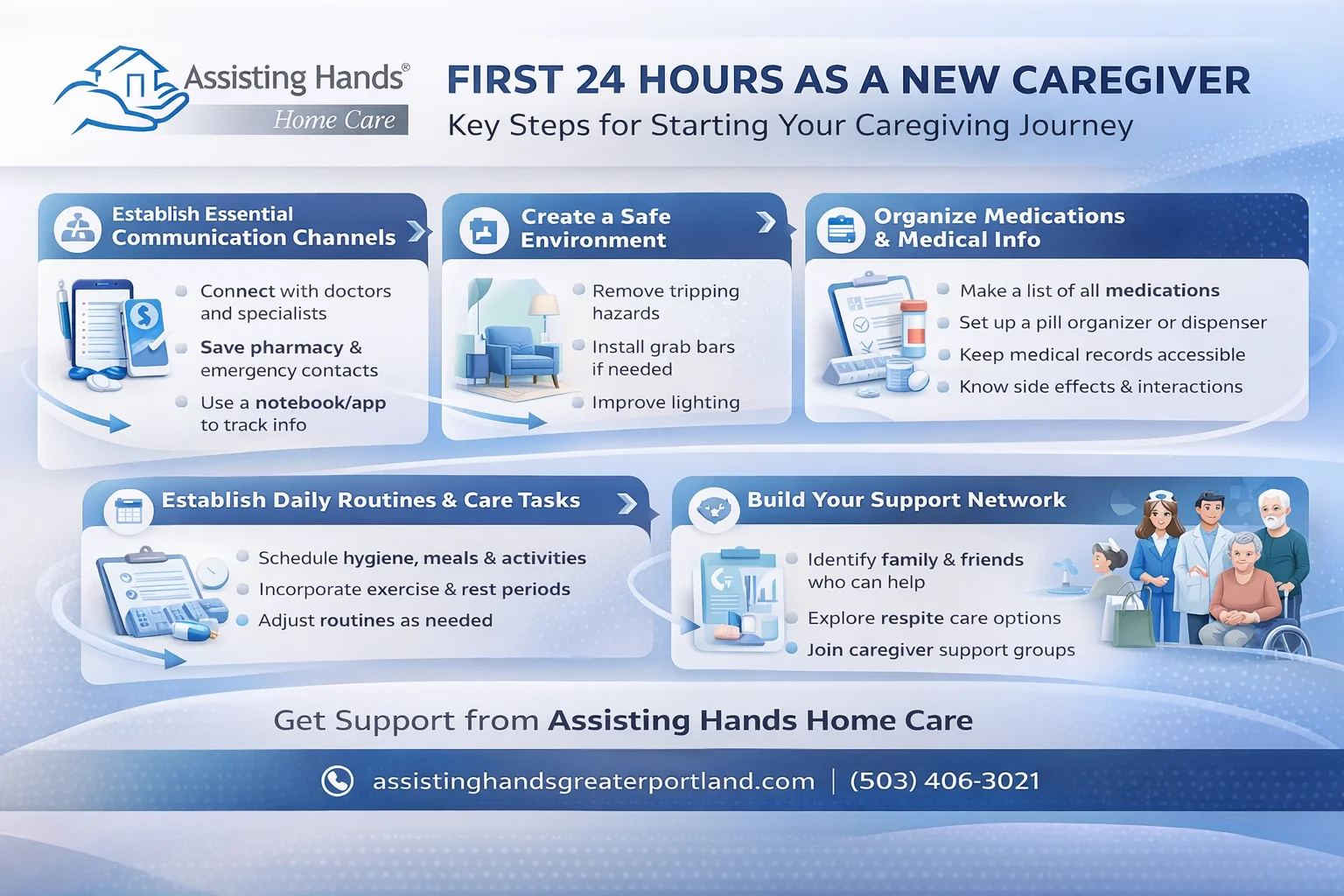
Create a Safe and Comfortable Environment
Walk through your loved one’s living space with fresh eyes, identifying potential safety hazards and comfort improvements. Small adjustments made early can prevent accidents and enhance daily living quality.
Essential safety modifications:
- Remove throw rugs and clutter from walkways.
- Install grab bars in bathrooms if needed.
- Ensure adequate lighting throughout the home.
- Check that emergency numbers are posted visibly.
- Verify medications are properly stored and labeled.
Consider your loved one’s mobility needs and arrange furniture to create clear pathways. If medical equipment like wheelchairs or walkers are involved, practice maneuvering through doorways and around corners.
Organize Medications and Medical Information
Medication organization often becomes a caregiver’s most critical responsibility. Create a system that works for both you and your loved one, ensuring accuracy and consistency in medication.
Medication organization steps:
- Create a comprehensive list of all medications, including dosages and timing.
- Set up a pill organizer or automated dispenser.
- Understand potential side effects and drug interactions.
- Establish a relationship with the pharmacist for questions and refills.
- Keep a record of when medications are taken.
Gather all medical records, insurance cards, and healthcare directives in one accessible location. Having this information organized will save precious time during medical appointments or emergency situations.
Living with serious health conditions can make it challenging for seniors to age in place. However, they can maintain a higher quality of life with the help of professional Portland live-in care. Seniors can benefit from assistance with meal prep, bathing, transportation to the doctor’s office, medication reminders, and much more.
Establish Daily Routines and Care Tasks
Structure provides comfort and predictability for both caregivers and care recipients. Develop realistic daily routines that incorporate necessary care tasks while allowing flexibility for unexpected needs or medical appointments.
Daily routine considerations:
- Personal hygiene assistance and timing
- Meal planning and preparation schedules
- Exercise or physical therapy requirements
- Social activities or mental stimulation
- Rest periods for both you and your loved one
Start with basic routines and adjust them based on what works best for your specific situation. Remember that routines may need modification as care needs change over time.
The type of home care Portland seniors need can vary. Some need assistance a few hours a day, while others require more extensive around-the-clock assistance. At Assisting Hands Home Care, we tailor our care plans based on each senior’s individual care needs, and the plans can be adjusted at any time. We are a trusted provider of respite and 24-hour care, and we also offer specialized Alzheimer’s, dementia, Parkinson’s, and stroke care for seniors.
Build Your Support Network
Caregiving isn’t a solo endeavor, and building a strong support network during your first day will pay dividends in the weeks and months ahead. Identify family members, friends, and professional resources who can provide assistance, respite, or emotional support.
Support network components:
- Family members who can share caregiving responsibilities
- Friends willing to help with errands or provide companionship
- Professional services like housekeeping or meal delivery
- Support groups for caregivers in similar situations
- Respite care options for when you need breaks
Don’t hesitate to accept help when offered, and be specific about what type of assistance would be most beneficial. Many people want to help but don’t know exactly what you need.
Family caregivers sometimes need a break from their caregiving responsibilities. When they need respite care in Portland, families can rely on professional caregivers to help their senior loved ones remain safe at home. For compassionate, reliable in-home care, trust the experienced professionals from Assisting Hands Home Care. Reach out to one of our dedicated Care Specialists today to learn about the high quality of our in-home care services.
