
When a family member requires care due to aging, illness, or disability, choosing in-home care can feel like an overwhelming decision. While the practical benefits are clear, the emotional effects on both caregivers and care recipients often go unaddressed. Understanding these psychological impacts helps families navigate this transition with greater awareness and compassion.
Relief Mixed with Guilt: The Caregiver’s Paradox
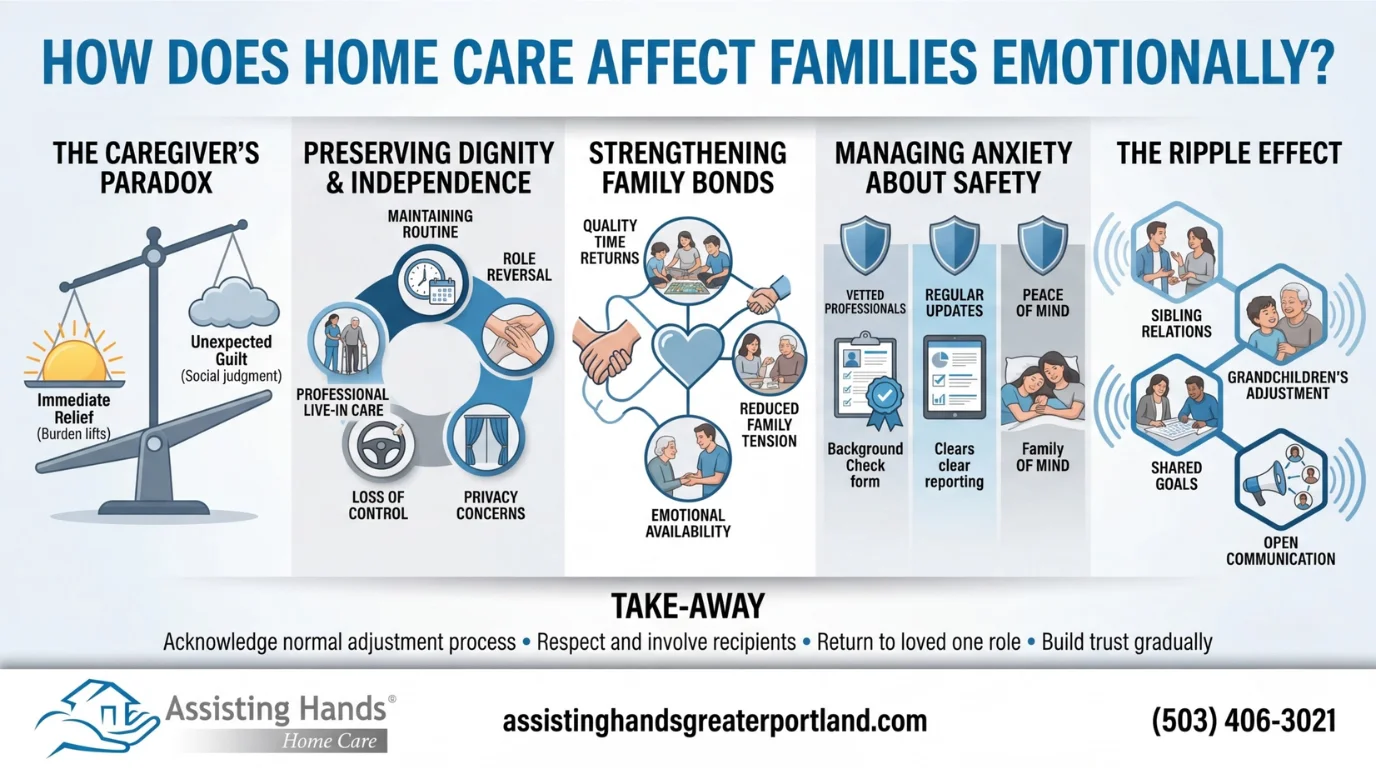
Family caregivers frequently experience conflicting emotions when professional in-home care begins. Many feel immediate relief knowing their loved one receives expert attention, yet this relief often comes with unexpected guilt.
- The burden lifts – Caregivers can finally sleep through the night or return to work without constant worry.
- Guilt creeps in – Questions like “Should I be doing this myself?” or “Am I abandoning my responsibilities?” become common.
- Social judgment – Fear of criticism from other family members or community members adds emotional weight.
- Permission to rest – Learning that accepting help doesn’t diminish love or commitment takes time.
Professional counselors recommend acknowledging these feelings as normal parts of the adjustment process rather than character flaws.
Preserving Dignity and Independence for Care Recipients
The transition to receiving help at home can trigger complex emotions for those requiring care. Maintaining dignity becomes a central concern that affects the entire family dynamic.
- Loss of control – Simple tasks once done independently now require assistance.
- Privacy concerns – Having strangers in their personal space can feel intrusive initially.
- Role reversal – Adult children making decisions creates discomfort for previously independent parents.
- Maintaining routine – Professional caregivers can preserve familiar daily patterns that provide emotional stability.
When care recipients feel respected and involved in their care decisions, adaptation becomes smoother for everyone involved.
Some seniors only require help with a few daily tasks so they can maintain their independence. However, those living with serious illnesses may need more extensive assistance. Luckily, there is professional live-in care Portland seniors can rely on. Home can be a safer and more comfortable place for your loved one to live with the help of an expertly trained and dedicated around-the-clock caregiver.
Contrary to fears that outside help might weaken family connections, in-home care often enhances relationships by removing the stress of constant caregiving duties.
- Quality time returns – Visits become about connection rather than tasks and medical needs.
- Reduced family tension – Arguments about care responsibilities decrease when professionals handle daily needs.
- Emotional availability – Family members can focus on being present rather than managing care logistics.
- Shared goals – Working with care professionals creates a team approach that unites families.
Many families discover professional care allows them to return to being loved ones rather than just caregivers.
Family caregivers need to care for their own wellbeing. If you’re caring for an aging loved one and are feeling overwhelmed, consider hiring a professional caregiver in Portland to provide respite care. Portland families who want to prevent burnout can turn to Assisting Hands Home Care. One of our professional caregivers can assist your loved one at home while you take a nap, go to work, run errands, or go on vacation.
Managing Anxiety about Change and Safety
Introducing new people into intimate family situations naturally creates anxiety for everyone involved. These concerns deserve attention and practical solutions.
Safety worries top the list for most families:
- Background checks and credentials – Reputable agencies provide thorough vetting processes.
- Communication systems – Regular updates help families stay informed about their loved ones’ wellbeing.
- Emergency protocols – Clear procedures for medical situations provide peace of mind.
- Gradual transitions – Starting with shorter visits allows everyone to adjust slowly.
Building trust with care professionals takes time, and agencies understand the need for patience during this adjustment period.
The Ripple Effect on Extended Family Dynamics
In-home care decisions affect more than just the primary caregiver and care recipient. Extended family members often experience their own emotional responses that can impact overall family harmony.
- Sibling relationships – Disagreements about care choices can strain adult children’s relationships
- Grandchildren’s adjustment – Young family members need help understanding changes in their grandparent’s situation.
- Financial stress – Care costs can create tension among family members contributing to expenses.
- Communication challenges – Keeping everyone informed requires intentional effort and clear boundaries.
Regular family meetings with care coordinators can address concerns before they become major conflicts. Open communication about expectations, finances, and care goals can maintain family unity during challenging transitions.
Though you may be researching multiple agencies in Portland that provide home care, Assisting Hands Home Care Portland has much to offer your family and your elderly loved one. We are leaders in the senior home care industry, offering hourly and around-the-clock assistance from reliable, experienced caregivers. Trust Assisting Hands Home Care to help your loved one enjoy a happier and healthier life in the golden years. Reach out to one of our Care Specialists today to schedule a free in-home consultation.
