
A cancer diagnosis can be overwhelming for older adults and their family members, and seniors often have several questions regarding how they’ll handle the changes in their health. Here are a few ways your aging loved one can address cancer.
1.Stay Informed
Once diagnosed with cancer, it’s normal to have many questions that lead to anxiety. Finding the answers to those questions can ease your loved one’s concerns. Ask the physician for resources you can use for research, and learn about your loved one’s specific type of cancer and the current treatment options.
2.Get Organized
A healthcare binder is a helpful tool many people with cancer use to organize their paperwork. Get a binder and use dividers to create sections for things such as a list of your loved one’s current medications and post-op instructions. This not only gives your loved one a reference guide when he or she has a question, but caregivers can also use it to keep up with changes in your loved one’s care plan.
Seniors can face a variety of challenges as they age, many of which can be mitigated with the help of professional in-home caregivers who provide high-quality home care service. Trust Assisting Hands Home Care to help your elderly loved one age in place safely and comfortably.
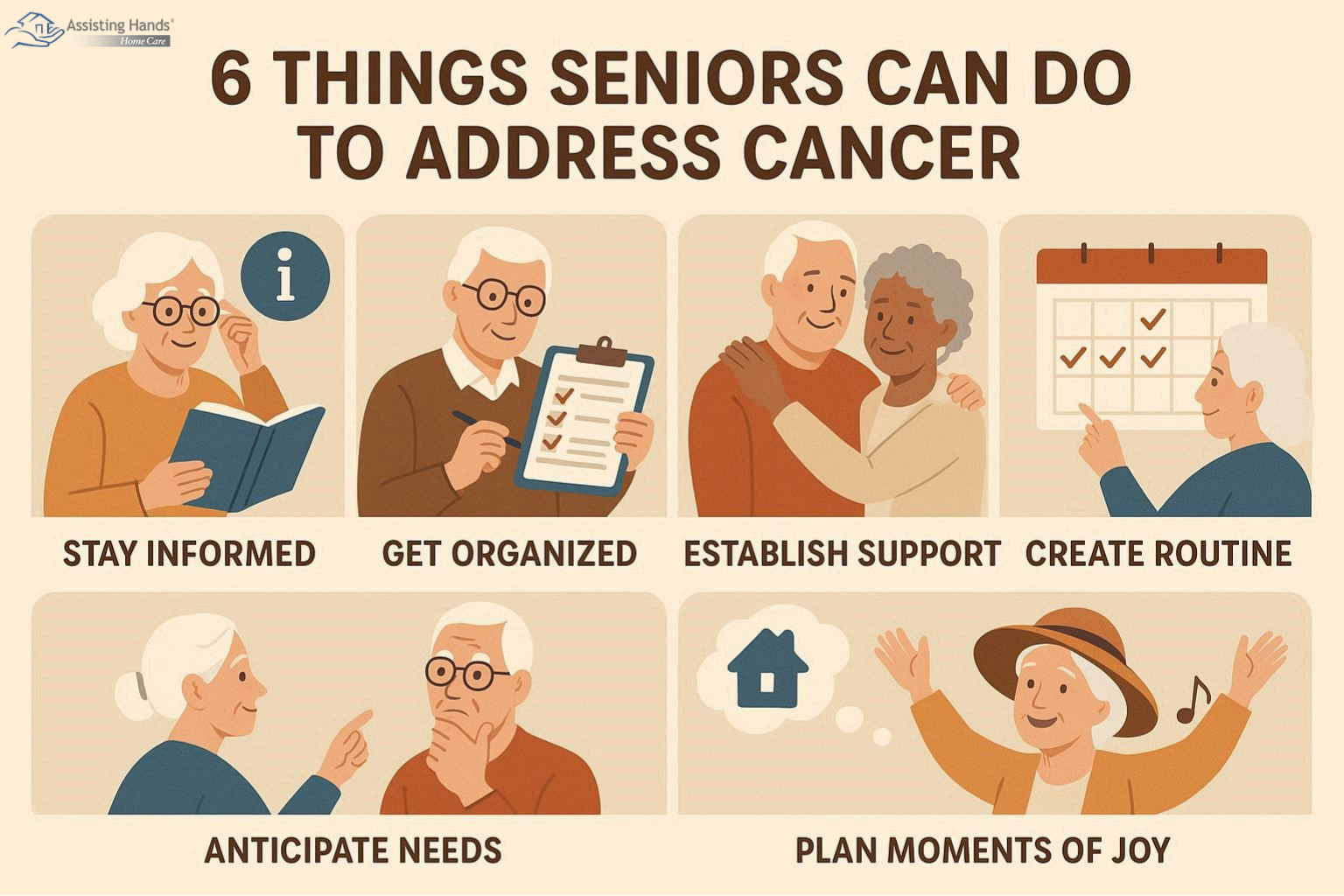
3.Establish a Support Network
People often find it difficult to tell others about their diagnosis. However, seniors need to have people they can lean on for emotional and physical support. Seniors should talk to their close friends and family members and let them know what they need, then reach out to professional caregivers who can provide assistance with daily living needs.
4.Create a Routine
Having a routine provides a sense of stability in life, and it also makes it easier for a caregiver to take over chores such as meal preparation. Once your loved one’s routine is established, he or she should be able to accommodate small changes. The routine could make new events such as taking medication easier.
5.Anticipate Future Needs
Chemotherapy and radiation sometimes make people feel worse before they can start to feel better. Make sure to arrange for transportation services to get your loved one to and from appointments, since missing one can interfere with recovery. Work with your loved one’s support network to ensure someone is available to care for your parent when the side effects of treatment make it difficult to perform daily duties.
For some families, caring for a senior loved one can be overwhelming at times. Luckily, they can rely on professional respite care. Portland, OR, Assisting Hands Home Care is a trusted name in respite and hourly care. Our caregivers are available around the clock to assist seniors with bathing, transportation, medication reminders, exercise, and much more, allowing families the time they need to focus on other important responsibilities or just take a break.
6.Plan Moments of Joy
Keeping a positive attitude on challenging days is important for recovery. You should plan special activities to boost your loved one’s mood. Whether your loved one chooses to eat lunch with a friend or spend a few minutes reading, focus on finding little moments of joy that make it easier to smile when times get tough.
If your senior loved one has been diagnosed with a serious condition and needs help with tasks like meal prep, transportation, medication reminders, bathing, and grooming, reach out to Assisting Hands Home Care, a leading provider of senior home care Portland families can trust. We also offer comprehensive care for seniors with dementia, Alzheimer’s, and Parkinson’s. To hire a dedicated caregiver, call Assisting Hands Home Care today.
