
Maintaining brain health in elderly individuals is crucial for sustaining memory, focus, and independence. One effective approach is incorporating superfoods into daily meals. Nutrient-rich foods like berries, oily fish, and leafy greens can reduce the risk of cognitive decline, enhance memory, and support overall mental function. With proper guidance and integration into regular meals, seniors can enjoy the benefits of these foods without dietary restrictions. Families using home care services can easily incorporate these foods into their senior loved ones’ meals while ensuring balanced nutrition. Pairing these foods with supportive care routines boosts quality of life and cognitive resilience.
Berries
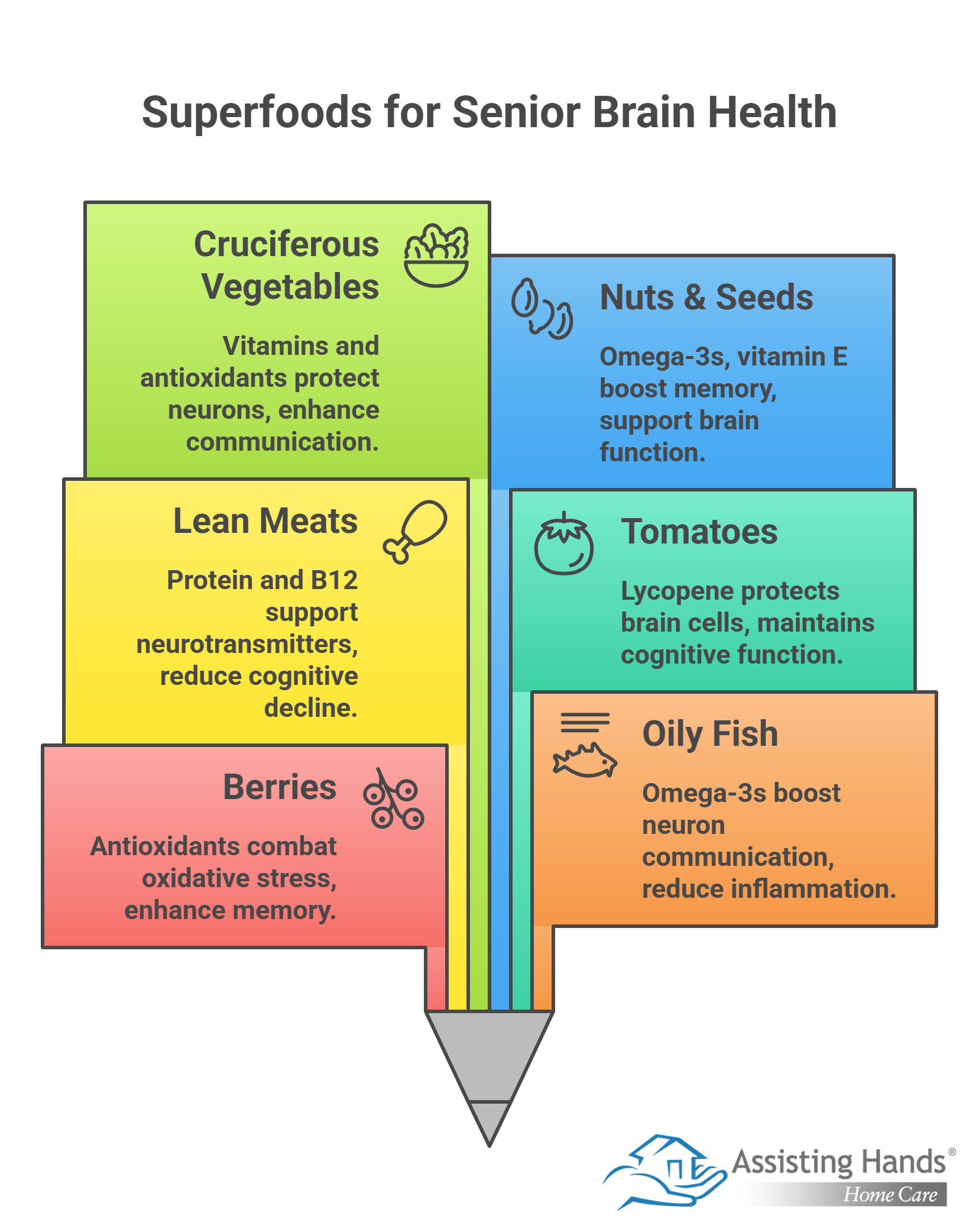
Berries, such as blueberries, strawberries, and blackberries, are packed with antioxidants and flavonoids that combat oxidative stress in the brain. Their nutrients enhance memory, focus, and neuron communication. Consuming berries regularly can slow the progression of age-related cognitive decline. For seniors, berries are easy to include in breakfast cereals, smoothies, or snacks. Their natural sweetness also encourages regular intake without added sugar. Families using home care services can ensure their loved ones consume these fruits safely, managing portion sizes and potential allergies. Regular berry consumption supports cognitive function while enhancing overall nutrition and vitality in older adults.
Oily Fish
- Salmon
- Sardines
- Mackerel
- Herring
- Anchovies
Oily fish are rich in omega-3 fatty acids, essential for healthy brain function. These fats enhance neuron communication, reduce inflammation, and boost memory retention. Serving oily fish two to three times per week supports cognition and may reduce the risk of Alzheimer’s disease. Incorporating oily fish into regular meals is easy with baked, grilled, or steamed preparations. Seniors can receive assistance from professional caregivers who prepare these meals safely. Omega-3 supplements may also be used if dietary intake is insufficient. Regular consumption of oily fish is linked to better mental clarity and focus.
Meat
Lean meats, such as chicken, turkey, and beef, provide protein and vitamin B12—both of which are good for brain function. Protein supports neurotransmitter production, while B12 reduces the risk of cognitive decline. Properly cooked, soft-cut meats are suitable for elderly individuals with chewing difficulties. Including meat in daily meals maintains energy levels and supports neuron health. Caregivers can monitor portions to avoid excessive saturated fat intake. Regular intake of lean meats, paired with vegetables and whole grains, enhances overall nutrition. Integrating these proteins into the diet can positively impact memory, focus, and mental clarity in seniors.
Tomatoes
Tomatoes are rich in lycopene, a powerful antioxidant that protects brain cells from oxidative stress. Regular consumption of tomatoes helps seniors maintain memory and cognitive function, supporting long-term brain health. They can be included in soups, salads, or cooked dishes, making them versatile for daily meals. Tomatoes are also beneficial for cardiovascular health, indirectly supporting brain function through increased blood flow. Caregivers assisting with meal preparation can ensure seniors consume a balanced diet daily. Including tomatoes in the diet complements other brain-boosting foods and contributes to overall cognitive resilience and nutrient variety in elderly individuals.
Broccoli
| Food | Key Nutrients | Brain Benefits |
| Broccoli | Vitamins K & C, Fiber | Supports cognitive function, protects neurons |
| Cauliflower | Vitamin K, Folate | Enhances memory and focus |
| Kale | Vitamin K, Antioxidants | Reduces inflammation, enhances neuron communication |
| Brussels Sprouts | Vitamin C, Folate | Supports neurotransmitter production |
| Spinach | Vitamin K, Magnesium | Enhances learning and memory |
Cruciferous vegetables like broccoli are excellent sources of vitamins and antioxidants that protect brain cells. Regular consumption reduces inflammation and supports neuron communication. Seniors receiving home care can have these vegetables prepared in soft, digestible forms. Pairing them with olive oil enhances nutrient absorption. Daily inclusion of broccoli and similar greens boosts mental clarity, supports memory, and complements a nutrient-rich diet for elderly cognitive health.
Nuts & Seeds for Cognitive Health
Nuts and seeds, including walnuts, almonds, flax seeds, and chia seeds, are rich in omega-3 fatty acids, vitamin E, and antioxidants. These nutrients protect neurons, boost memory, and support overall brain function. Small servings of nuts or seeds can be added to oatmeal, yogurt, or salads. Caregivers assisting seniors can ensure safe consumption, particularly for individuals with chewing or swallowing difficulties. Regular intake of nuts and seeds contributes to reduced oxidative stress and supports long-term cognitive health. These brain-boosting foods are an easy, nutrient-dense addition to a balanced elderly diet.
Avocados and Healthy Fats
Avocados provide monounsaturated fats that support blood flow to the brain, enhancing nutrient delivery and neuron health. Including avocado slices in salads, smoothies, or sandwiches is an easy way to increase healthy fat intake. Healthy fats from olive oil, nuts, and seeds complement avocado for comprehensive brain support. Regular inclusion of these fats boosts memory, focus, and cognitive resilience. Families and caregivers offering Alzheimer’s care can ensure seniors receive adequate healthy fats daily. These foods not only support cognition but also promote heart health and reduce inflammation, which are critical for long-term wellness.
Whole Grains for Sustained Energy
Whole grains, such as oats, brown rice, and quinoa, provide a steady source of glucose for the brain. Rich in B vitamins and fiber, these grains support neurotransmitter function, focus, and memory retention. Preparing whole grains in easy-to-chew forms makes them suitable for seniors. Alzheimer’s care routines can incorporate grains in meals and snacks to maintain energy and cognitive function throughout the day. Replacing refined grains with whole grains ensures nutrient density while promoting overall brain health. Consistent intake supports memory, focus, and mental clarity in elderly individuals.
Green Tea for Focus and Antioxidants
Green tea contains catechins and antioxidants that reduce oxidative stress and enhance mental focus. Drinking one or two cups daily may boost memory and protect brain cells from age-related cognitive decline. Including green tea in Alzheimer’s care routines can provide both hydration and cognitive support. It’s a gentle alternative to caffeinated beverages and can be paired with brain-healthy snacks like nuts or berries. Seniors benefit from the neuroprotective compounds in green tea, which contribute to long-term cognitive resilience, memory maintenance, and increased attention span.
Turmeric: Anti-Inflammatory Brain Support
Turmeric contains curcumin, a natural anti-inflammatory compound that protects neurons from oxidative damage. Adding turmeric to soups, stews, or golden milk supports memory, focus, and overall brain function. Hourly care can ensure seniors receive consistent turmeric intake safely. Curcumin’s neuroprotective properties contribute to reduced risk of Alzheimer’s disease and age-related cognitive decline. Pairing turmeric with black pepper enhances absorption, maximizing benefits. Regular inclusion of this spice enhances mental clarity and complements other brain-boosting foods like berries, oily fish, and leafy greens.
Dark Chocolate for Memory and Mood
Dark chocolate is rich in flavonoids that promote blood flow to the brain, enhancing memory, focus, and mood. Small servings of 70% or higher cocoa chocolate can be included as a snack or dessert. Alzheimer’s care can help seniors monitor portion sizes to avoid excessive sugar. Regular intake of dark chocolate enhances cognitive performance, supports neuroplasticity, and provides enjoyable mental stimulation. Combining dark chocolate with other brain-boosting foods like berries or nuts creates nutrient-dense snacks suitable for elderly individuals. Its antioxidant properties complement a comprehensive cognitive health diet.
Beans and Plant Proteins
Beans, lentils, and other plant proteins provide fiber, B vitamins, and essential amino acids that support brain function. Including these in soups, stews, or salads enhances memory and focus while maintaining heart health. Seniors benefit from easy-to-digest plant proteins that are gentle on the digestive system. Caregivers can prepare these foods in appropriate textures for elderly individuals. Regular consumption reduces oxidative stress, supports neurotransmitter production, and complements animal-based protein sources. Beans are an affordable, nutrient-rich addition to a brain-healthy diet for seniors seeking long-term cognitive support.
Practical Tips: How Seniors Can Include Superfoods Daily
Integrating brain-boosting superfoods into daily meals can be simple and effective. Caregivers can prepare smoothies with berries, oats, and avocado, or serve nuts and seeds as snacks. Incorporating leafy greens, tomatoes, and cruciferous vegetables in soups or casseroles ensures variety and consistency. Oily fish can be baked or grilled twice a week, while turmeric and green tea provide daily neuroprotective benefits. Planning meals around these foods boosts compliance, mental function, and overall nutrition. Combining dietary strategies with home care routines enhances safety, consistency, and overall elderly wellbeing.
Frequently Asked Questions
Which superfoods are best for seniors’ brain health?
+
Berries, oily fish, nuts and seeds, leafy greens, turmeric, and dark chocolate are proven to support memory and cognition.
How can seniors safely include these superfoods?+
Caregivers can prepare meals, adjust portion sizes, and monitor dietary restrictions.
Can these foods help with Alzheimer’s care?+
Yes, nutrients like omega-3 fatty acids, antioxidants, and curcumin support neuron health and may boost cognitive wellbeing.
How often should seniors consume these foods?+
Most brain-boosting foods can be consumed daily, while oily fish is recommended 2–3 times per week.
Are there any risks with these foods for the elderly?+
Moderation is key. Check allergies, sugar content, and consult caregivers or nutritionists for dietary guidance.
