
Alzheimer’s caregivers often experience a wide range of emotions, including guilt, when caring for senior loved ones living with the disease. If you’re an Alzheimer’s caregiver, realize that what you’re feeling is perfectly normal. Finding support can be key to managing your emotions. Understand that you need to take care of yourself, too. Eat a balanced diet, get enough sleep, and exercise to keep your body and mind at their strongest. If that doesn’t work, here are a few ways you can address your feelings of guilt.
Contact the Alzheimer’s Association Caregiver Center
The Alzheimer’s Association operates a very active community where caregivers can talk about what they’re feeling and ask questions about this debilitating disease. They also offer a 24-hour hotline at 1-800-272-3900 that’s staffed with trained professionals who are willing to lend a compassionate ear and offer advice.
Consider hiring a professional caregiver if you need some time off to relax, de-stress, and avoid negative emotions, including guilt. Seniors living with Alzheimer’s disease aren’t the only ones who can benefit from Alzheimer’s care. Portland families have much to gain as well, especially if they’re the ones currently providing care. Professional Alzheimer’s caregivers can watch over your loved one, giving you the chance to relax, focus on other responsibilities, and prevent burnout.
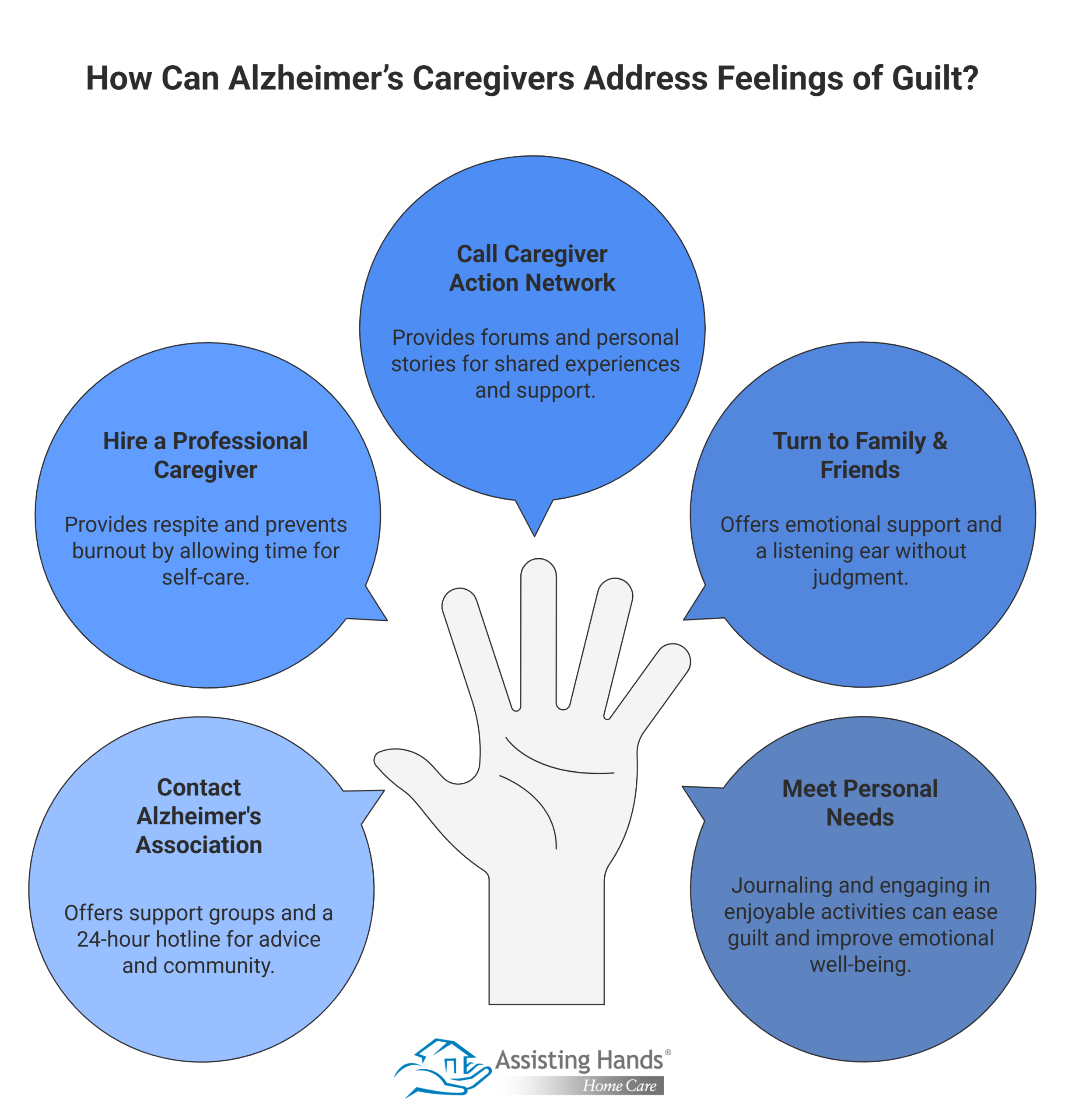
Call Caregiver Action Network
Caregiver Action Network maintains active forums where people can share their feelings, ask questions, and receive support. One area of their site allows caregivers to share their personal stories, which can be very therapeutic to read. While much of the site is dedicated to all caregivers, those providing services to seniors with Alzheimer’s can find a specialized forum just for them.
Turn to Family & Friends
Don’t overlook the importance of asking family and friends for help. Find someone you can talk to who will listen without judgment. Oftentimes, simply expressing your emotions can help you see things in a whole new light and purge your feelings of stress and guilt.
Caregivers don’t have to manage their guilt by themselves. You should always feel free to talk about your negative emotions with friends and family. Talking about guilt can be a major source of relief for caregivers who don’t have outlets for their emotions.
Caring for a loved one and assisting him or her with daily tasks can be overwhelming at times. Families who need help caring for senior loved ones can turn to Assisting Hands Home Care Portland, a leading provider of senior home care. Services available in our customizable care plans include meal prep, mental and social stimulation, assistance with personal hygiene tasks, and much more.
Meet Personal Needs
While it’s important to reach out for support, there are other actions you can take to ease any guilt you feel. One of them is to write in a journal every day, as many find it helpful to get their thoughts down on paper. Spend another part of each day doing something you enjoy. It may be working on a simple art project or curling up with a good book.
When caregivers feel guilty about their perceived inadequacies, the feeling isn’t always limited to caregiving. Oftentimes, guilt is an expression of dissatisfaction. If you’re experiencing too many negative emotions, it may be a sign you need to set aside time each day to tend to your own needs. When caregivers feel emotionally fulfilled, they can handle negative emotions and thoughts more effectively.
Caring for senior loved ones can be challenging for families who don’t have expertise or professional training in home care, but this challenge doesn’t have to be faced alone. Families looking for top-rated Greater Portland at-home care providers can reach out to Assisting Hands Home Care. When considering the difference between a caregiver vs caretaker, it’s clear that caregivers provide the hands-on, compassionate support seniors truly need. From respite care to specialized Alzheimer’s, dementia, stroke, and Parkinson’s care, there are many ways we can make life easier for seniors and their loved ones. To talk to one of our friendly Care Managers and create a customized senior care plan, call us today.
