
Parkinson’s disease is a progressive neurological disorder that can affect movement, balance, and coordination. For many seniors, daily routines may become challenging, and symptoms such as tremors, stiffness, and slowed movement can impact independence. Finding safe, enjoyable, and effective ways to maintain mobility is essential for enhancing quality of life, boosting confidence, and supporting mental wellbeing. Engaging in low-impact exercises that promote coordination and flexibility can offer significant benefits over time, enhancing both physical and cognitive health while preserving a sense of control and empowerment in everyday life.
The Benefits of Biking for Seniors with Parkinson’s
Biking is more than just a recreational activity. It has specific therapeutic advantages for seniors living with Parkinson’s disease. Studies have shown that cycling, especially stationary or tandem biking, can lead to better gait, balance, and motor control while also reducing rigidity and tremors. Regular cycling encourages rhythmic movements, which can enhance neuroplasticity and support brain function. For families seeking additional support at home, combining outdoor activity with professional assistance like home care ensures safety and consistency, allowing seniors to engage confidently in physical activity without undue risk of falls or overexertion. The psychological benefits include better mood and reduced anxiety, which are often associated with progressive neurological conditions.
Types of Biking Suitable for Seniors
Not all biking activities are created equal for seniors managing Parkinson’s symptoms. Depending on mobility, balance, and endurance, different approaches may be appropriate:
- Stationary bikes – These provide stability and allow for consistent, safe cardiovascular exercise indoors.
- Tandem biking – Partnered riding allows for social interaction and added safety for seniors with balance challenges.
- Recumbent bikes – These support the back and reduce strain while maintaining leg movement.
Incorporating these options into a daily routine can enhance physical therapy outcomes. Families looking for more comprehensive support may consider integrating professional services such as live-in care to assist seniors before and after exercise sessions, ensuring hydration, mobility safety, and adherence to a structured schedule.
Physical and Cognitive Benefits from Cycling
Cycling provides multiple benefits that directly target Parkinson’s symptoms:
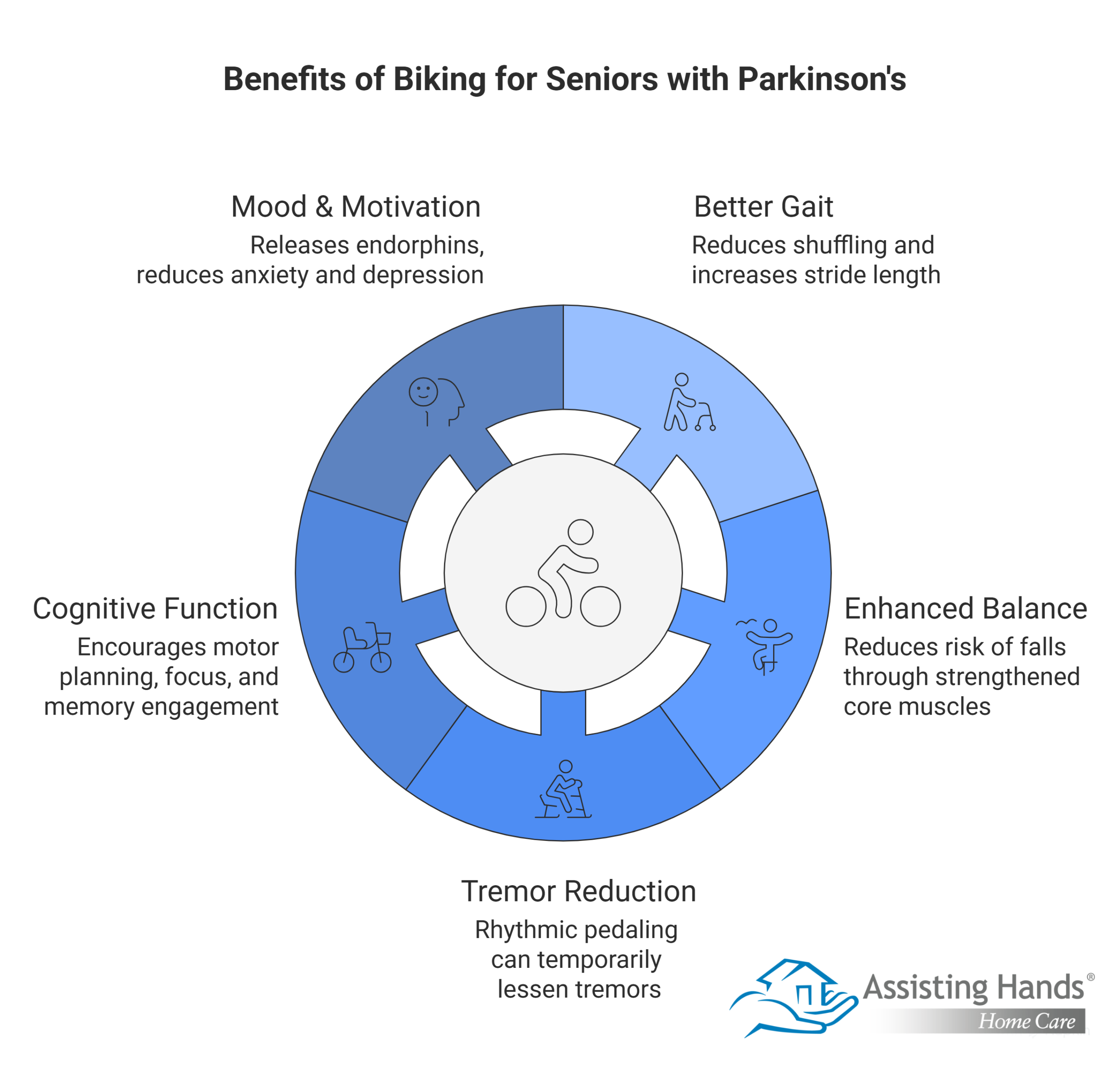
| Benefit | Impact on Parkinson’s Symptoms |
| Better Gait | Reduces shuffling and increases stride length |
| Enhanced Balance | Reduces risk of falls through strengthened core muscles |
| Tremor Reduction | Rhythmic pedaling can temporarily lessen tremors |
| Cognitive Function | Encourages motor planning, focus, and memory engagement |
| Mood & Motivation | Releases endorphins, reduces anxiety and depression |
By cycling 20–30 minutes several times per week, seniors often notice improvements in coordination and endurance. Professional guidance through trained caregivers or structured in-home programs can ensure consistency and safety, particularly for seniors who are newly diagnosed or have advanced symptoms.
Safety Guidelines and Precautions
While biking has many benefits, safety is critical for seniors with Parkinson’s. Families should follow these guidelines:
- Always use helmets, knee and elbow pads, and reflective clothing for visibility.
- Choose flat, low-traffic routes or indoor stationary bikes for controlled environments.
- Maintain proper hydration and avoid overexertion. Symptoms may vary daily.
- Begin with short sessions and gradually increase duration and intensity.
- Supervision or accompaniment from a trained caregiver can reduce safety risks.
Professional support, including programs like respite care, allows family caregivers to take a temporary break while ensuring their loved one remains safe, hydrated, and motivated. This combination of exercise and professional oversight maximizes both physical benefits and overall confidence.
Incorporating Biking into a Parkinson’s Management Routine
Consistency is key for alleviating Parkinson’s symptoms through exercise. A weekly plan may include:
- 2–3 days of cycling for 20–30 minutes each session
- Complementary stretching or yoga sessions to maintain flexibility
- Use of adaptive devices if needed, such as pedal straps or recumbent bikes
- Tracking progress in a log for motor control, endurance, and mood improvements
Combining biking with professional care support at home encourages adherence to the routine and reduces risk of injury. Family members can coordinate schedules with caregivers to ensure regular participation and timely adjustments to intensity levels as symptoms change.
Frequently Asked Questions
Can biking reduce tremors in Parkinson’s patients?
+
Yes, rhythmic pedaling can temporarily lessen tremors and enhance motor coordination. It also strengthens leg muscles, which supports overall balance.
Is stationary biking safe for seniors with advanced Parkinson’s?+
Stationary bikes provide a controlled environment that minimizes fall risk. Seniors should start with shorter sessions and gradually increase duration under supervision.
How often should seniors with Parkinson’s cycle? +
Experts recommend 20–30 minutes, 2–3 times per week. The exact frequency can be adjusted based on individual tolerance and symptom severity.
Can professional caregivers assist with biking routines?+
Yes, caregivers providing services like home care, live-in care, or respite care can supervise exercise sessions, ensure safety, and provide hydration and motivation support.
Are there cognitive benefits to biking for Parkinson’s patients?+
Cycling encourages motor planning, memory, and focus, which can positively affect cognitive functions. Regular exercise also boosts mood and reduces stress levels.
