
Veterans seeking support with everyday tasks, long-term care needs, or aging in place options often have access to multiple financial assistance programs designed specifically for their service. Understanding these benefits can make the process of arranging safe and dependable at-home support significantly easier for families.
Understanding Financial Aid Options for Veterans
Navigating financial aid for veterans can feel overwhelming at first, especially when you’re trying to determine which programs apply to home-based care services. Many veterans qualify for more benefits than they realize, including non-service-connected pensions, supplemental stipends, and disability-related programs. These benefits are designed to offset the cost of home support, helping veterans stay independent longer. Veterans and families often begin by exploring the Aid and Attendance (A&A) benefit, a supplemental payment added to the VA pension that can cover some out-of-pocket caregiving costs. It’s also important to review housebound benefits, disability compensation, and state-level veteran home care grants to ensure nothing is overlooked. In addition to these programs, families often search for supportive options like home care services to understand how financial aid aligns with individualized care needs.
Aid and Attendance and Housebound Benefits
Aid and Attendance (A&A) is one of the most commonly used financial support avenues for veterans who require help with daily living tasks such as bathing, dressing, meal preparation, and mobility support. These benefits provide additional payments on top of the standard VA pension and are specifically available for veterans who need hands-on assistance or are bedridden due to chronic illness. A&A eligibility typically depends on medical documentation that confirms the veteran requires personal assistance for daily tasks. Housebound benefits, on the other hand, are for veterans with disabilities that limit them to their home environment. Family caregivers researching part-time professional support often look into options like hourly care to understand how supplemental VA funds can ease their financial burden and ensure consistent care.
Disability Compensation and Service-Connected Support
| Area of Focus | Details & Benefits |
| Eligibility Criteria | Veterans with service-connected disabilities determined by the VA based on injury severity, chronic conditions, and functional limitations. |
| Monthly Compensation | Higher disability ratings result in higher monthly payments that can offset the cost of ongoing care, adaptive equipment, or mobility modifications. |
| Support Needs | Veterans with severe impairments such as traumatic brain injury or advanced joint damage often require structured daily routines and long-term support. |
| Memory & Cognitive Support | For veterans experiencing cognitive decline, professional resources such as dementia care can guide families in deciding when and how to include expert assistance. |
| Application of VA Funds | Disability compensation and related VA benefits can be applied toward home-based support, professional caregiving, and adaptive modifications to enhance independence and safety. |
How Families Can Apply for Veteran Financial Aid
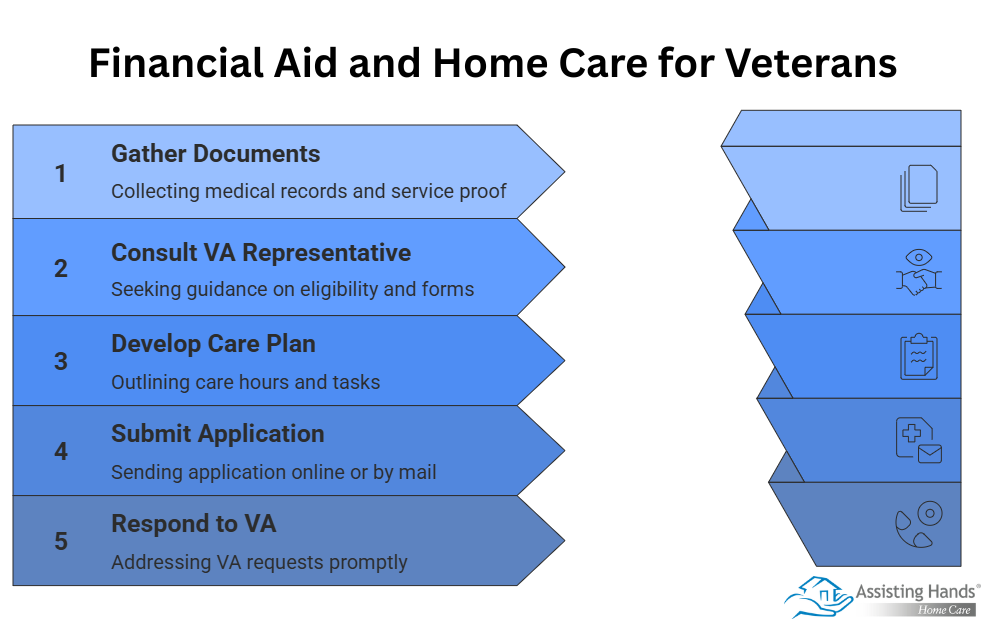
- Families can begin the application process by collecting essential documents, including the veteran’s medical records, proof of military service, and details about daily care needs. These documents help the VA determine the level of support required and whether the veteran qualifies for programs such as Aid and Attendance or Housebound benefits. Having a physician’s statement that clearly explains the veteran’s limitations can also speed up the approval timeline.
- Many families choose to work with a VA-accredited representative, who can guide them through application forms, eligibility guidelines, and submission steps. This reduces errors that may delay benefits. It’s also helpful to prepare a written care plan outlining expected care hours, mobility requirements, medication reminders, and personal care tasks.
- Once the application is submitted online, by mail, or through a regional VA office, families should keep track of communication from the VA and respond promptly to requests for additional information. Being thorough, organized, and proactive significantly increases the likelihood of faster approval and ensures veterans receive the support they deserve.
Frequently Asked Questions
What is the Aid and Attendance benefit for veterans?
+
Aid and Attendance is an added financial benefit for veterans who require help with daily activities such as dressing, mobility, or bathing. It supplements the veteran’s monthly pension and offsets the cost of home-based support. Eligibility requires documented medical need and service history.
Who qualifies for housebound benefits?+
Housebound benefits are available to veterans who have a disability that significantly limits their ability to leave home. This benefit provides additional monthly financial support and may be combined with other VA programs. Medical documentation is required for approval.
Can veterans use financial aid for home care services?+
Yes, many VA benefits, including A&A, Housebound, and disability compensation, can be used to pay for in-home support services. These benefits help veterans remain independent while receiving needed care in the comfort of their homes.
Is disability compensation different from a VA pension?+
Yes, disability compensation is for veterans with service-connected conditions, while a pension is for low-income veterans with non-service-related disabilities. Both may offer supplemental benefits for caregivers and home support.
How long does it take to get approval for VA financial aid?+
Approval time varies depending on documentation, medical evaluations, and claim volume. On average, applications may take several weeks to a few months. Providing complete and accurate paperwork can speed up the process.
